
Blonde and Blue: Today’s Southern Belle

Recently, I caused quite a stir among friends on Facebook when I suggested that today people think of the southern belle as a young woman who has blonde hair–in addition to a having a southern drawl and other character traits people associate with someone being a “southern belle.”  This discussion was originally prompted by a post I made about an ad that appeared in a local issue of Creative Loafing for the show “The Bachelor.”  The ad was to announce the show’s casting call, which read “Calling All Southern Belles.” 

What did they mean by that exactly?  Should she have a southern drawl?  Was she blonde? What sort of stereotype were the producers looking for? Several of us weighed in and there was considerable disagreement among my fellow southerners, especially when I suggested that the current point of view held in pop culture was that a southern belle should be blonde.  This certainly didn’t apply to the most popular belle of all time.  I mean, Scarlett O’Hara had black hair for crying out loud!

So, I decided to go to the casting call and interview people for their opinions as to the questions “What is a southern belle?”  “How would you describe her?”  There was general agreement on her traits–many said she was polite, well-mannered, etc.  But there was more than one person who responded that a southern belle had blonde hair and blue eyes.

One of the young women I interviewed was actually asked to come in based on a video she submitted to the show.  She had the requisite southern drawl and guess what else?  Blonde hair and blue eyes.

Perhaps the idea that southern belles have blonde hair and blue eyes is generational or maybe even regional.  Most people associate the intangible qualities that make a woman a southern belle–not her physical traits.  Yet in popular culture you get a bit of both.

Clearly, the makers of Butterfinger Snakerz think a southern belle has blonde hair, blue eyes, has a southern drawl (no matter how bad) and is even a little stingy.
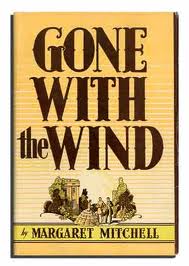
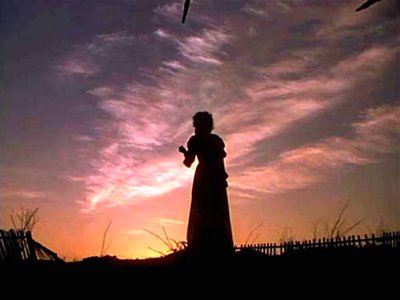
Gone with the Wind as Southern History

Unless you have been living under a rock, you know that this year marks the 75th anniversary of the publication of Margaret Mitchell’s Civil War epic, Gone with the Wind.  The book and its characters are being celebrated and discussed around the world.  From Atlanta to Calcutta, people have weighed in on why they like the book, how many times they’ve read it, and how it has influenced their lives.

Aside from the personal connections readers have made with the book and its characters, however, Gone with the Wind’s most enduring legacy has been in shaping a popular understanding of the Old South and the Civil War.  From the beginning, fans have accepted as truth the book’s Lost Cause narrative of the pre-Civil War South as a region gilded by romance and whose cast of characters included cavaliers, belles, mansions, and of course, loyal slaves.

Yet it is fair to say that the film, more than the book, has influenced this popular view of the southern past.  Even Margaret Mitchell called this one.

Indeed, a few years after the film premiered, she wrote to her friend Virginius Dabney, editor of the Richmond Times-Dispatch, mortified that she was “included among writers who pictured the South as a land of white-columned mansions whose wealthy owners had thousands of slaves and drank thousands of juleps.”

Her embarrassment derived from the fact that the film had done more to influence what people had learned about the Old South than her book. “Southerners could write the truth about the antebellum South,” she said, but “everyone would go on believing in the Hollywood version.”

One could certainly argue that what Mitchell produced, despite her meticulous research, was not necessarily a “truthful” southern history, but one in step with the Lost Cause version she grew up with. Yet, Mitchell was on target about the film’s influence in shaping a popular understanding of southern history.

“People believe what they like to believe,” she wrote, “and the mythical Old South has too strong a hold on their imaginations to be altered by the mere reading of [my] book.”  This was true.  As the most influential medium of popular culture in the first half of the twentieth century, movies shaped what people learned about history.  And during the 1930s, movies set in the Old South were very popular.

When the book was made into a film, Gone with the Wind became Hollywood’s first blockbuster, and as such it cemented an image of southern history in the popular imagination—much to the chagrin of African American leaders who recognized that this kind of popular “history” not only damaged the morale of their race, but hurt the cause of civil rights nationally.

This year’s celebrations of the book and the film probably won’t lead most people to think, much less hold serious discussions, about Gone with the Wind’s influence on popular perceptions of southern history.  That would ruin the historical fantasy that Margaret Mitchell created and which they love.  And frankly, I’m not sure they give a damn.

Note:  This blog post originally appeared on the UNC Press Blog.

Welcome to Pop South!

Pop South is the continuation of a blog I began at UNC Press in anticipation of the publication of my book Dreaming of Dixie: How the South Was Created in American Popular Culture, which focuses on the period from the late nineteenth century through World War II.  Writing that blog has challenged me to think about contemporary representations of the South in the popular media.   Pop South is a space for discussing these representations and trying to understand their meaning for the region today.  It is my intention to have guest bloggers and to encourage a broader discussion.  I’m not sure how long this experiment will last, but I wanted to give it a try.