The Southern Foodways Vortex

This winter, weather watchers have been talking a lot about the “polar vortex,” which is a confluence of climatic events that essentially boil down to “Damn, it’s cold outside!”  The term “vortex,” however, offers a useful analogy for considering something quite different than the weather–the expanding interest in southern foodways.
SFAStay with me on this. Vortex, according to your basic dictionary, is a mass of spinning air, liquid, etc., that pulls things into its center. I’d argue that we’re currently experiencing a southern foodways vortex in which the food and culinary practices of the region are pulling at us from all directions thanks to the work of scholars, chefs, cooks, journalists, and documentary filmmakers. Leading this movement, of course, is the Southern Foodways Alliance (SFA), a non-profit organization based at the University of Mississippi that “documents, studies, and celebrates the diverse food cultures of the changing American South.”

Maybe I’m overstating the case about the growing interest in southern foodways because I’m familiar with the work of the SFA, know several scholars who have contributed to the literature on this topic, and have met some of the region’s chefs whose cookbooks sell a lot better than anything I’ve ever written. And if I don’t know them, I’m following them on Twitter. But I think the case is strong.
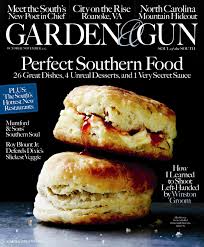
gandgSFA Director John T. Edge is a frequent contributor to the New York Times, and the paper’s Atlanta bureau chief, Kim Severson (also a cookbook author), has written several articles about southern foodways, which means the topic gets national exposure. Then there are the regional magazines (Southern Living, Garden and Gun, Our State) that practically beg to be bought, enticing us with mouthwatering photos of food and drink, spreading the love of southern foodways. The new online magazine called The Bitter Southerner, recently featured a two-part essay on the work of the SFA (which I highly recommend) that offers an in-depth look at the organization and the ways in which southern foodways can be used for good–to build bridges between people from all walks of life and to do so “in a spirit of reconciliation.”

willis_okraThe University of North Carolina Press, which has a reputation for publishing outstanding books on regional history and culture, is now publishing some of the best books on regional food to be found. Its Savor the South  cookbook series is unique in its exploration of regional food, as each book examines the history and cultural relevance of a single ingredient common in southern food, while also providing recipes that use those ingredients. Okra? Buttermilk? Pickles & Preserves? Yes, please!

While the photographs found in the pages of magazines and cookbooks are a feast for the eyes, there are also beautiful documentaries that invite you to savor the sights, sounds, and stories of regional foodways; there are none better than those produced by the SFA’s Joe York. York’s films, featured at food film festivals in New York and Chicago, are special because the focus is not so much the food as it is about people, and before you know it, you’ve learned something unique about southern history and culture. Watch York’s short film “Smokes and Ears” and you’ll see what I mean.

Why all this interest in southern foodways? Perhaps all that’s old is new again. During the Great Depression, Americans were very nostalgic about the South, as evidenced by the novels, plays, movies and advertising of the period. The nostalgia was based, in part, on an idea of the South as America’s last remaining pastoral region and that southerners embodied the American ideal of self-reliance because they lived off the bounty of the land they cultivated.

In our own time of economic uncertainty, I wonder if we aren’t experiencing a similar nostalgia for the pastoral and for the self-reliant southerner. Exploding interest in southern foodways goes a long way in feeding that craving, because it’s very much about valuing our history with the land, about the resourcefulness of people, and about traditions. Even if nostalgia draws people into the southern foodway vortex, any preconceived ideas about the region’s history and culture or what constitutes “southern” food are bound to be challenged by the work of historians, food writers, and the cooks themselves.

Cheers to that. With a glass of bourbon, of course.
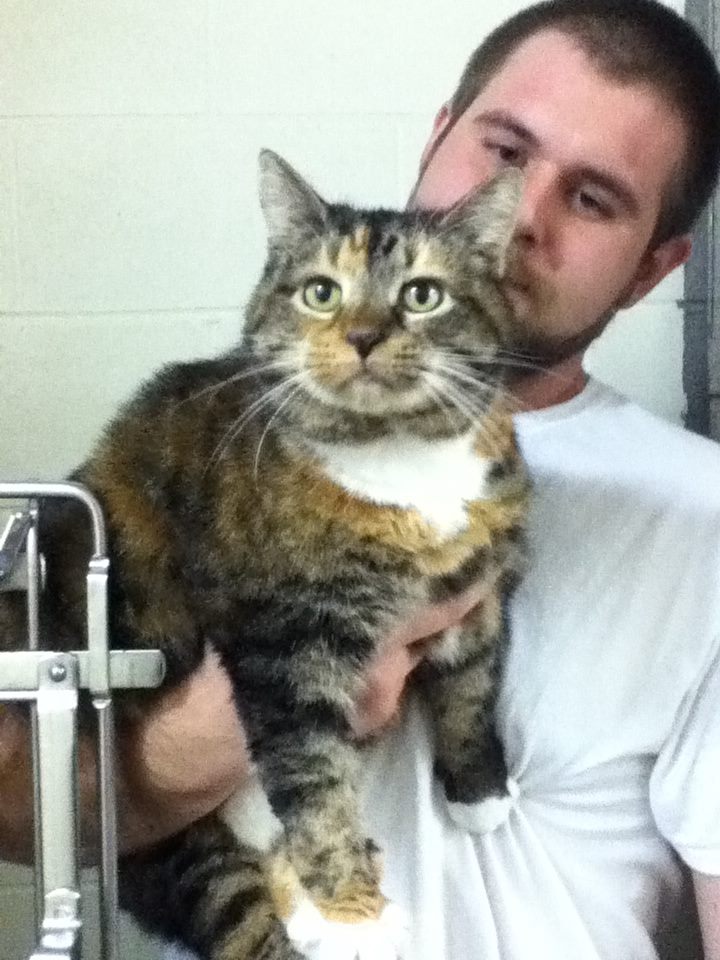
Be a good neighbor–support your local animal shelter

"Mama" was Hilda's cat who is now in a shelter. She's 8 years old, good with other animals, and an door cat. Call the APS in Yanceyville to adopt her!  (336) 694-4921
“Mama” was Hilda’s cat who is now in a shelter. She’s 8 years old, good with other animals, and an indoor cat. Call the APS in Yanceyville to adopt her! (336) 694-4921

This past week, a dear friend of mine named Hilda Brody, passed away.  She was a great animal lover and helped to found the Animal Protection Society of Caswell County, the county seat of which is Yanceyville, North Carolina. Throughout her life, she gave generously of herself–often taking in cats, dogs, and even horses–because she valued the lives of animals and knew the gift of love and loyalty that animals give us, as humans, in return.

The APS of Caswell County, like so many animal shelters across the South, struggles to stay afloat. In counties racked by rural poverty, local governments are less likely to support the efforts of organizations devoted to animals rather than human beings.That means that much of the work to maintain the shelter is left to volunteers or individuals who work for pennies on the dollar. Their budgets are often stretched thin and the need for both money and supplies is constant.

So many of us out there know the joy and love that our pets bring to us each and every day.  So, why not honor them by assisting another dog, cat, or the other animals that shelters care for?

What can you do to help?  Be a good neighbor and support your local animal shelter.

If you have some money to spare, consider making a donation to support the many things a shelter does (including spaying and neutering).

My cat, Halen, and my dog, Phoebe, were both adopted from an animal shelter.

And if you don’t have much, consider donating old blankets, towels, newspapers, old placemats, gently used toys, leashes, collars, litter, or grooming items.  Check here for Top Things to Donate to an animal shelter.

And when you are ready to offer an animal “forever home,” consider adopting from your local shelter.  You’ll be glad you did.

On behalf of my shelter-adopted pets, we thank you.

“Party Down South” and “Southern Charm”: South Carolina’s Turn at Reality Television

When I first wrote about the South in reality television a few years ago, it seemed like a disturbing trend that would hopefully die a quick death. But no. Today, the reality shows that exploit the region have expanded from a trickle to a flood. And even within this genre of programming there are state “franchises,” so to speak, with Louisiana being the best example.  Nearly every state in the region has served as a backdrop for a reality-based show, but not all. South Carolina? It’s your turn.

Mark Sanford's declaration of love for his mistress at a 2009 press conference.
Mark Sanford’s declaration of love for his mistress at a 2009 press conference.

The state usually takes it on the chin for its conservative politics, or more pointedly, conservative politicians who draw the wrong kind of media attention. Think of former governor Mark Sanford’s tearful display of love for his mistress after he went “hiking on the Appalachian Trail.”  Or of Joe “You Lie!” Wilson. Even the Democratic Party was put to shame when Alvin Green–an unemployed veteran indicted for showing pornographic pictures to a female student at USC–became the party’s candidate for Senate.  And on it goes.

This spring, however, South Carolina is being showcased in two new reality shows, making this a total of three for the Palmetto State. It is already the site of TLC’s Myrtle Manor, a show that covers the hijinks of people who live in a trailer park in Myrtle Beach. But, I digress. The new shows include CMT’s “Party Down South,” filmed in Murrells Inlet (near Myrtle Beach), and Bravo’s “Southern Charm,” featuring a group of poorly-behaved Charleston socialites, a show locals have condemned to no avail. Hint: there’s nothing charming about this bunch.

The cast of CMT's "Party Down South"
The cast of CMT’s “Party Down South”

“Southern Charm” will be out in a couple of months, but “Party Down South”  (PDS) has already cranked up.  The show is produced by SallyAnn Salsano, who is the “mastermind” behind MTV’s “Jersey Shore,” and it does what MTV’s “Buckwild” couldn’t manage to do, which was to create a southern equivalent with characters like Snooki and the Situation.

The gist of the show is that the cast (most of whom hail from Deep South states like Louisiana, Mississippi, and Alabama) is staying at a rented house near the beach, where they share bedrooms, go to bars nearly every night, get drunk (a lot), fight (this goes with drinking), have sex, eat meals together “like a family,” have a “job” by the marina, and show their collective asses. Sound familiar?

So what is southern about the show?  Essentially, the setting, the accents, colloquialisms (“pop a squat,” “cooter,” and “coon ass”) and some good ol’ redneck fun, which usually involves trucks and mud.

CMT has become the primary network for redneck television and “Party Down South” is one in a long line of shows that hit the same tired notes of southern-based reality television. The formula involves working-class southerners, in this case young ones, as imbeciles willing to do anything for a little cash and attention. Being on the show is likely going to be the biggest thing to ever happen to them, and producers know it.  No doubt there were several hundred “hopefuls” who wanted to be on the show.

The thing is, I knew people like this in high school.  Girls that drank too much and got into fights. Guys that would do anything for a laugh.  Many of my classmates may have found them amusing in the moment, but they also felt embarrassed for them. The difference today is that the cast of PDS may never be able to escape their immature past, because it is forever preserved on film and has been shared with millions.

The cast of Bravo's "Southern Charm."
The cast of Bravo’s “Southern Charm.”

CMT and SallyAnn Salsano are the real winners here, as the network may boost its youth demographic and Salsano her financial portfolio. The losers, of course, are South Carolina and this cast.

Bravo promises a different group of southerners in its series “Southern Charm,” but don’t expect much different from what’s on over at CMT.

You can put lipstick on a pig, but it’s still a pig.

Freedom of Speech? Duck Dynasty’s Phil Robertson quacks about homosexuals and “the blacks”

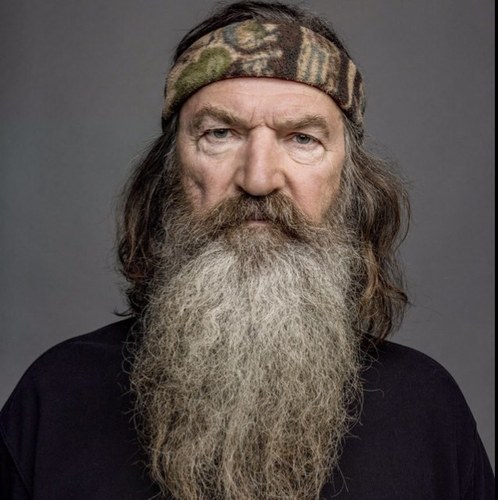
Phil Robertson from A&E's Duck Dynasty
Phil Robertson from A&E’s Duck Dynasty

Duck Dynasty, the enormously popular reality television program produced by A&E, is under fire thanks to some eye-opening statements made by Phil Robertson, the family patriarch, in an interview with GQ magazine.  That’s Gentleman’s Quarterly, in case you were wondering.  And, the comments weren’t so, shall we say, gentlemanly.

Essentially, Daddy Duck equated homosexuality with being one train stop short of bestiality.  And, he seems to believe that “the blacks” who worked for white farmers in his home state of Louisiana were “happy,” going so far as to say “I’m with the blacks, because we’re white trash. We’re going across the field…. They’re singing and happy. I never heard one of them, one black person, say, ‘I tell you what: These doggone white people’—not a word!” (from “The Gospel According to Phil,” GQ Blog, December 18, 2013).  Since Robertson quacked the truth, he’s been suspended indefinitely from the show.

No one should be surprised by this and it was just a matter of time before we were going to hear it, if not from Phil, then perhaps one of his sons.  We can expect religious conservatives to make negative comments about gays.  We can also expect a white southerner of Phil’s generation to refer to African Americans as “the blacks,” as though they are a separate species.  In that regard, he has something in common with Paula Deen.

Yet the focus has been on his statements about homosexuality. Gay advocacy groups like The Gay & Lesbian Alliance Against Defamation (GLAAD) have been been quick to call Robertson out for what it says are “anti-Christian” views. That’s red meat for conservatives, who have jumped to his defense saying that liberals are “hysterical” (Rush Limbaugh), or “intolerants” (Sarah Palin), and that Phil was just expressing his First Amendment Rights (Louisiana Governor Bobby Jindal).

No one seems to have taken much issue with A&E who has crafted a statement distancing itself from Robertson’s remarks.  Yet producers knew.  Robertson was quoted in the GQ article as saying “we’re bible thumpers who just happened to end up on television.”  The network understood this going into its contract (and re-negotiations) with the beards.  And anyone paying attention knows that the more popular Duck Dynasty has become, the more free the family has been about sharing its conservative values and, in Phil’s case, strict interpretation of the bible.

For what it’s worth, I believe that Phil Robertson has a right to his opinions and his beliefs. The problem, of course, is that he’s on an enormously popular television show with millions of viewers over whom he has tremendous influence.  And while he has since given a statement “I would never treat anyone with disrespect just because they are different from me,” what he fails to realize is that there are people who are fans of the show who would disrespect others.  Or worse.  And therein lies the problem.

Perhaps the profits for A&E have outweighed the risks. The network has certainly been down this path before with Dog the Bounty Hunter.  Remember him? People may have forgotten that Dog was recorded using the “n-word” and not too long after, A&E cancelled the show.  It may come to this, much to the chagrin of Duck Dynasty fans, but for now it will be played out as a culture war cast by conservatives as a battle royale between “defenders of free speech” and the “Gay Mafia.”

Let’s all grab some popcorn.

When You’re Lookin’ at Her, You’re Lookin’ at History

Note: This blog post first appeared on the UNC Press Blog on March 21, 2011. I post it here in honor of Loretta Lynn who received the Presidential Medal of Freedom this past week.

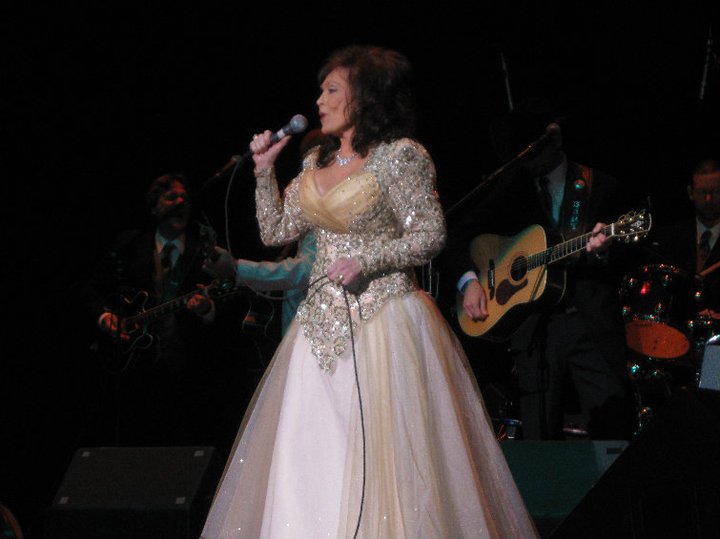
Loretta Lynn, Charlotte, NC, March 2011.

Whenever I visit the Thirsty Beaver, a local honky tonk in my neighborhood in Charlotte, I always find something new on the wall that catches my attention—a velvet Hank Jr. picture here, a child-size set of overalls done in Hee Haw fabric there. This time, it was a metal serving tray on which there was an image of Loretta Lynn.  Someone heard me comment on it and offered that Ms. Lynn’s tour would be coming to town.  I was so excited by that news that on the day the tickets went on sale, I beat a path to the ticket counter and had seats on the third row with a great view of the Queen of Country Music.

She sounded terrific as she sang hit after hit, and as I looked around the audience I noted that while there was strong representation from the senior set, there were also people who ran the gamut in age from teens through middle age.  My mother saw her in concert with Conway Twitty years ago, and here I was, a generation later, thrilled to hear her perform.  Loretta Lynn has experienced something of a renaissance.  Her work with Jack White, who produced her Grammy award-winning album Van Lear Rose (2004), as well as 2010’s tribute album marking her fifty years in country music, has garnered new fans for Lynn. Having her songs covered by artists ranging from young country music’s Carrie Underwood to rockers Paramore is indicative of Lynn’s broad appeal.

I also realized as I sat there enjoying her music and singing along with favorites like “Fist City” and “You’re Lookin’ at Country,” that I was bearing witness to a woman who serves as a link to country music’s past and its future.  Her first singing partner was Ernest Tubb, an icon of early country music, and her most recent partner was Miranda Lambert who, along with Sheryl Crow, re-recorded “Coal Miner’s Daughter.”

Loretta Lynn should also be understood as an important figure in women’s history.  Since she emerged on the country music scene in the early 1960s, she’s been unafraid of speaking on issues that affect women, though hers is more of a working-class feminism.  Her song “The Pill,” controversial for a country music artist, spoke of reproductive choice and being able to decide (through birth control pills) when to be pregnant.  “One’s On the Way” about those stream of pregnancies, also showed Lynn’s keen observation about how different the lives of women “here in Topeka,” (or any other small town for that matter) were from the feminists about whom we often read, write, and teach as these lyrics demonstrate:

The girls in New York City they all march for women’s lib
And Better Homes and Gardens shows the modern way to live
And the pill may change the world tomorrow but meanwhile today
Here in Topeka the flies are a buzzin’
The dog is a barkin’ and the floor needs a scrubbin’
One needs a spankin’ and one needs a huggin’ Lord one’s on the way

http://www.youtube.com/watch?v=yMzSYyjNb74

As we mark Loretta Lynn’s 50th anniversary in country music, I think it’s important to recognize her not only for her contributions to country music, but also for her role in women’s history as a troubadour for working-class women everywhere.

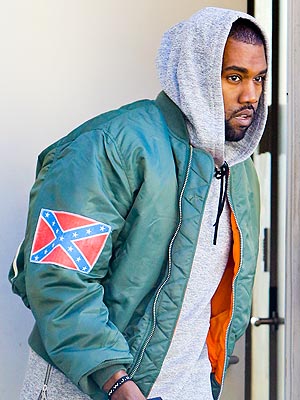
Kanye West, Neo-Confederate, and 12 Years a Slave

Since Pop South isn’t a paying gig, I don’t always post items as quickly as I’d like. I’ve got a real job that needs attending to, which means that I’m a little slow to blogging about those stories that are on my mind.  Like rapper Kanye West sporting a Confederate battle flag on his jacket.  And, 12 Years a Slave.

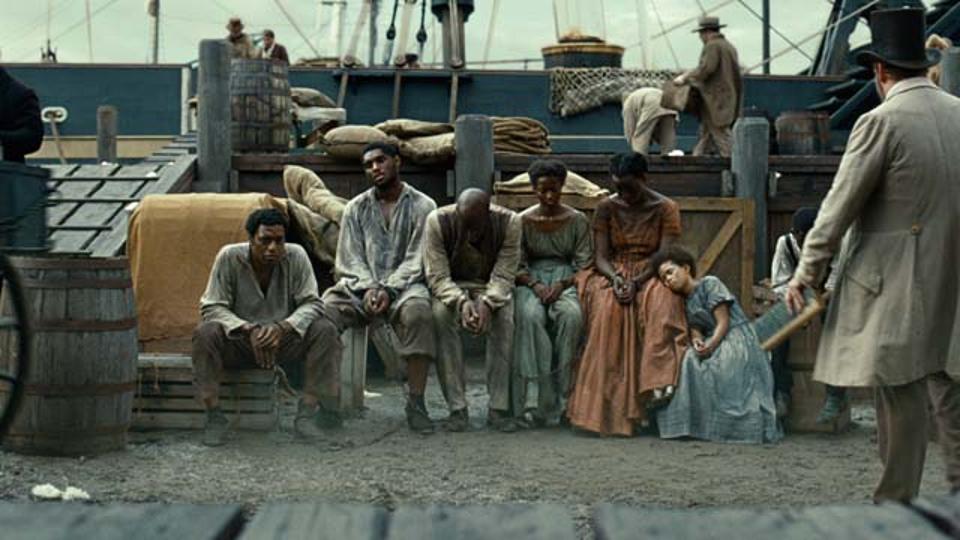
From the film, 12 Years a Slave

Speaking of which, what a powerful film.  The movie, directed by Steve McQueen, is based on true events in the life of Solomon Northrup, a free black man who was captured and sold into slavery.  But it is so much more.  Based on Northrup’s narrative, the story itself is an amazing tale of survival. Yet the greater story is how the brutality of slavery damages the humanity of everyone associated with the system–from the slave owners to the enslaved, the slave catchers and the slave buyers, men and women.  This is the institution that the Confederacy sought to preserve.

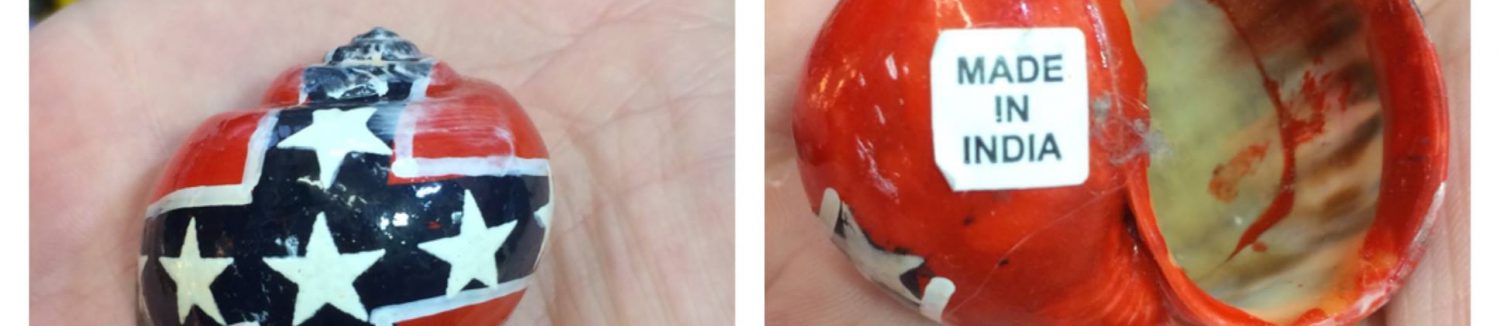
Which brings me back to Kanye and that flag.  Not just any ol’ Confederate flag, of which there are several, but the Confederate battle flag.  Because we know Kanye enjoys a battle, especially when his ego is involved or, more importantly, his wallet. Some have called this move “genius.”  He would agree. Controversy = publicity = $$$.

Kanye West, Neo-Confederate

What I find disconcerting is how willfully ignorant West is about the flag’s meaning. His public response to using it is to say: “You know, the Confederate flag represented slavery in a way—that’s my abstract take on what I know about it… So I took the Confederate flag and made it my flag! It’s my flag! Now what are you going to do?”  Yea, Kanye, it represented slavery “in a way,” and it’s also been co-opted by the Ku Klux Klan, segregationists, and Neo-Nazis. In essence, you’ve cast your lot with them, too.

But, wait. He doesn’t care about that. In a more recent interview he said as much. “You don’t ever know what I’m trying to do. Black people stopping other black people from getting checks. . .Don’t nobody care about the Confederate flag on that type of level.”  Perhaps, but I don’t think we’re out of the (pecker)woods yet.

This brings me back to 12 Years a Slave.  Kanye West needs to see this film. Over and over again. Perhaps then, he’ll get why he’s wrong about the meaning of the Confederate flag.  He may never admit to it publicly, but in his heart, he will know.

This is the South, NOT the Confederacy

As the government shutdown dragged on, journalists everywhere, on the left and the right, raised the level of their rhetoric in search of what they believed to be the appropriate scapegoat for their wrath. The American South, it turned out, was one of their favorites.

Enough of this.
Enough of this.

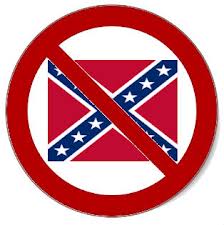
The Washington Post’s Colbert King offered a sardonic editorial in which he used the metaphor of the Confederacy to describe today’s Tea Party.  Over at Salon.com, Stephen Richter of The Globalist wrote that the shutdown was a reminder that the Civil War never ended.  Richter argued that “the South is once again rebelling against modernizing shifts in American society” and makes the analogy that “Southerners and white conservatives everywhere” fear that offering healthcare to Americans is akin to “freeing the slaves.” Of course, the article would not have been complete without illustrations of the Confederate battle flag.

Well, thanks for nothing.

The quagmire in Washington, DC, cannot be explained by simply tossing it into the lap of the South since just as many states outside of this region are being represented in Congress by members of the Tea Party caucus. When Ari Berman wrote in The Nation that the GOP has a “white southern Republican problem” by noting the high numbers of southerners in the Tea Party caucus, he failed to address the reality that the shutdown would have been impossible if only GOP conservatives from the South were involved.  The fact is that this southern faction has co-conspirators across the country. (See the list.)

Not only do these comparisons perpetuate the idea of a monolithic South, it keeps alive regional divisiveness (to say nothing of continued stereotyping) as the comments section of these articles attest. It also ignores the changing demographics of the region, which over the last few decades has included a considerable migration of people from North to South.

Moral Monday protest

More importantly, this Neo-Confederate rhetoric does nothing more than embolden Tea Party leaders and their acolytes, while at the same time it undermines the efforts of southern progressives. All the anti-South commentary illustrated with battle flags damages any inroads that are being made through grassroots efforts like those of the Moral Monday protesters here in North Carolina who are doing their damnedest to hold the GOP’s feet to the fire.

The real power struggle is not inside the Beltway, but in individual states. Conservative Republicans have gerrymandered districts to insure their power, but southern progressives in the state are not taking it lying down.

Wendy Davis, Democratic candidate for Texas Governor

Sen.Ted Cruz (R-TX) may still be a Tea Party darling (and a shoe-in for Joseph McCarthy), but State Senator Wendy Davis is offering a change to politics as usual with her candidacy for governor. And in Georgia, Democrat Michelle Nunn is off to a strong start to replace Republican Saxby Chambliss in the U.S. Senate.

The point here is that progressives nationally need to support southern progressives. (Apparently, Sen. Bernie Sanders (I-VT) agrees.)  It makes no good political sense to dismiss an entire region as a “lost cause” behind the drumbeat of Civil War rhetoric.

What’s happening in Washington is not a result of the return of the Confederacy. It might make good hay to allude to the South as the “Old South” or to suggest that it lacks the diversity (and by suggestion, education) to accept “modernizing shifts,” or insinuate that all southerners are conservative.  But this kind of commentary only serves to inspire southern conservatives, while placing yet another obstacle in the path of those seeking change.

Yes, conservatives appear to have a stranglehold on the region, but throughout the South there are strong progressive voices that need to be heard. So here’s a novel idea: rather than bolstering conservatism in the South by pointing fingers to its Confederate past and discouraging progressive voters, which is what the Tea Party wants, how about shining more light on candidates and grassroots efforts and give Progressivism a fighting chance?

And, by the way, I live in the South, NOT the Confederacy.

Southern progressives could learn a lesson from Julia Sugarbaker

sugarbaker
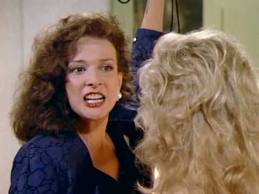
Designing Women’s Julia Sugarbaker, played by Dixie Carter.

Sometimes I feel like a lone voice in the wilderness when I write essays in an effort to counter some of negative images of the South that permeate popular culture or to contest the drivel that national journalists churn up in order to take swipes at a region they’ve never visited, much less know.

With the government shutdown, writers from The Nation to Salon to the Washington Post have all pointed their fingers at the South, especially conservative Republicans from the region, the most intransigent of which are members of the Tea Party caucus. Here, they say, the Civil War has not ended.  Here, they say, are nothing but a bunch of “Neo-Confederates.” I’m not suggesting that these journalists don’t have a point to make, but in making it, they are using a fairly broad brush that hits me and other southern progressives like a slap in the face.

This is when I wish I could muster up a rant that would make Julia Sugarbaker proud.  In the 1980s television series Designing Women, Julia Sugarbaker, played so well by the late actress Dixie Carter, knew how to rip someone a new one. In one particular episode, she lashed out at a writer from the New York Times for printing an article about dirt eating in the South.

Today, the articles about dirt eating may have subsided, but the stereotypes of the region remain.  The use of banjo music for television programs, illustrations of the Confederate battle flag for articles about the South, and so on. In one week John T. Edge might write a nice food article for the New York Times that gets all sorts of compliments (southerners do okay when it comes to food), but the next week a comedy-news show (The Daily Show or perhaps Real Time with Bill Maher) will interview a hillbilly type to make a point.

It’s tiresome and I wish Julia Sugarbaker were here to let them all know.

The Daily Show and Tired Southern Tropes

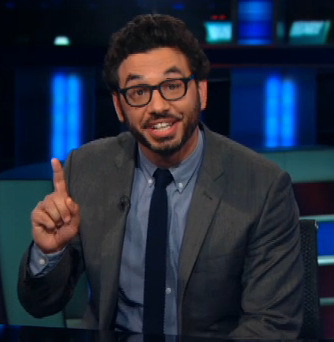
Al Madrigal
Al Madrigal

I love The Daily Show, I really do.  But when it comes to segments about the South, they often do a piss poor job of it. The latest example came from correspondent Al Madrigal who did a story on the dispute between Georgia and Tennessee regarding state borders and the water supply. (Watch the segment here.)

Georgia essentially wants and needs access to the water provided by the Tennessee River, and in typical Daily Show fashion, the actual story was less important than Madrigal’s effort to highlight the stupidity of local officials.  This is nothing new, because the show’s correspondents are often satirizing politicians.  Where it fails is in its pitiful attempt to poke fun at the South, which can be done, but with more intelligence.

Instead, it’s so lame, it’s as if the writers dialed this one in. Want to discuss the South? Incorporate banjo music and, these days, mention Honey Boo Boo.  Want to suggest that rural southerners are inbred? Incorporate a clip from Deliverance. Need to establish that people are ignorant? Mock their accents to their face or include “man on the street” interviews with people who fit the stereotype.  It was on this last point where The Daily Show showed its hand, because it was clear to anyone with a keen eye that a couple of those interviews were plants, what I’ll call “hicks for hire”.

Unknown Hinson
Unknown Hinson

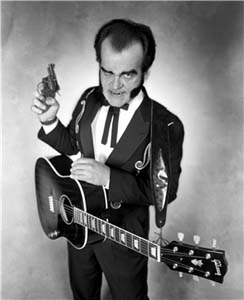
First, there were the two men in camouflage: one held a shotgun, while his friend offered a bug-eyed look. These two were obviously playing to the camera. Second, there was the guy who had mutton chop sideburns, slicked back hair, and sunglasses circa-1970s Elvis. The tip off that this guy was playing to the camera was his Unknown Hinson t-shirt.  While the studio audience in New York was laughing at this guy, I knew that he was saying things Al Madrigal needed to pull the piece off. And he was probably having his own laugh at Madrigal’s expense.  Like Unknown Hinson, he was portraying a character.  Everything he said played to stereotype on purpose.

So, suffice it to say, I’m disappointed with The Daily Show’s latest attempt at satirizing the South.  As usual, the writers relied on worn out tropes about the South and not only was it not amusing, it wasn’t even funny.

About “Ask A Slave”

This is a thoughtful response to the video sensation “Ask a Slave.”

edabney's avatarInterpretive Challenges

This past week I received approximately 20 people sending me a YouTube web show called “Ask a Slave” by Azie Dungey who portrayed an enslaved maid at Mount Vernon. Through this medium of YouTube she shares some insensitive and not very thoughtful questions asked by people at Mount Vernon (and at a host of other sites that deal with slavery). Like others I appreciate the explanation and intent behind the project. My friends want to know “What do you think?”

The problem I have with this show is that interpreting enslavement in eighteenth and nineteenth century contexts must be taken seriously by the presenter and also by the receiver. Poking fun at visitor inquiries is not the best method of interpreting (to be fair this web show is not claiming to interpret). However, the questions posed by visitors are their (albeit often poorly worded) way to find some information…

View original post 1,388 more words