Black Domestic in a Can–A South Carolina Ad Agency “Helps” Glory Foods

IMPORTANT UPDATE:  After tweeting Scott Brandon of the Brandon Agency about these offensive commercials, they have been removed from YouTube.  Coincidence?  I think Pop South as well as viewer comments must have gotten their attention. (4/19/2012)

I wonder if you have seen these commercials by Glory Foods?  It’s a company out of Columbus, Ohio, that specializes in canned goods they call “Southern food with a soulful heritage.” In one, there’s a frustrated white housewife in the kitchen and she’s having trouble in preparing dinner for her guests.  What’s she going to do?  Not to worry, a black woman (known as “Shirley” on the company’s website) busts through the door to help!   As she prepares the food, a can of Glory collard greens, the white woman can relax.  Not only does she have a black woman working it out for her in her kitchen, she’s got food that already has its southern seasoning.   Even better, Shirley plans to stay hidden in the kitchen as she shouts to the white woman “Now get on out there, and take all the Glory!”

I thought this was an unfortunate commercial, until I saw a second and related commercial.  It’s the same white woman, although this time her two children are involved, shouting and banging their forks and knives on the table.  Who’s going to rescue Miss White Lady now?  You guessed it, the canned black domestic.*  She’s going to set those mouthy children straight, make sure they eat their vegetables, and guess who gets to take “all the glory?”  Miss White Lady.

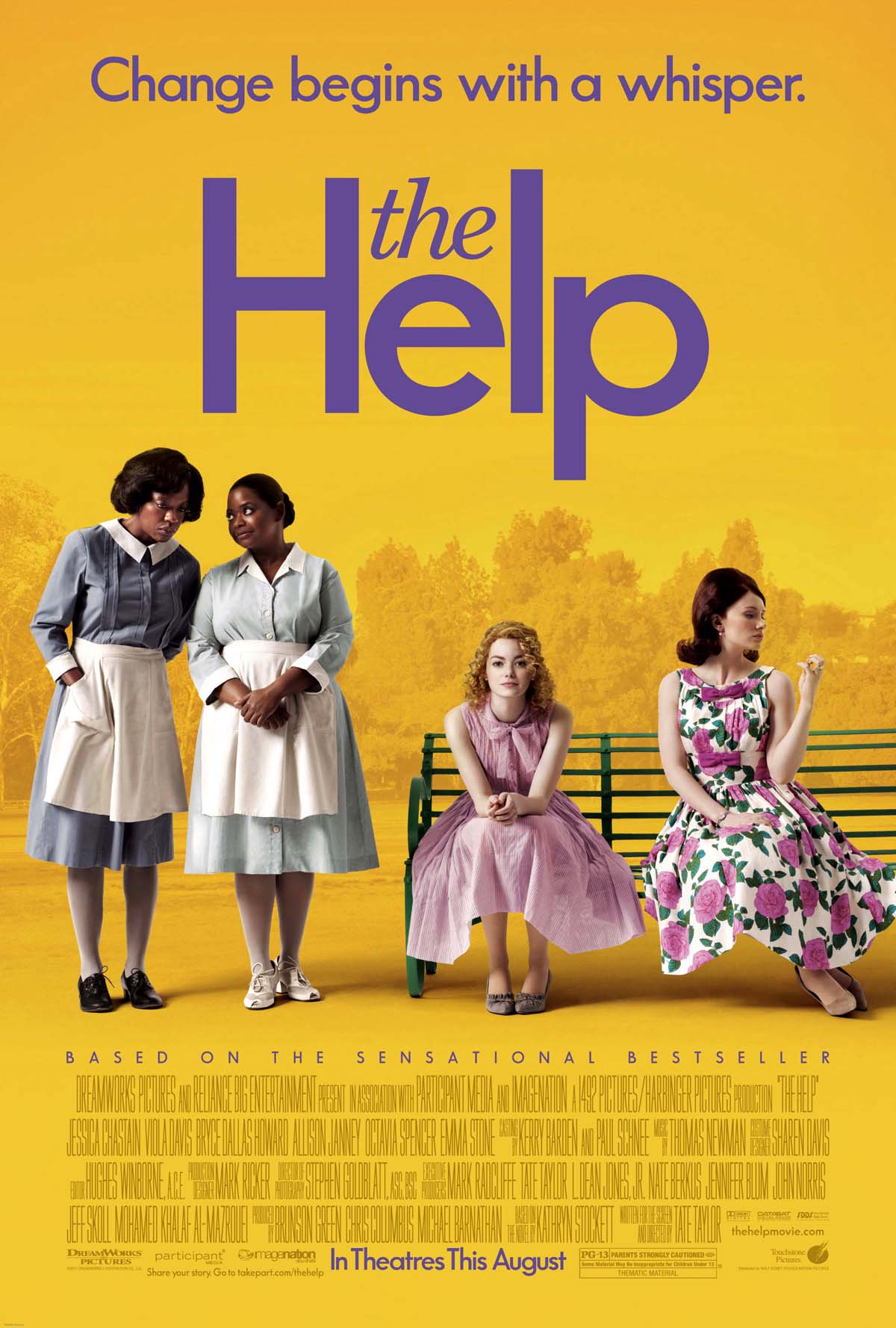
I wonder what is going on here, because it looks like Glory Foods is taking its cues from The Help.  But this isn’t 1960s Jackson, Mississippi. I went to the website of the company and that’s where I discovered that this is a black-owned business with an African American CEO who has an MBA from Duke University.  So what gives?

Who is the company trying to reach with these commercials except, perhaps, all those white women who read The Help and are looking to recapture some of that for themselves? It’s certainly an interesting marketing ploy.  Perhaps that is the point. And guess what?

The Brandon Agency, a South Carolina-based advertising agency with offices in Myrtle Beach, Charleston, and even Charlotte, North Carolina are behind the TV commercials.  The agency was hired by Glory Foods back in February, which explains why these commercials have recently appeared in Charlotte.  Take a look at the agency’s website and you’ll find something very interesting–the entire leadership team is white.  That’s right.  White “originalists” (the term the agency uses to describe company leaders and probably found in the bottom of a cocktail glass) from South Carolina came up with the Glory Food campaign featuring a modern-day Aunt Jemima.

However, this shouldn’t let Glory Foods off the hook.  If this company were run by whites we’d be all over it with this analogy to The Help, which is why I don’t understand why Glory Foods and The Brandon Agency aren’t being called out for perpetuating this particular southern stereotype.

Maybe not enough people have seen these commercials or realize the underlying assumption (or history) of mammy in the kitchen.  If they had, they’d be as concerned about this image of black women as I am.
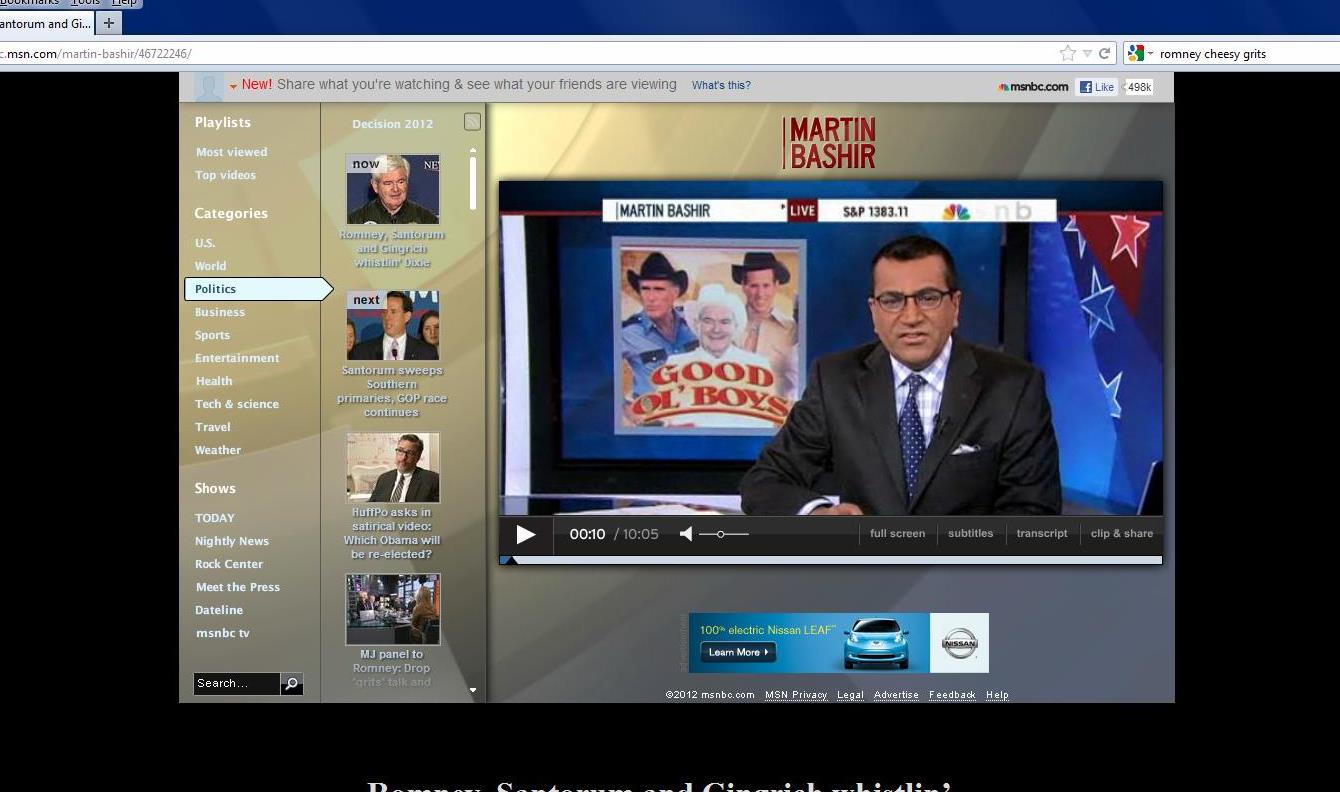
 

Republican Candidates in the South: A Confederacy of Dunces. So, too, MSNBC’s Martin Bashir & Co.

Oh, for goodness sake!  The Republican candidates for president went South and the next thing you know Mitt Romney touted “cheesy grits” and practiced saying “ya’ll,” and Rick Santorum adopted a hick accent and told people “I got kin here in Mississippi.  I’m not sure. . . (don’t say “what I think about it!”). . .I’m very proud of it.”  Shew!  That was a close one.

I think that Kathleen Parker hit the nail on the head in her opinion piece in the Washington Post that southerners deserve better from their candidates.  The one thing that she missed, however, is that Santorum, Romney, and even Newt Gingrich aren’t speaking to black southerners (or Latinos who represent the fasting growing population in the South) AT ALL.

What made it worse, for me at least, was how MSNBC covered the Republican campaigns in Mississippi and Alabama–particularly Martin Bashir and company–as they chuckled their way through a discussion of the candidates.  Believe me, there is a lot to chuckle about when you hear the gems that fall from Romney’s mouth, but that shouldn’t let Bashir off the hook.  His show began with the banjo theme song from Deliverance followed by his opening statement “Oh, my goodness, it is a deep fried primary day down in Dixie.” Really? Hush yo’ mouth!  And then, between the graphic about Good Ol’ Boys (with the faces of Romney, Santorum, and Gingrich superimposed over a former Dukes of Hazzard logo), describing the Deep South as the “Cracker Barrel circuit” and then pondering what will happen “down in Faulkner country,”  Bashir did as much to perpetuate an image of the South as moonshine-swilling, varmint-eating, backward region as did the candidates themselves.   In sum, the national media is often no better than the candidates themselves in understanding the complexities of the South and the people who live here.

And this is what we are in for people, when the Democratic National Convention comes to Charlotte.  Because the media pundits, who are supposed to be “informed,”  will be looking for what makes this a southern city, and will likely miss what makes it as American as apple pie.

Panel Discussion of Dreaming of Dixie at UNC Charlotte, February 21st

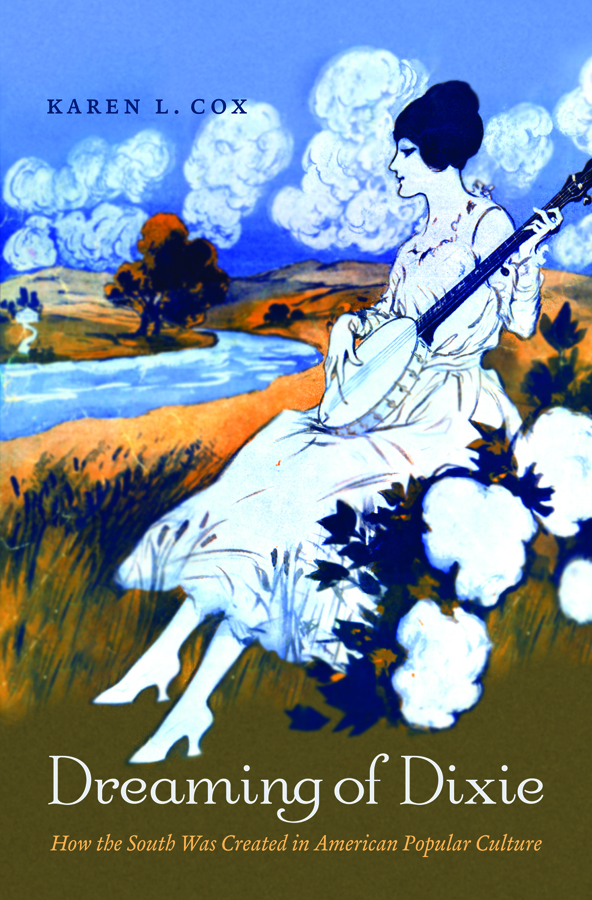
The Center for The Study of the New South will convene a panel discussion of Dreaming of Dixie: How the South Was Created in American Popular Culture, by Dr. Karen Cox, on Tuesday, February 21, 2012 at 3:30 in the Halton Reading Room, in the J. Murrey Atkins Library.

Participants will include David Goldfield (history), Richard Leeman (communication studies), Debra Smith (Africana Studies), and Mary Newsom (Urban and Regional Affairs). Sonya Ramsey (History) will serve as moderator.

This campus event will be the precursor to the Center for the Study of the New South’s annual lecture, on Tuesday, March 13, at the Levine Museum of the New South. This year’s distinguished speaker will be Dr. Cox.

What the hey, NAACP?

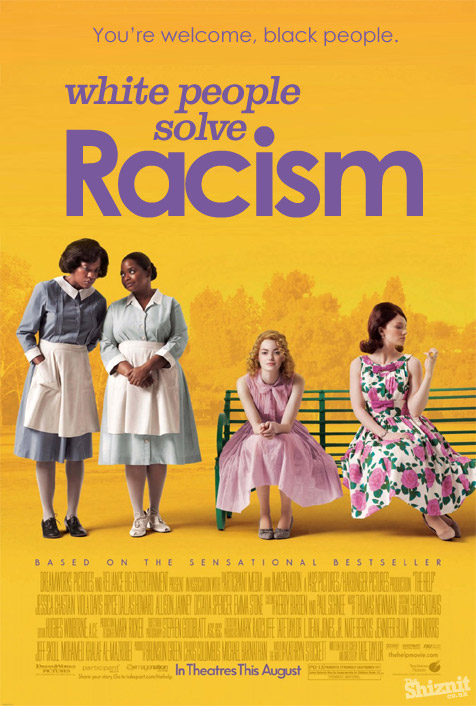
As I’ve written about before, I found the “history” reflected in the film “The Help” to be problematic on many levels.  I agreed with the Association of Black Women Historians in their criticism of the film’s message about black women in the era of Jim Crow. I also found Melissa Harris-Perry’s review of the film to be on point when she described it as “ahistorical and deeply troubling.” More recently, an alternate reading of “The Help” came in the form of this revised movie poster that bitingly states what many of us think about the film.

Then, what the hey is the NAACP thinking by nominating the film for Outstanding Motion Picture for one of its 2012 Image Awards? More importantly, why did they give Bryce Dallas Howard a nod for Outstanding Supporting Actress? Hilly? She’s not exactly a person of color (at least not in the tradition of these awards).  As the Washington Post stated, this is one of the most awkward nominations the organization made.  I can understand Viola Davis’ nomination for Outstanding Actress–even Melissa Harris-Perry recognized her talent.  Still, I agree with her that it’s a shame that Davis will probably win for playing a maid.  Hattie McDaniel, anyone?

As a historian, I often find myself combating popular media’s misrepresentations of the past in the classroom.  However, it is often an uphill battle and the success of films like “The Help,” make it even more difficult.  So, like my cohorts in the profession, I plod along and try to educate my students by having them read some honest-to-goodness history.  I only wish filmmakers would do the same.  It’s not as if the historical truth doesn’t make for good drama.

Call me “Professor Swamp People”

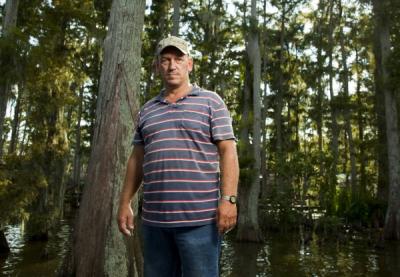
Troy Landry, one of the stars of History Channel's "Swamp People"

I was recently interviewed by Cara Bayles at the Houma Courier in Louisiana about the flood of reality television shows that are set in Louisiana.  We had a terrific talk that lasted a good half an hour, but all that ended up in the paper was a couple of sentences, which you can read here.  Just before we hung up the phone, I asked Cara “How did you find me?” to which she responded “I Googled ‘professor swamp people.'”

When I set out to write Dreaming of Dixie, I had no idea that it would lead to my becoming some “expert” on reality TV shows set in the South, although “Professor Swamp People” has a nice ring to it.  It began with the op-ed in the New York Times, which led to an interview about “hixploitation” for the Louisville Courier-Journal(KY) and similarly-related articles elsewhere.

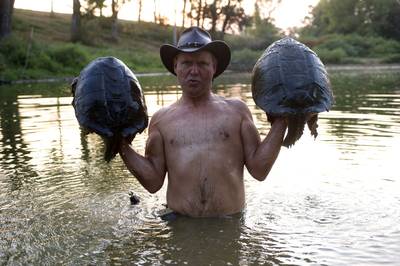
Ernie Brown, Jr. a.k.a. "Turtleman," from "Call of the Wild Man" on Animal Planet

It may seem a huge leap to go from an analysis on the impact of Gone With the Wind to that of Swamp People, but from where I sit the purveyors of popular culture have, since the early nineteenth century, simply decided to emphasize what it believes to be the South’s cultural distinctiveness–whether or not it applies to the broader region.

And yet, therein lies the problem. So often nonsoutherners (including seasoned journalists) who don’t know the region’s history and have not spent time in the South, will often buy into those differences they find in popular culture. And as long as they do, I will continue to answer to the name “Professor Swamp People” when called.  Choot’em!!

Occupy South Carolina? Yes. Republican debaters beware!

South Carolina is one of the most conservative states in the nation, a place where Republican presidential candidates are often assured of a supportive crowd.  So, when Michele Bachmann took to the stage to give a foreign policy speech aboard the WWII air craft carrier USS Yorktown, harbored near Charleston, South Carolina, she was taken by surprise when a group of around 30 protestors, affiliated with the Occupy Wall Street movement, shouted her down with chants of “you cater to the 1 percent!”  Instead of giving her policy speech, she was ushered off stage.  Score one for Occupy Charleston.

This was not a huge political story, but the fact that it took place in South Carolina drew significant media interest.  So often, it seems, the media delights in spreading the news of South Carolina’s political nuttiness.  To be fair, the state has often served as a wellspring of such stories in recent years.  Former governor Mark Sanford’s well-publicized affair with his Argentinian mistress, which included his weepy and weird press conference did nothing for the state’s political reputation.  Then, there was Alvin Greene, an unemployed Air Force veteran who was indicted for showing pornographic photos to a female student at the University of South Carolina, who still garnered enough votes to become the state’s Democratic nominee for the U.S. Senate.

Some in the media seem shocked that a pocket of populism (much less liberalism) exists in a state known for its conservative politics and its Tea Party governor, Nikki Haley.  The action taken by Occupy Charleston simply does not play into popular perceptions of the state; therefore, it was news that, even in South Carolina, people are taking a stand on behalf of the 99%.

This election, however, is ultimately about the economy and South Carolina is suffering.  The state’s unemployment rate is at 11% and in some areas that percentage is far higher. So, when the GOP’s presidential candidates gather tomorrow at Wofford College in Spartanburg for yet another debate, don’t be surprised if you hear from members of Occupy South Carolina and their friends in the pro-labor “Redneck Party” who are going after what they call “cheap labor” conservatives.  The Occupy Movement is alive and well in the Palmetto State. Don’t be so surprised.

“What about The Help?”

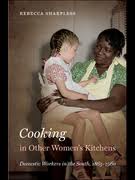
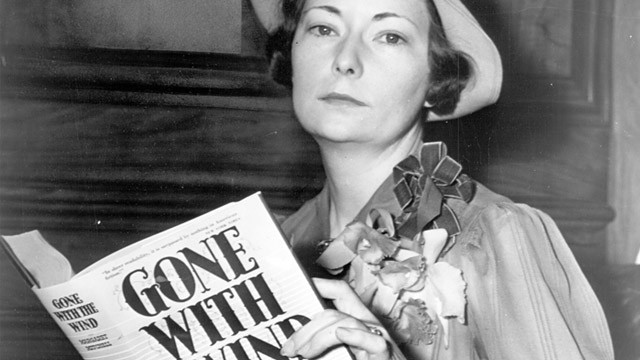
For the past several weeks, I have been traveling to promote the publication of my book Dreaming of Dixie—a study that explores representations of the South in popular culture up to World War II.  Still, even after explaining the book’s time frame, I am regularly asked “What about The Help?”  (One woman, more pointedly said “You didn’t even mention The Help!). In other words, what do I think of that book and its representations of the South?  The first time it happened, it took me off guard, because I had not read it (yes, it’s true). Instead, I was prepared to discuss the impact of Gone With the Wind.   So, I punted and happily recommended Rebecca Sharpless’s fine book Cooking in Other Women’s Kitchens and suggested they read it if they wanted a more historically accurate portrait. 

The thing about novels and movies that deal in history is that they so often get it wrong.  Gone With the Wind was a good story, and so is The Help, but let’s not kid ourselves that either makes the best history.  And yet, the success of a book like The Help means that historians will have to clear up the mistakes made in both the book and the film for a long time to come. (See, for example: An Open Statement to the fans of The Help from the Association of Black Women Historians.)

Still, I was curious as to what some readers of Stockett’s novel had to say.  As I write, there are more than 4,800 reviews of the book on Amazon.com, the majority of which are positive.  However, there are 261 readers (none who identify as historians) who gave the book less than stellar reviews.  It is clear that they, too, are concerned—not only by historical inaccuracies, but also the ways in which the book perpetuates stereotypes, specifically through the use of dialect.  As one reader put it (and very well, I might add):

“The way she presents it, the black vernacular becomes both abhorrent and belittling, particularly in that throughout most of the novel, Stockett avoided the use of the southern white vernacular when telling the story in the voice of the two main white characters, ‘Miss’ Skeeter, and ‘Miss’ Hilly.”

This particular remark seemed all too familiar to me, as I had read a similar criticism about Gone With the Wind when it was published.  In 1944, Earl Conrad, a vocal critic of Jim Crow, referred to writers who used dialect as “neo-Confederates,” because they used it to infer inferiority.  He considered Margaret Mitchell one of the worst offenders, because while she employed black dialect she never once used the nuances of language to illustrate a white southern drawl.  That book was published in 1936.  Stockett’s book—2009.

Seven decades after the publication of Gone With the Wind, it seems that a novel set in the Jim Crow South could and should move beyond the use of dialect.  As Conrad suggested, such writing “Jim Crows” African Americans by relegating them to the status of second-class citizens.

And that’s the “what” about The Help.

Nightmares about Dixie: Monsters in America…and in the American South

In honor of Halloween, I invited fellow historian Scott Poole, who teaches at the College of Charleston, to guest blog about southern horror.  In this post, we learn about pop culture’s representations of the South as a peculiar site of horror, from Deliverance to True Blood and eerie things in between.  What does a horrific South say about southern identity?  Read what Scott has to say. 

Scholars of the American South spend a great deal of time reflecting on the nature of southern distinctiveness.  An earlier generation of historians of the region labored under what C. Vann Woodward famously labeled “the burden of southern history.” A fun, if frequently reductionist, version of this scholarship turns everything from barbeque to moon pies to stock car racing into attributes of ethnicity, claims for a peculiar and allegedly charming southern essentialism.

Over the last two decades, the scholarship has, luckily, become much more complex. Southern historians take seriously the role of imagined difference and how representations of the South often reflect historical misunderstandings. Scholars have shown how frequently the region has functioned for the rest of the country as a metonym of the exotic. To quote the blogmeister herself, we understand just how much time Americans have spent “dreaming of Dixie.”

I’d like for us to ponder the macabre side of this story. Let’s think about America’s nightmares about Dixie.

Horror has always played a role in representations of the South. Abolitionist leaders rightfully described the barbaric treatment of human beings under slavery in their broadsides against the peculiar institution. They often did this by evoking the most lurid aspects of plantation life in order to, in the words of Boston abolitionist Theodore Weld, “thrill the land with horror.”

In the 20th century, racial segregation, uneven and makeshift economic development and the sometimes adversarial relationship of southern traditionalists with modernity helped create new monster traditions.  In pop and folk culture, “the hillbilly” and “the redneck” became images of horror. The gothic south of decaying ancestral lineages and the lurid south of tobacco roads meet somewhere along these borders of the monstrous and the terrifying.

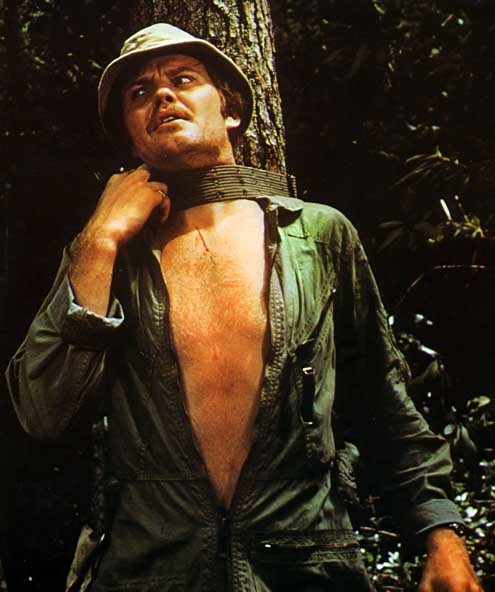
Jon Voight in "Deliverance" (1972)

In American films from the 1970s forward, this the portrayal of the South as the trackless region of horrors, the place off the highway where civilization meets savagery, became common. This view of the South has two dark fathers, Texas Chainsaw Massacre and Deliverance.

These are both important aesthetic documents with more to say than simply “beware the hicks.” Indeed, both are deeply subversive documents. Hooper’s TCM launches a full-frontal assault on any romanticisms of the American past, turning the frontier cabin into, literally, a slaughterhouse where counter-cultural teens must face the horrific violence of the past. This is the horrific South as horrific America, Daniel Boone come back as cannibal, the true and secret history of American violence that southern violence both reflects and symbolizes.

Deliverance calls into question the relationship between modernity and traditionalism in the South while also critiquing various kinds of southern notions of masculinity. Burt Reynolds, for example, exhibits an interesting variant of southern gender identity, the suburban “hell of a fella” (to borrow and rephrase the W.J. Cash template). He’s the original NASCAR dad but one with more authenticity than camo can provide.

And yet he becomes for our unlucky wilderness travelers a guide into hell. He preaches a gospel of deliverance in the wilderness and finds instead an Appalachia facing encroaching modernity with one last rebel yell.  Deliverance ironically becomes a new version of the Puritan captivity narrative, “the errand into the wilderness” gone horribly wrong.

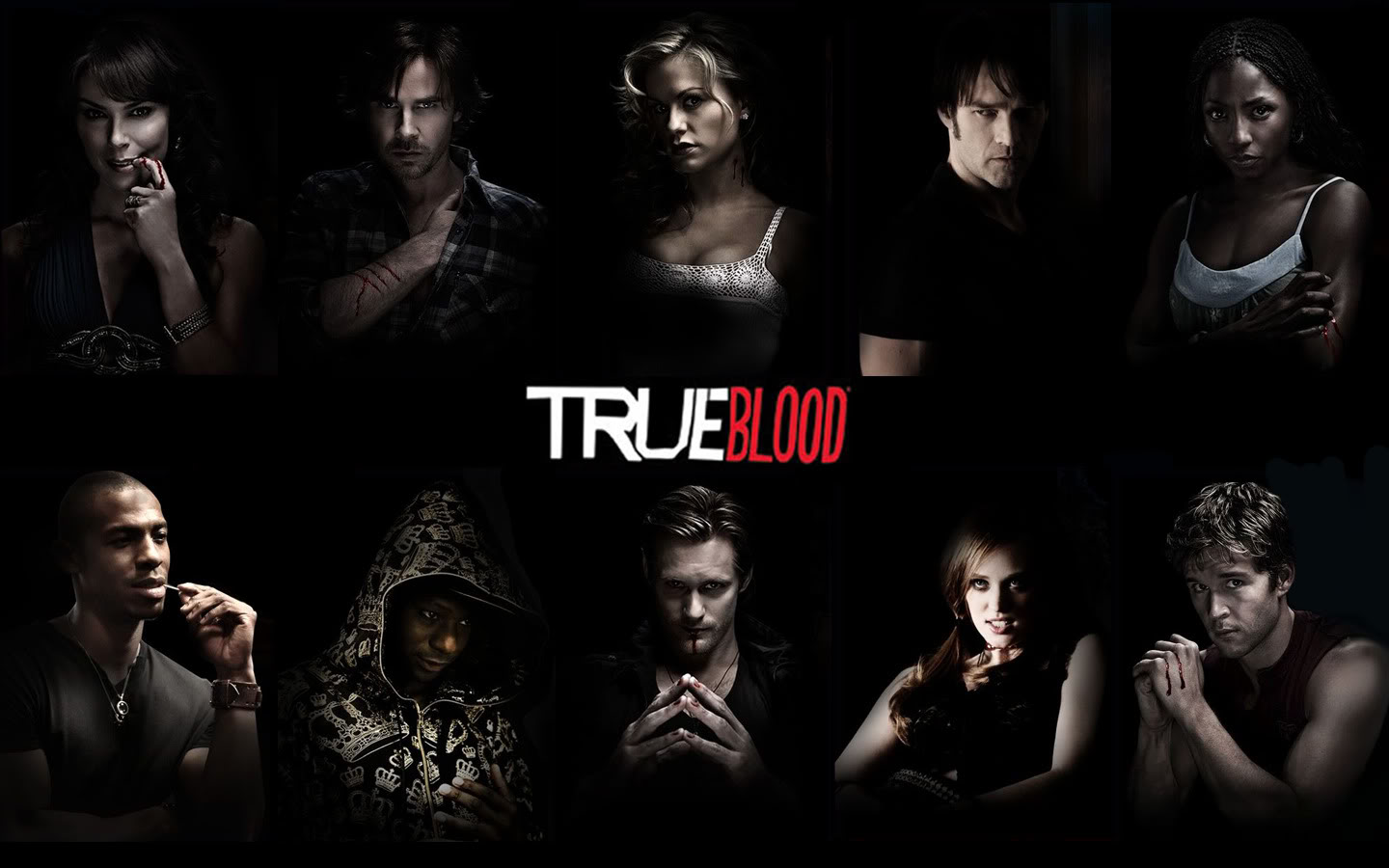
HBO’s True Blood has borrowed certain aspects of this tradition of backwoods grotesquerie. For many of us, a favorite part of the show is the opening montage of deep-fried southern religion in black and white mingled with images of southern sexuality that include stereotyped representations of the proletarian south. It’s a set of images that writers as diverse as Faulkner, Erskine Caldwell, Harry Crews and Ron Rash would recognize and could have narrated. It’s a south that wants to do bad things with you—and to you.

I praise Alan Ball and True Blood pretty highly in Monsters in America. Despite what some see as its egregious use of camp and schlock, I see the show as an important moment in the American monster mythos. Locating the vampire mythos in the heart of the South Americanizes the vampire mythology, indeed bundles it up with the rich and textured regional mythologies about identity and gender.

Its also important to remember that the AMC series The Walking Dead features the zombie apocalypse played out on a ruined southern landscape. Anything especially southern about those zombies? Not really. But Rick Grimes is every inch the post-civil rights image of the southern sheriff, a combination of toughness and western-film influenced masculinity.

It’s also a show that has established itself as a southern apocalyptic landscape by introducing race and racism as a continuing facet of post-zombie southern experience. In what we have seen of the second season, the religious aesthetic of the South has even made an appearance, an idea I’d love to see the show explore more thoroughly (and with a bit more research…Southern Baptist churches usually don’t have a gigantic crucifix like you might find in a Catholic parish).

These pop culture representations of southern horror raise lots of questions about southern identity, southern representation and southern terror. I hope that southern scholars will investigate the haunted and the monstrous south more thoroughly in their work on popular culture and folk belief.

W. Scott Poole is the author of Monsters in America: Our Historical Obsession with the Hideous and the Haunting (Baylor University Press, 2011)Follow Scott as he haunts America on Twitter @monstersamerica.

Historians on ‘The Help’: Vanessa May and Rebecca Sharpless Respond

Historians on ‘The Help’: Vanessa May and Rebecca Sharpless Respond.

So many people ask me questions about The Help (both the book and the film version), that I thought it would be better to let some historians, whose research can shed light on the subject, offer you a little context. Click on the link above.  Editor, Pop South

Ben Bernanke–South of the Border

Pedro
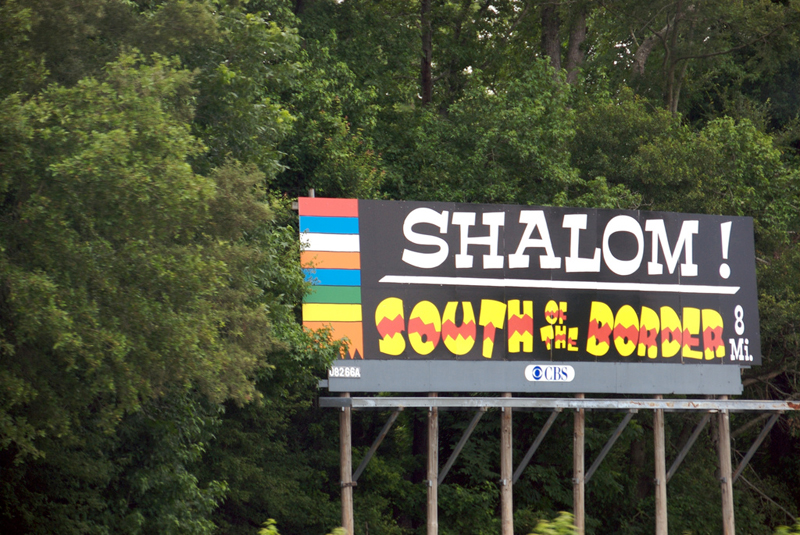
If you’ve ever traveled on I-95 and made it to Dillon, South Carolina, then you most certainly have noticed (and how could you not?) South of the Border and its steady stream of neon painted billboards with “Pedro,” the sombrero wearing icon, trying to draw you in to the roadside attraction to eat a hot tamale or take your kids to “Pedroland.”

South of the Border, owned and operated for years by Alan Schafer, began as the South of the Border Beer Depot.  According to Nicole King, a professor at the University of Maryland-Baltimore County who has written about the creation of what is known as “S.O.B.”, Alan and his father Samuel had a successful beer distribution company and because they were Jews, could avoid the cultural stigma associated with beer sales that Baptists and other religious conservatives could not. Over the years, especially after the passage of the Interstate Highway Act of 1956, South of the Border grew from beer depot into a souvenir shop to catch the traffic now going up and down I-95.(See King’s article “Behind the Sombrero: Identity and Power at South of the Border, 1949-2001,” in Dixie Emporium: Tourism, Foodways, and Consumerism in the American South, edited by Anthony Stanonis).

Chairman Ben Bernanke

What you might not know and what I learned recently through a fellow historian and Facebook friend is that our current Federal Reserve chairman, Ben Bernanke, worked as a waiter one summer at South of the Border.  This must certainly be a feather in his sombrero and should have brought him more respect from Republican presidential candidate Rick Perry, who accused his fellow southerner of “treason.”  That’s right.  Fellow southerner.  Bernanke didn’t just work at S.O.B., he is originally from Dillon, South Carolina.  Take that, Senor Perry.

Alan Schafer

South of the Border is complex, just as complex as Alan Schafer, who died in 2001.  As King explains, the roadside attraction “memorializes the African American experience by selling ‘authentic souvenirs’ from Africa in a Mexican-themed tourist spot created by a progressive Jewish man in the predominantly Anglo, conservative, and Protestant American South.”  And that’s just for starters.

All this is to say S.O.B. is a fascinating place.  And it just became more fascinating to me, now that I know that Ben Bernanke, the man who can make economic markets go up or down whenever he speaks, once worked under the big sombrero.