I watch a lot of reality television and am always on the lookout for new southern-based reality shows, but one I liked almost right away was Billy the Exterminator. The show, which is set in Louisiana, follows Billy and his brother Ricky (with help from his parents Donnie and Bill, Sr.) whose company Vexcon is set up to help people get rid of snakes, wasps, cockroaches, and raccoons, among other critters that have invaded their homes. Billy, the show’s star, does his work while wearing all black (in the Louisiana heat and humidity) spiked wristbands, very often a hat, and his trademark thin sunglasses. He’s a bit wild man, and a bit rock ‘n’ roll.
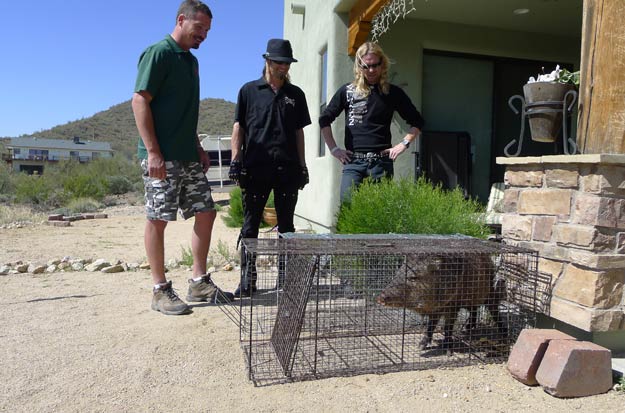
Billy and Ricky in Arizona with captured Javelina
This season the producers have taken Billy on the road to assist people in catching vermin in other states–Texas, Florida, and even Arizona, but I’m not so sure that Billy the Exterminator on the road is such a good idea. Some people might like to see him try his hand at catching a Javelina (which looks like a miniature wild boar) in the Arizona desert, but something about that episode didn’t resonate with me. While Billy is certainly the star of the show, in some ways so is the State of Louisiana. Louisiana is like another of the show’s characters. Having Billy and Ricky work in the desert may have seemed like a good idea to the producers, but he looks out of place and the show’s chemistry seems off.
I don’t think the producers should mess with what is clearly a successful formula. They might be able to take Billy out of Louisiana, but you can’t take Louisiana out of the show. That’s just not right.
On a recent vacation to Lake Lure, North Carolina, I drove over to the small town of Chimney Rock where people can hike to Hickory Nut Falls, grab a bite to eat, do a little gem mining, and perhaps stop in a souvenir shop to buy mementos of their trip. I didn’t necessarily want a souvenir, but given the heat and humidity it made sense to duck into a few of the shops to cool off and to see what was for sale.
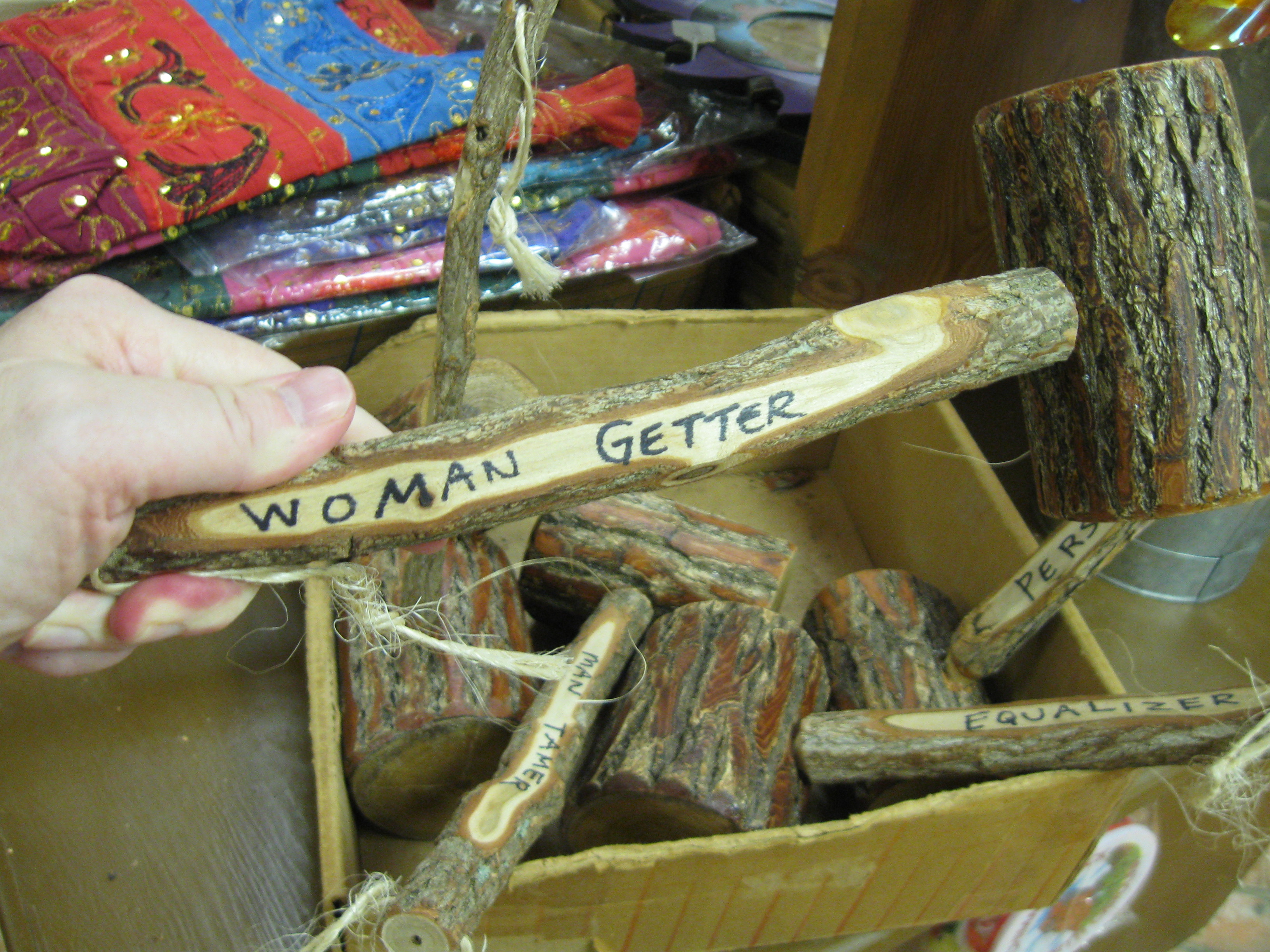
The "Woman Getter" a.k.a. the "Persuader," a.k.a. the "Man Tamer"
And boy was I in for a treat. In addition to some of the ridiculous hillbilly items being sold (note photo of the “Woman Getter” a.k.a. the “Persuader,” a.k.a. the “Man Tamer”), Confederate tchotkes were everywhere and not just in one store.
This, of course, is surprising since the mountain South is not known for loyal Confederates. Tourists who follow the signs along North Carolina’s Civil War Discovery Trail near Hickory Nut Gorge learn not about staunch Confederates, but about Union General George Stoneman’s raiders and his order to Colonel William Palmer to join in the pursuit to capture Confederate President Jefferson Davis, whose flight from Richmond had entered North Carolina in late April 1865.
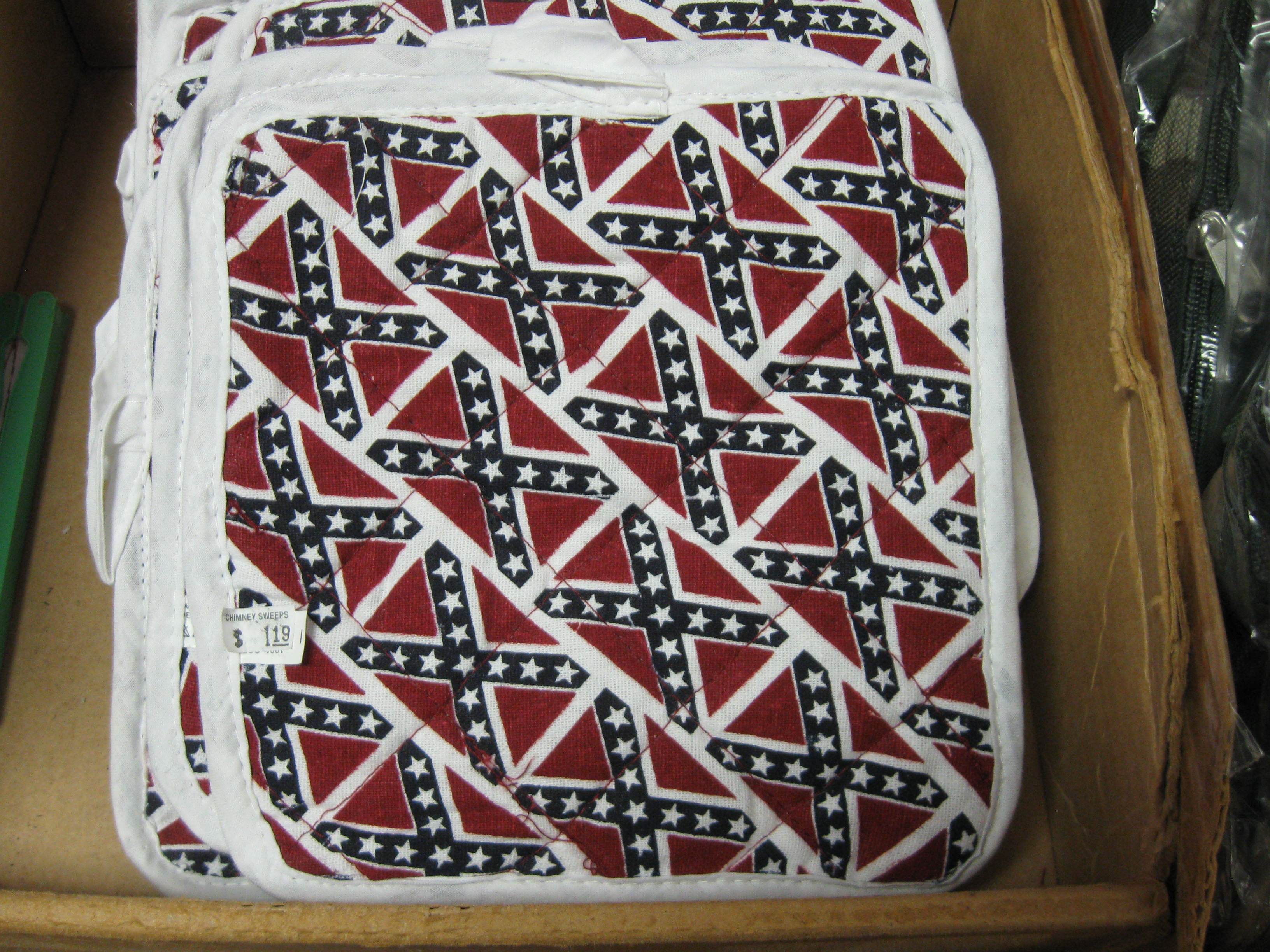
Rebel Potholders
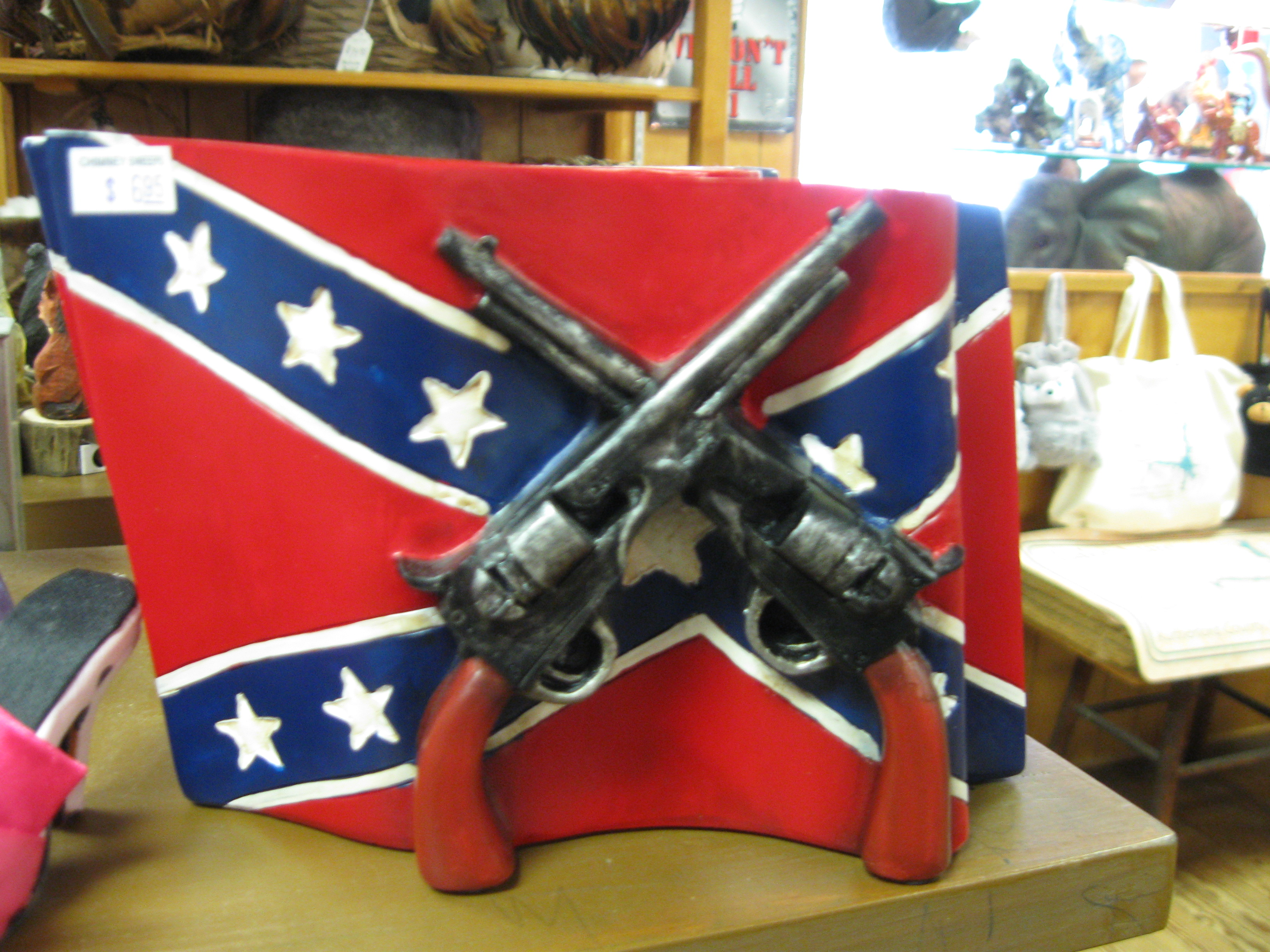
Well, in the same store that carried the “Woman Getter” there were items emblazoned with the Confederate battle flag ranging from a pot holder, useful for Rebel-hot recipes from the Confederate Cookbook, to bookends with three-dimensional pistols attached to protect your copies of Southern By the Grace of God or When the South was Southern.
Battlin' Bookends
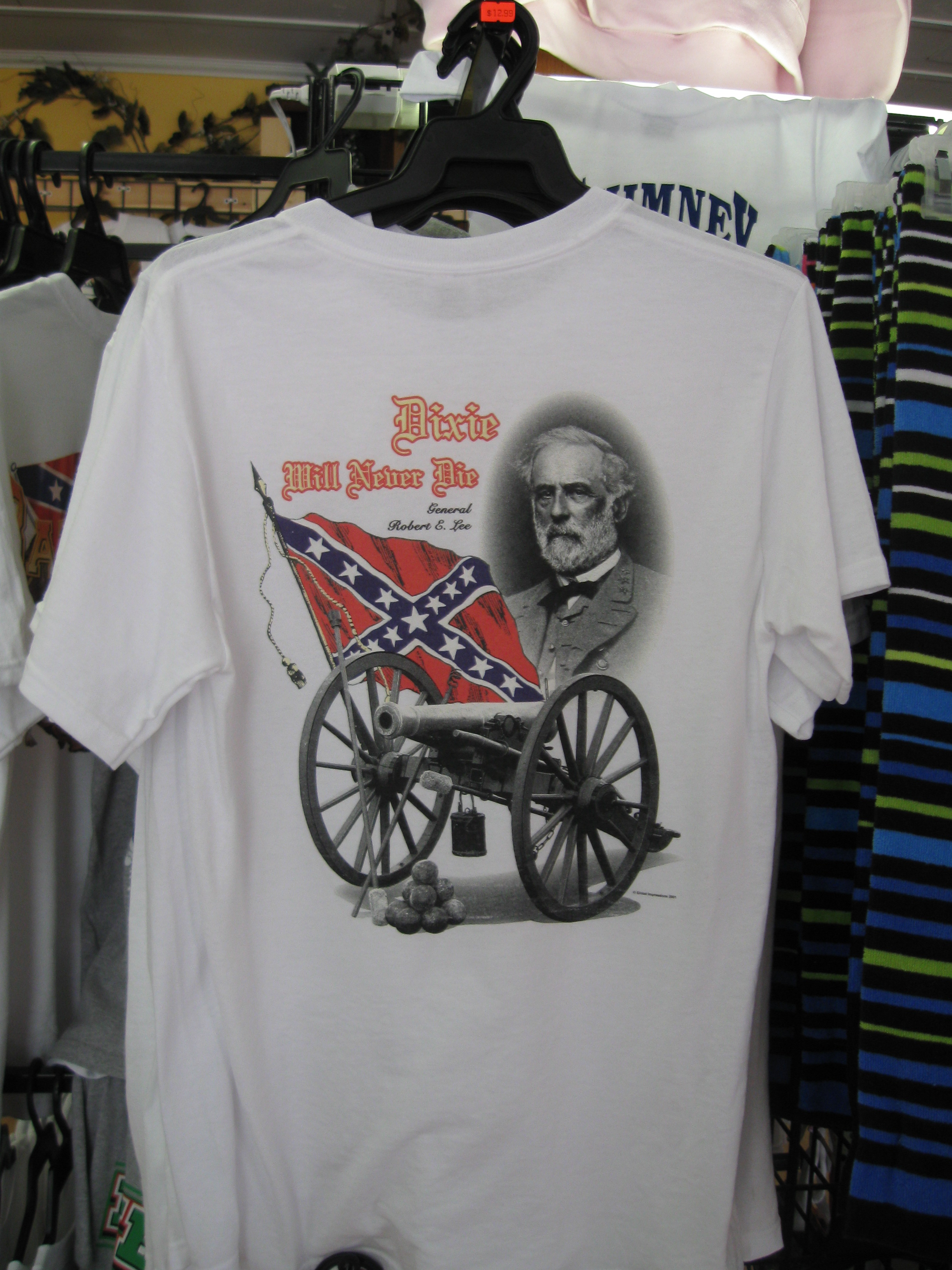
In a second store where I sought a reprieve from the heat there was an enormous selection of t-shirts from Dixie Outfitters—a merchandiser that offers a wide array of items displaying messages of “pride in the Southern way of life.” Perhaps you’ve seen them. Using images of Confederate soldiers, Robert E. Lee, and yes, the Confederate battle flag, the shirts practically scream that the Civil War is still alive and well in the hearts and minds of some southerners (those who would buy these shirts).
"Dixie Will Never Die"
On one, with an image of Lee, the slogan reads “Dixie Will Never Die,” and another for the “Southern Girl” tells you that among her many qualities are “Boot Scootin’,” “Handgun Packin’,” “Pickup Drivin’,” and “Bass Fishin’.” Of course, she wouldn’t be complete without also being a “Belle of the Ball.”
While I’m a historian, I must be part sociologist. The historian in me understood that the history of this area of North Carolina ran counter to the sale of such pro-Confederate souvenirs. Yet the sociologist in me could not help but notice that this store was owned by two immigrants, living the American Dream. The couple, a Hispanic man and his wife, who I guessed to be from Eastern Europe, were the proprietors of the store. When I asked her why they were selling all of these pro-Southern t-shirts she responded vehemently “I am from southern!” She couldn’t have known I asked out of curiosity and perhaps thought I was challenging her in some way. Thinking on it, I wondered if she indeed had been challenged about it before. Maybe by some of those present-day Confederate sympathizers (a.k.a. “Neo-Confederates) who, let’s face it, are very likely to be anti-immigrant in their thinking.
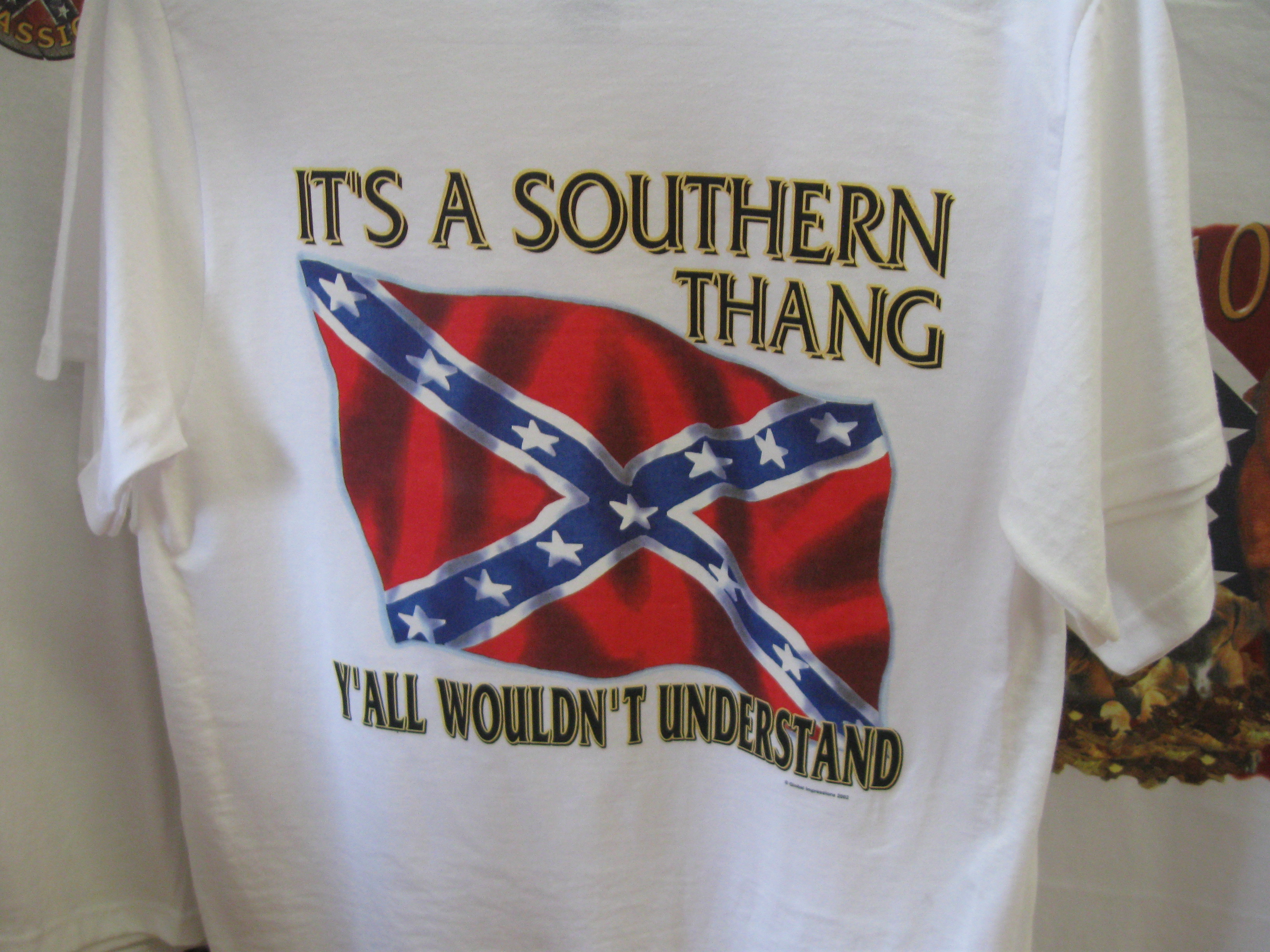
A "Southern Thang?"
I wanted to write this piece in an effort to unravel the complexities of what I was experiencing there in the little town of Chimney Rock: the Confederate souvenirs in what, historically, was not so Confederate. The immigrants selling shirts emblazoned with “It’s a Southern Thang, Ya’ll Wouldn’t Understand,” a slogan that is clearly a ripoff of “It’s a Black Thing, You Wouldn’t Understand.” So, I turned to Winston Churchill. Yes, Churchill.
Speaking about Russia during World War II, Winston Churchill said: “I cannot forecast to you the action of Russia. It is a riddle, wrapped in a mystery, inside an enigma; but perhaps there is a key. That key is Russian national interest.” I felt very similarly about my experience—that what is going on in Chimney Rock and in similar tourist attractions around the South is a riddle, wrapped in a mystery, inside an enigma, but perhaps there is a key. That key is capitalism.
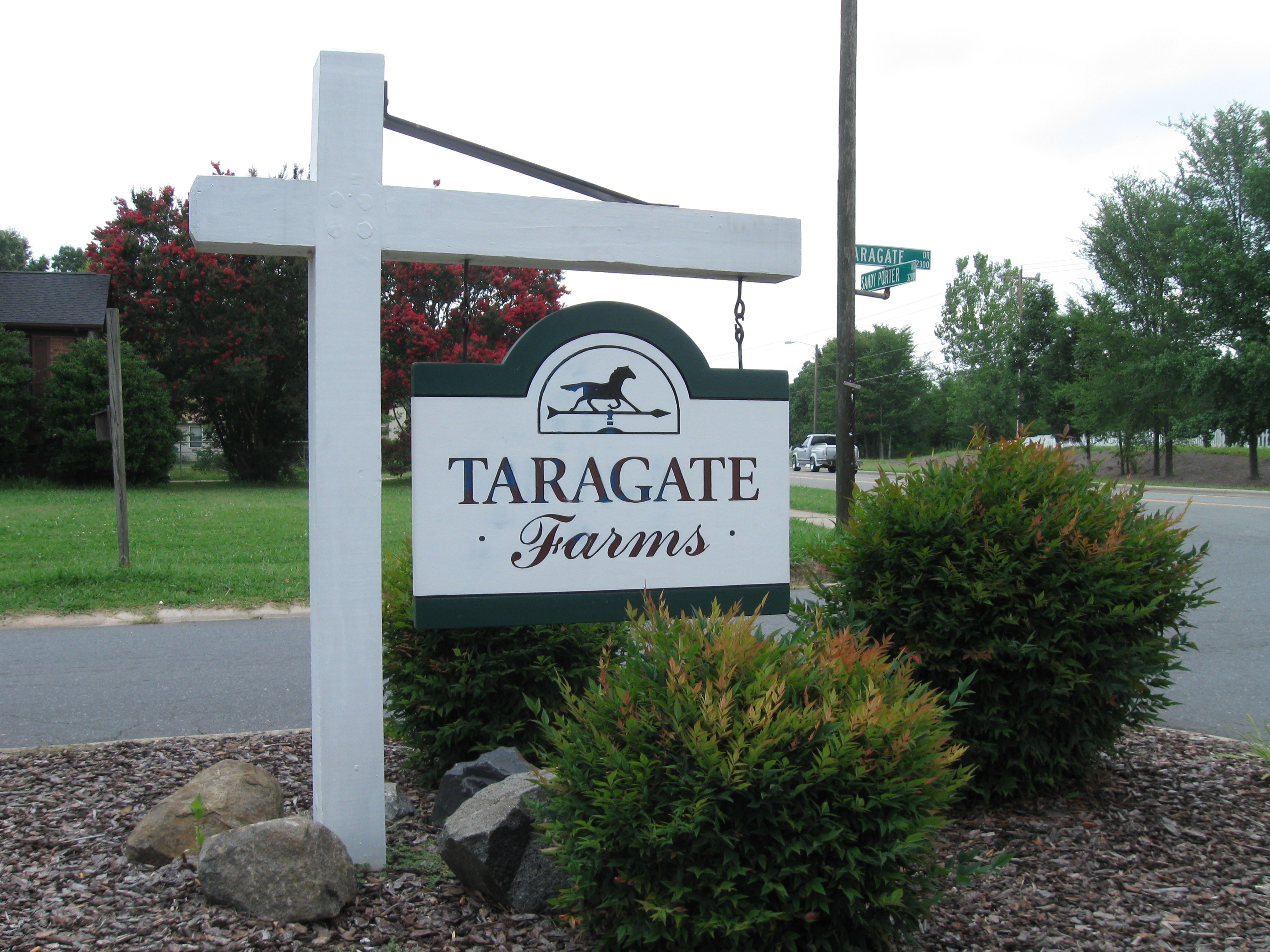
If you were to drive south on I-77 and exit onto Arrowood Road in Charlotte, North Carolina, you would eventually run across a development called “Taragate Farms.” I had no idea it existed until recently, when I was invited to have dinner at a home in the neighborhood.
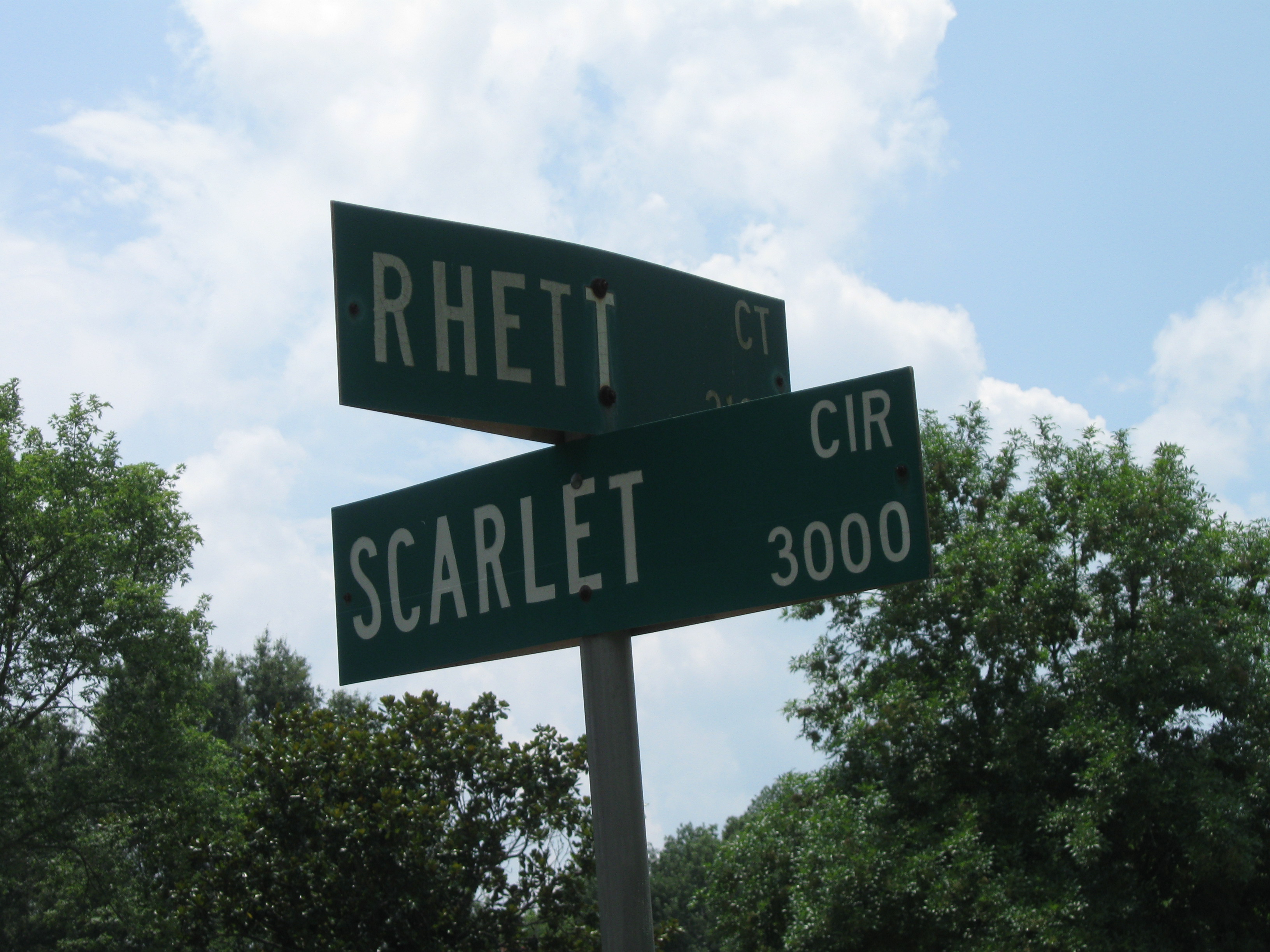
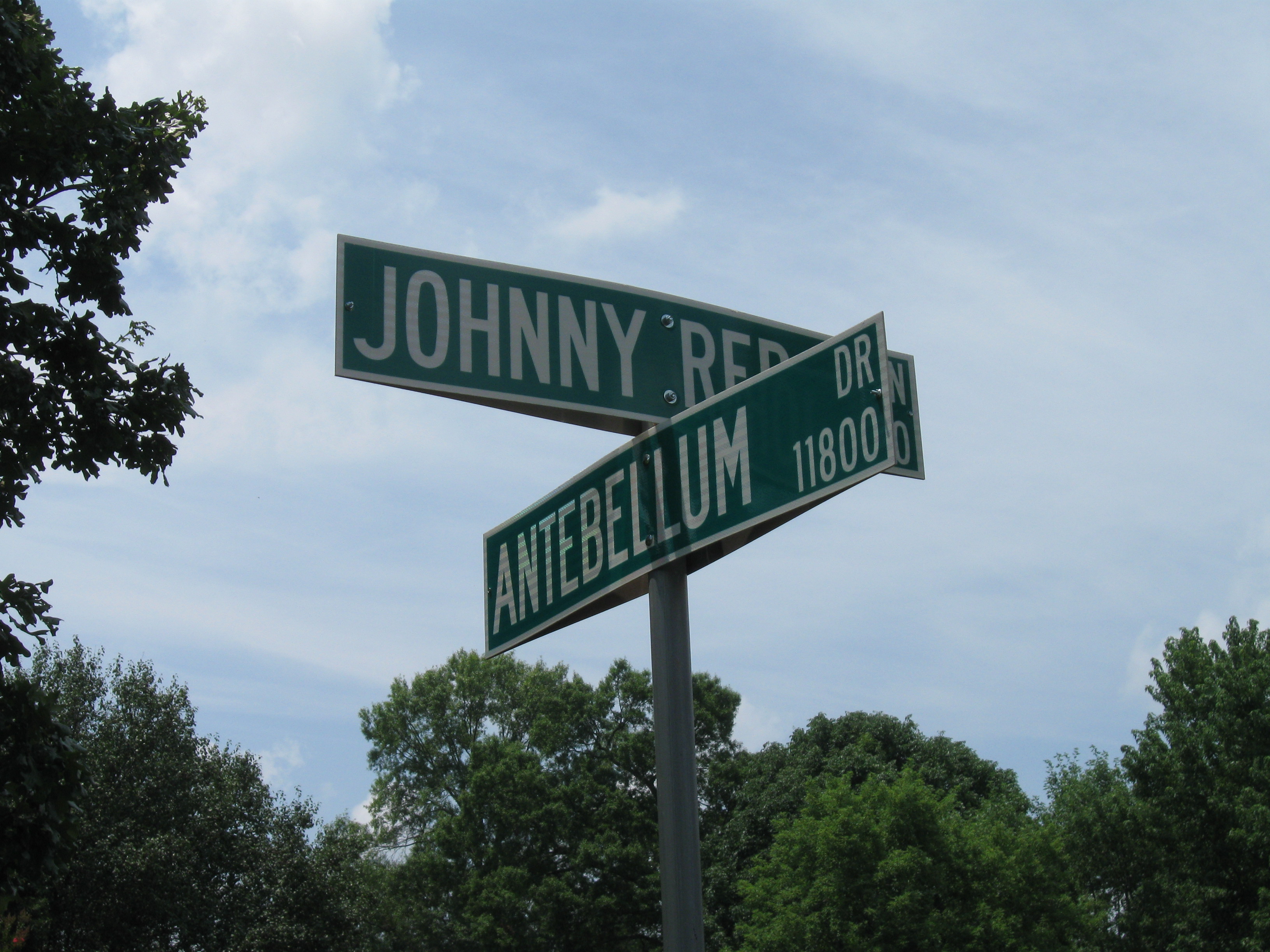
At first, I didn’t think too much about the sign that sets out in front announcing one is entering “Taragate.” However, as I followed directions on my Garmin I started noticing street names. Driving down “Scarlett Circle” my eyes were alerted to themes of Gone with the Wind and the Old South. In the same neighborhood, just off of Scarlett Circle is “Rhett Court” and “Rice Planters Road.” “Julep Lane” intersects with “Pitty Pat Court.” “Antebellum Drive” is just off of “Johnny Reb Lane,” and “Sherman Drive” (appropriately) crosses over “O’Hara Drive.”
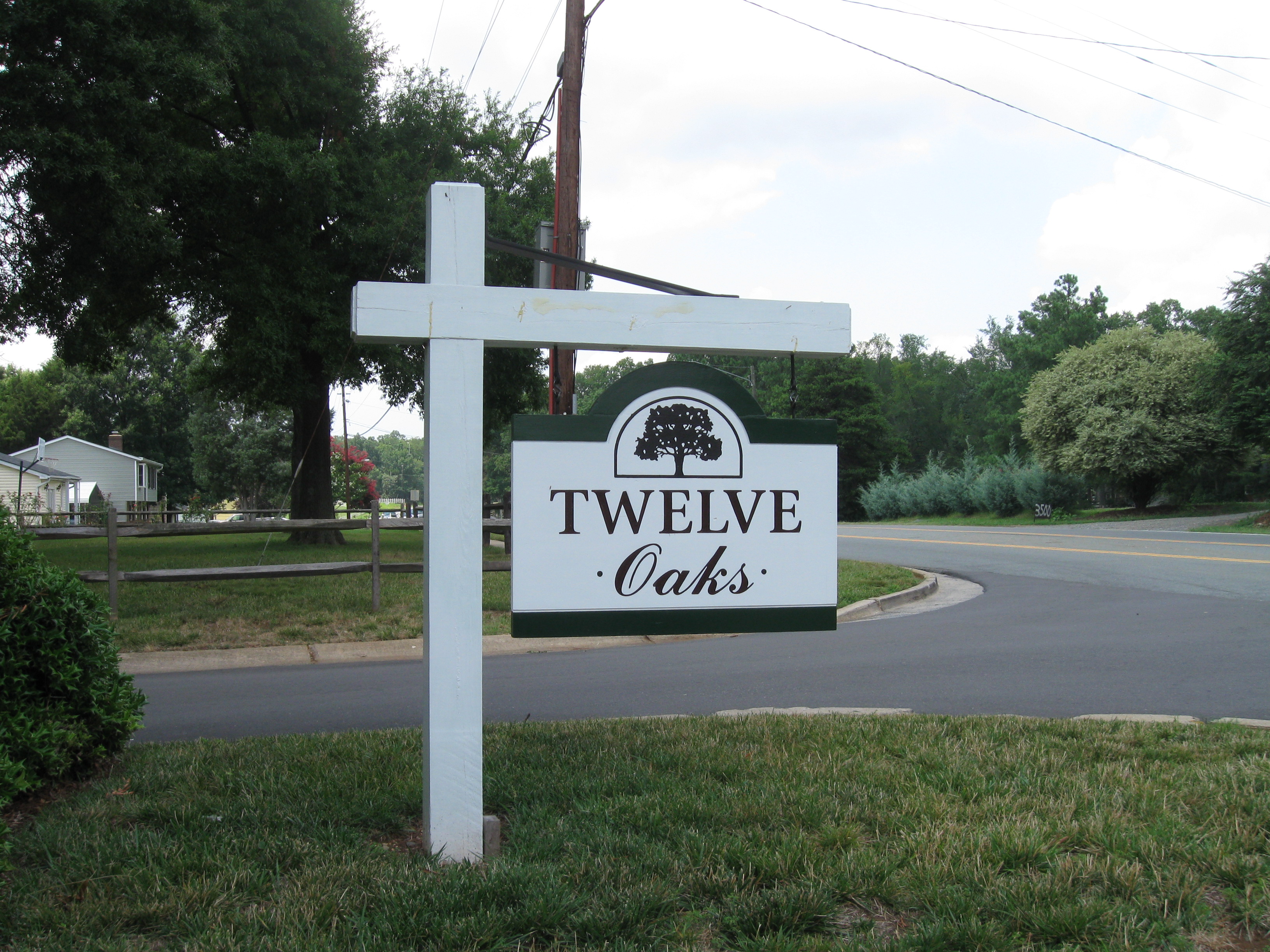
Well, of course, I had to investigate. It turns out that sometime in the 1980s, Ryan Homes created Taragate and, hold on to your hoop skirts, “Twelve Oaks”–two neighboring housing developments in an area that is so far south of the city, one might call it the Deep South of Charlotte.
I have no idea to whom they were marketing these neighborhoods twenty-five years ago, but today the residents reflect a far more diverse population than one would expect to be living in a development with attachments to the Old South or Gone with the Wind. Indeed, my dinner hosts were African American, and their neighbors were both white and Asian.
On the one hand I was impressed by the extended marketing reach of the novel and the film, such that in the 1980s developers wanted to “recreate” Tara and Twelve Oaks. Yet, I also wondered what my dinner hosts thought about it–you know, with references to plantations and all. But while I was fascinated, they seemed unfazed.
Clearly, Gone with the Wind has lost some of its relevance, despite the big 75th anniversary celebrations of the book going on this year. Today, however, neither the book nor the film does the kind of damage it once did to the progress of race relations in the United States, even though the portrayals of African Americans remain offensive. Although people around the globe will be commemorating Margaret Mitchell’s tome on the Old South in 2011, at Taragate and Twelve Oaks there will be folks wondering what the fuss is all about.

 Pop South