This weekend in Atlanta, the city “too busy to hate,” there will be a meeting of the Southern Historical Association. Men and women, professors and graduate students will attend to learn about the latest scholarship on the American South, buy the latest books in the field, and visit with old (and new) friends.
Pop South welcomes this post by Joshua Rothman, professor of history at the University of Alabama.
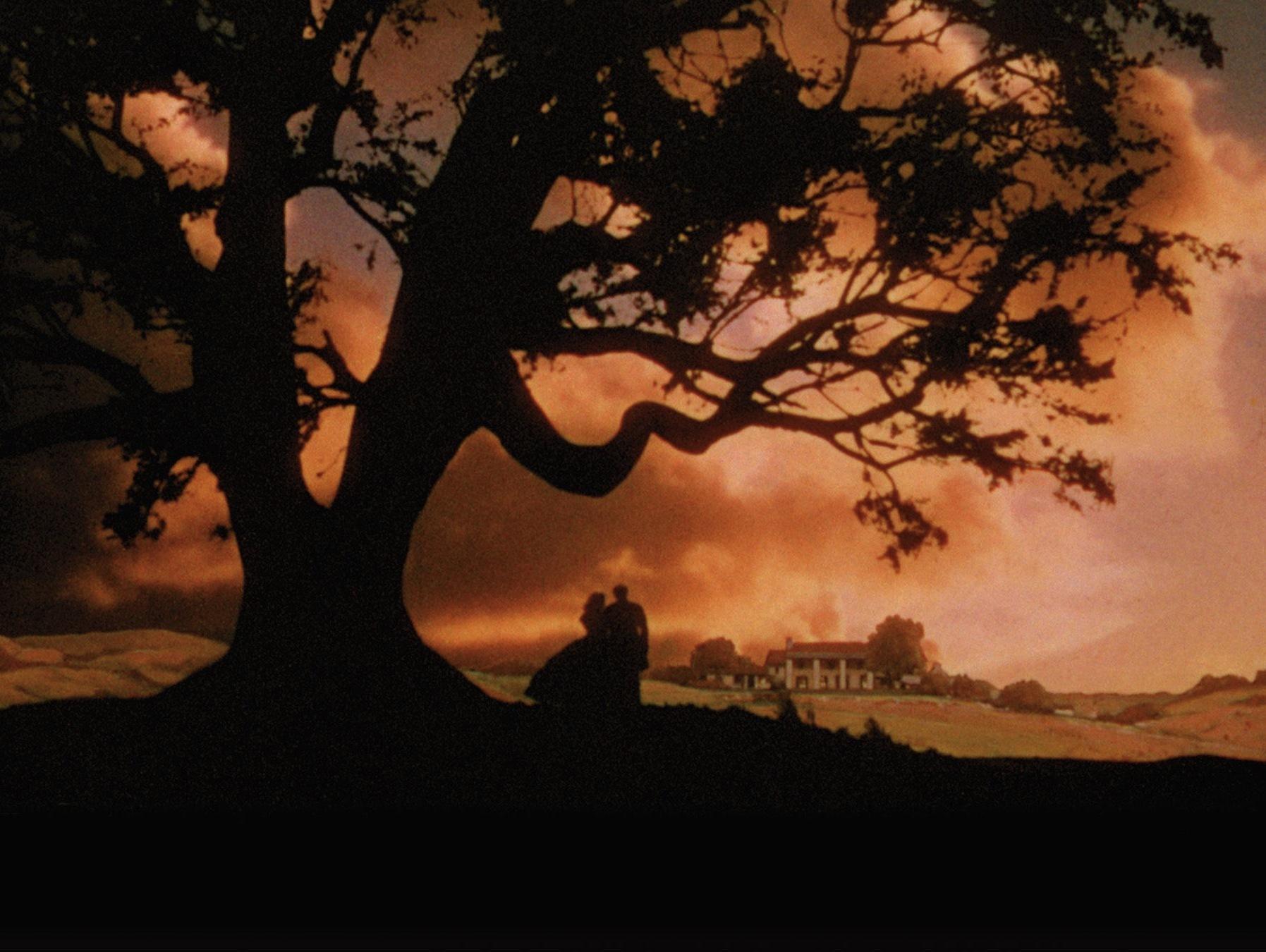
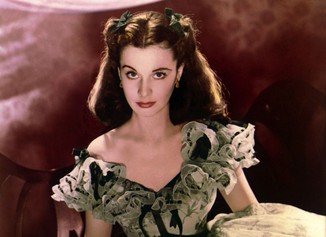
Still shot from Gone with the Wind.
Although I feel very fortunate to have a job where I actually get paid to teach courses on the American South, slavery, and memory to college students, there is one thing about being a professor of southern history that gets more grating every time I do it. Roughly once a year, I make myself (and my students) watch Gone with the Wind (GWTW). I could assign the book, of course, but the film really is the elephant in the room where American popular cultural memories of slavery reside.
Even now, seventy-five years after its release in 1939, the images of the intrepid belle Scarlett O’Hara, the embattled and torched city of Atlanta, the sympathetic scoundrel Rhett Butler, and the heartless Yankee invaders form the core of how a significant number of Americans, and particularly white Americans, imagine the South to have looked and operated during the era of the Civil War. And in my more generous moments, I concede that it’s not hard to understand why.
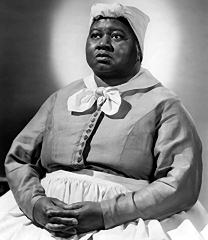
Hattie McDaniel as “Mammy” in GWTW.
The film is sweeping and epic in its scope, drenched in color, and filled with so many iconic lines of dialog, characters, and screenshots that after a while it simply washes over you. It becomes beautiful, seductive and, superficially at least, nearly immune to critical engagement. There’s just one problem, of course. The film is racist as hell. The legendary performances of Hattie McDaniel and Butterfly McQueen notwithstanding, a clear-eyed viewer recognizes GWTW as a fantastical reading of the lives of the richest people in the antebellum South that one can only believe and fall in love with by denying how the real life O’Haras collectively subjected millions of black people to cruel violence and systematic exploitation to make their lives possible.
Fiddle-dee-dee indeed.
Blake Lively
Which—and here I’m making a transition that I never thought I would make and did not actually think was possible—brings me to Blake Lively, a 27 year-old actress. I am uncertain of whether I ought to be proud or embarrassed to admit that before the other day I was not entirely sure who or what a Blake Lively was. Apparently she is in some television shows and movies that I have never seen, and she has parlayed that into running a “lifestyle” website called Preserve whose goals are things like “support[ing] the America we’ve always known, and the one we haven’t yet met.” It’s a site, in other words, that sells $80 t-shirts, $45 jars of sugar, and $325 floral teepees for children, all of which are “curated” for the consumer who doesn’t have enough overpriced and precious things in his or her life. It parodies itself, really, and is usually easy to ignore.
But this fall, Preserve proudly brings you the “Allure of Antebellum,” a fashion collection inspired by the “southern charm” and the “authenticity” of the “Southern belle.” These were the women, the website observes, who possessed “inherent social distinction [that] set the standards for style and appearance” and “epitomized Southern hospitality with a cultivation of beauty and grace, but even more with a captivating and magnetic sensibility.” Want a piece of that? Well, then, “embrace the season and the magic below the Mason-Dixon with styles as theatric as a Dixie drawl.”
The Allure of Antebellum. Photo credit: preserve.us
The problem here isn’t the clothes. Indeed, how exactly stiletto heels, triangular earrings that look strikingly like the Star Trek insignia, and a leopard print skirt evoke belles or the antebellum South is a complete mystery, though the site claims it has something to do with “artful layering,” and I regret to inform you that that skirt is currently sold out. The problem is not even necessarily that Preserve proffers fashion purportedly inspired by a historical ruling class that sat atop its world by preying upon and slowly draining the life out of those they deemed inferiors, as arguably many fashions across time and space owe themselves to similar inspirations.
The problem is that at our current historical moment, the failures of the United States to reckon effectively with its particular legacy of slavery, and its seeming determination to perpetuate elements of that legacy in its public policy a century and a half after slavery’s demise, as evidenced most alarmingly in our criminal justice system, are glaringly on display. To glom onto that legacy culturally and materially, and to sell it back to American consumers—not merely with a total lack of self-awareness but as an aspirational virtue—may be a longstanding tradition in its own right.
But it is more than in bad taste. It’s rubbing it in.
Historical sensibility does not seem to be the strong suit of Preserve, and I would venture that whoever conceived the “Allure of Antebellum” campaign and wrote its insipid ad copy had no malicious intent. But even casual ignorance and unintentional callousness deserve to be called out. It’s long past time to leave Scarlett O’Hara behind.
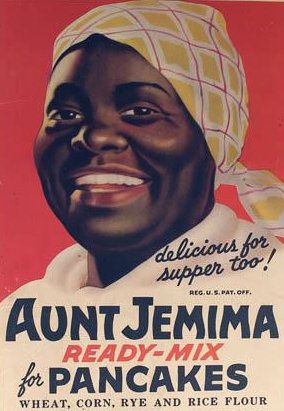
One of the most iconic advertising images of the twentieth century is Aunt Jemima, and recently the heirs of Nancy Green and Anna Harrington, just two of the women whose portraits were used as the “face” of the brand, are suing Quaker Oats for $2 billion and future revenues, claiming that not only did Green and Harrington portray Aunt Jemima, they were influential in shaping the recipe. Attorneys for Quaker Oats are saying “hold on a minute,” Aunt Jemima might be the brand, but she was “never real.”
Yes and no.
The “biography” of Aunt Jemima was the creation of the J. Walter Thompson Agency based in New York. More specifically, it was the creation of James Webb Young, a native of Covington, Kentucky. According to internal documents of the agency, the story of Aunt Jemima was that she came from Louisiana. So, yes, the story is a creation.
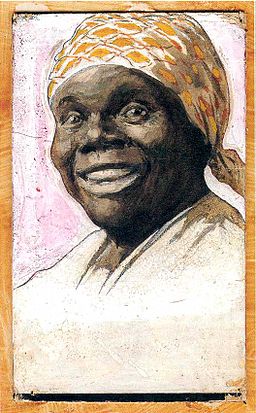
Portrait of Nancy Green by Arthur Burdette Frost.
Yet it is also true that Nancy Green, then a Chicago domestic, portrayed “Aunt Jemima” at the 1893 World’s Fair and made a career of doing so for nearly twenty years after the fair. More to the point, Green’s face was, in fact, the first image of Aunt Jemima to appear on the pancake box. The Thompson Agency hired Arthur Burdette Frost, better known for his illustrations of Uncle Remus tales, to paint Green’s portrait.
If she contributed to the recipe, we may never know, but we do know that white women often took their maids’ recipes and passed them off as their own, a tradition that even Paula Deen maintained when she co-opted recipes from Dora Charles, a black woman who had worked in Deen’s Savannah restaurant for years.
It is true that several black women portrayed Aunt Jemima at various state fairs during the early decades of the twentieth century. They greatly assisted the brand by lending an authenticity to the product as being a particularly “southern” recipe. This was in keeping with the character created by the Thompson Agency, whose story was that Aunt Jemima had been a slave and that she created the recipe that brought her such fame that it caused jealousy among other mammies.
But on radio, it was a different story. In a short program called Aunt Jemima Radio, which ran from 1930 to about 1942, she was portayed by several white women who were essentially doing a radio minstrel act. One of those women was Tess Gardella, an Italian-American actress from Wilkes-Barre, Pennsylvania. Gardella had played “Queenie” in the stage version of Show Boat, and she parlayed that experience into performing as Aunt Jemima on the radio. She also played Aunt Jemima in a film short. It is even on her gravestone.
Gardella’s gravestoneTess Gardella as Aunt Jemima, early 1930s
Tess Gardella is also interesting because she filed a lawsuit against NBC for allowing an “imposter to broadcast as ‘Aunt Jemima,’ when as a matter of fact she [Gardella] had been using that name for years on stage and air.” The actress further claimed that she had the right to use the name “by virtue of authority from the Quaker Oats Company.” She won her lawsuit and nearly $116,000 in damages.
The heirs of Nancy Green and Anna Harrington may have a difficult time in the courts because, unlike Gardella, they did not have a contract. Still, their lawsuit brings into sharp relief the ways American companies have profited by using images of African Americans to brand their products.
*Some of the ideas expressed in this post are drawn from Dreaming of Dixie: How the South was Created in American Popular Culture (UNC Press, 2011), 40-41.
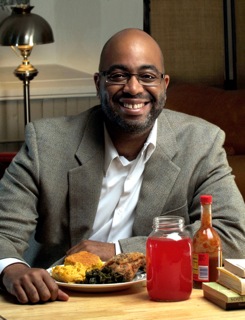
Q: You aim to explore “where Southern food ends and soul food begins.” What’s the difference between the two?
A: Inside the South, the distinctions between the two are so subtle that it almost seems meaningless. In my experience, black Southerners are just as quick to call soul food “home cooking” or “country cooking.” I found that the Southern diet, particularly after the Civil War, is demarcated more by class than race. In other words, blacks and whites of a similar socioeconomic background pretty much eat the same foods. That said, I find that soul food dishes tend to have more intensity than their counterparts in Southern cuisine. They’re sweeter, more highly spiced and tend to have a higher fat content—all the things that one would expect from a cuisine using a lot of bland starches and lesser cuts of meat. Then there are the differences in preparation. Soul food joints and home cooks tend to have more bone-in meat selections (neckbones, smothered chicken, and meaty soups) and hardcore offerings like chitlins.
Q: You’ve structured your book around the dishes that might be found in a typical soul food meal. Was it difficult to select what to include?
A: Surprisingly, it wasn’t that hard, especially after I did my national soul food tour. Once one gets out of the American South, the soul food offerings at restaurants are pretty uniform. I thought long and hard about okra. It’s such an iconic food item, but I just didn’t see it on many soul food menus in the North and West even though fried okra is popping up at many more mainstream restaurants as a standard appetizer. It’s been more challenging to tell people what makes up my representative meal. As much as I say that I endeavored to describe a general meal that a soul foodie might eat at any time and at any place in the world, they think I’m whacked because I didn’t include their family favorite. I’m sorry, but I just didn’t see a trail of smothered neckbones across the country.
Q: Who are two or three of the most important figures associated with soul food?
A: If you’re expecting me to name a famous chef or TV personality, it’s a no-go with soul food. There really isn’t a Julia Child for soul food. I’m tempted to say Edna Lewis, but she was adamant that her cooking was Southern and not soul food. There are some notable figures out of New Orleans like Leah Chase and Austin Leslie, but I think Creole cuisine is different than soul food. The only person who comes close to being a soul food icon is the recently departed Sylvia Woods of Sylvia’s Restaurant in Harlem. Thanks to her business savvy, New Yorkers and tourists from around the world have made her cooking synonymous with soul. Otherwise, soul food’s most important figures are the cooks who carried on culinary traditions by making Sunday dinner and holiday meals for their loved ones time and time again.
Q: Why are red drinks such an important component of a soul food meal?
A: Throughout our history, African Americans have made red drinks the beverage of choice for social occasions, especially big communal gatherings. There are some popular red drinks in West Africa such as bissap (known as hibiscus tea and agua de Jamaica in the U.S.), and some in the United States such as red lemonade and red soda pop. In present times, it’s hard to imagine a soul food meal without a red drink, whether it be a powdered drink, a punch, or a carbonated beverage. Walk into any soul food joint or fast food place with a primarily black clientele and you’re going to get offered a red drink. I know this is controversial, but I think that red Kool-Aid is soul food’s official drink.
Q: Are you optimistic about soul food’s future—both among home cooks and as a chef-driven cuisine?
A: I am optimistic! There’s so much interest in food now. I know a lot of people who are into watching cooking shows on television even though they will never actually cook. What’s gratifying is that more and more people are in search of and eager to explore bizarre foods, comfort foods, healthy foods, regional foods, unusual foods, and vintage foods. Soul food has all of those elements! I think this interest will move people to cooking instead of just watching TV and visiting a restaurant. The irony is that unless soul food’s stigma can be mitigated, culinary adventurers of all types may end up discovering more about what soul food has to offer than African Americans.
(Interview courtesy of Adrian Miller, author of Soul Food: The Surprising Story of an American Cuisine, One Plate at a Time, University of North Carolina Press, Fall 2013.)
During the 1970s, The Dukes of Hazzard was one of the most popular shows on American television, and while Bo and Luke Duke (played by John Schneider and Tom Wopat, respectively) were technically the stars of the show, the real star was their car. The 1969 orange Dodge Charger sped through the back roads of Georgia, leaping over hay bales, creeks, or other cars, nearly always getting “the boys” out of a jam. It was one of the most iconic vehicles ever to hit the small screen and its name was “the General Lee,” a nod to the most beloved of white Southern heroes, Robert E. Lee. And emblazoned on the roof was a large Confederate battle flag.
Well, no more.
In a new commercial for Autotrader.com, the “Duke boys” are back and so is their car. They are driving the hell out of that Dodge Charger to escape “the law,” but the car can’t seem to outrun these new police vehicles, so Luke pulls out his phone to search for a newer, faster, car on Autotrader.com.
But something is obviously missing. The “General Lee” has been stripped of its battle flag–at least the camera doesn’t allow you to see it. And the commercial lets us know that Autotrader ad execs also know that even while they wanted to use such an iconic car to advertise their business, that flag is a divisive symbol.
Who is their target audience for this commercial? According to an article on Bulldog Reporter, a website for public relations professionals, the commercial uses nostalgia to draw in people who, when they were kids, were tuned into The Dukes of Hazzard. I get that. They are also targeting consumers who like muscle cars. I get that, too. Yet, the article says nothing about the absence of the flag, which they’d just as soon not draw attention to.
In a separate Autotrader article, the writer tells the story of a how former NBA player, Jalen Rose, owned one of the many “General Lee” cars that exist. Rose, an African American, planned to sell the car at auction. As the article points out, he removed the flag “for obvious reasons.” It seems as though Autotrader doesn’t really want to discuss what those reasons are although, to save face, it does want you to know that at least one black man owned one of these cars.
So, we might think Autotrader was smart enough not to allow its brand to be tarnished by the battle flag, but has the company really fooled anyone?
Just as the car is associated with the television show, the battle flag is associated with the car–as well as having some unsavory historical ties to slavery and segregation. Fans of the show are unlikely to appreciate that the flag is hidden from view, while those who know its place in pop culture–and history–recognize that it’s gone missing.
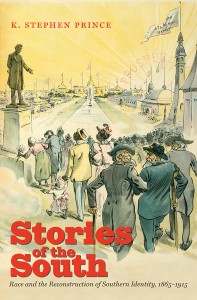
Pop South interviews Stephen Prince, Assistant Professor of History at the University of South Florida, about his new book Stories of the South: Race and the Reconstruction of Southern Identity, 1865-1915, published by UNC Press in April.
PS: The main title of your book is “Stories of the South.” Since this is a history book and not a book of literature, please tell readers of Pop South about the kind of stories your book examines.
I use the term “stories” fairly loosely. Though I do analyze literary texts, I find stories about the South in a variety of other places: congressional debates, newspaper editorials, travel narratives, speeches, sermons, visual art, popular theater, songs, promotional material, writings on the “race problem,” political cartoons, and scholarly treatises. I cast my net pretty wide in order to capture the range of sites at which people grappled with the nature of the South in the fifty years after the Civil War.
PS: The subtitle of your book is “Race and the Reconstruction of Southern Identity.” When you write about “southern identity” between the Civil War and World War I, specifically whose identity are you concerned with? Whites? Blacks? Men? Women?
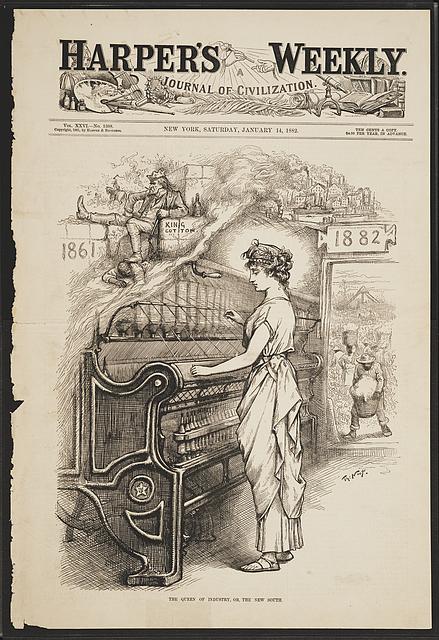
Thomas Nast’s illustration of the New South. Image courtesy of Library of Congress
The book starts from a fairly simple premise. In the aftermath of the Civil War, the meaning of the South – defined as a region, a people, a civilization – was an open question. “The South,” as it had been, had ceased to be. The question was what the region would become. Over the next fifty years, Americans – northern and southern, male and female, black and white – debated the nature of the South. I use these conversations to chart a course from the racial egalitarianism of Reconstruction to the nightmare of Jim Crow.
That said, I’m not particularly attuned to the ways that individual southerners understood their “southern-ness” on a private, personal level. I’m much more interested in popular, public discussions of the South. References to “the Southern Question” were extraordinarily common in the late 19th and early 20th centuries. Northerners played an important role in these discussions, before and after the oft-cited “end” of Reconstruction in 1877. I argue that the South was re-defined in conversation between the sections. The ability to define the South carried with it enormous political power. To tell the story of the South was to control the South.
PS: Your book relies on sources of popular culture as a way to better understand the region. What types of sources did you use and was there a consistent message among those sources regarding the American South?
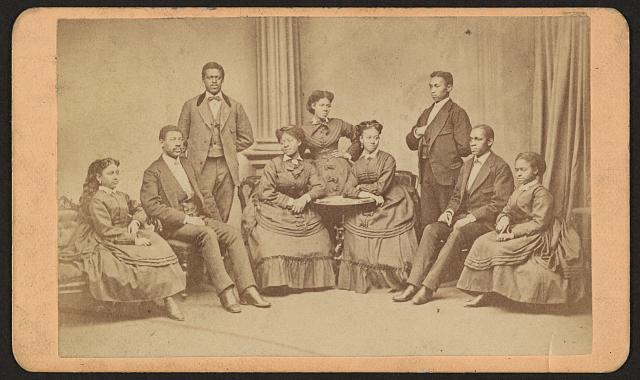
Fisk University Jubilee Singers, ca. 1871. Image courtesy of Library of Congress.
The message is definitely not consistent! Contestation and debate were the only constants. One of my goals was to bring cultural history to the study of the postwar U.S. South. Political and social history still dominate the literature on Reconstruction and its aftermath. Debates over the future of the South certainly occurred in the halls of Congress and on individual southern farms and plantations, but there was a much wider cultural universe in which the nature of the region was discussed. In order to understand the retreat from Reconstruction and the rise of Jim Crow, we need to pay attention to the larger cultural context in which political change occurred. Viewed from this perspective, a fantastic and phantasmagoric* pamphlet on the Ku Klux Klan is not just ephemera, it’s an important part of the cultural landscape in which power was won and contested. The same is true of the New South’s city boosting literature, Thomas Nelson Page’s plantation fiction, and the songs of the Fisk Jubilee Singers. Culture matters. Without understanding the stories that Americans told themselves about the South, we can’t understand the history of the South.
PS: One of your main arguments is that cultural production—particularly popular culture—is as important to understanding what shaped the South in the post-Civil War era as are political and economic changes. What role did popular culture play in shaping contemporary ideas about the South in the 19thc.?
Though I try to avoid simplistic cause-and-effect analysis, a large-scale change-over-time argument structures much of the book. In the first years of Reconstruction, northerners seized the power to re-imagine the South. By the 1880s, however, conservative white southerners had realized the significance of what we might call the cultural front in the war on Reconstruction. By the early twentieth century, northerners were largely content to defer to white southerners on matters relating to the South, particularly where race was involved. Throughout, African-Americans told their own tales of the South. In the process, they offered eloquent testimony to the power of culture and public opinion. Go read Frederick Douglass’s last speech on lynching or the cakewalk scene in Charles Chesnutt’s The Marrow of Tradition. As Douglass put it, “words are things.” The way that people described affairs in the South – the words they used, the stories they told – mattered deeply.
PS: Last, but not least, what about your newest research project might interest readers of Pop South?
Historian Stephen Prince
I’m now writing a book about the 1900 New Orleans riot, tentatively titled The Ballad of Robert Charles: Race, Violence, and Memory in the Jim Crow South. The riot has a place in all the big books on the rise of Jim Crow, but no one has attempted a full scholarly study since William Ivy Hair’s 1976 Carnival of Fury. The violence in New Orleans started when a black man named Robert Charles shot and killed several white police officers. Over the new few days, white New Orleanians took their revenge on the city’s African American residents, killing at least five and wounding dozens more. When the authorities finally located Charles, an enormous gunfight broke out. Trapped in a second story loft, Charles shot several more white people before he was killed. The riot quickly became a national story, spawning extensive newspaper coverage and becoming the subject of Ida B. Wells-Barnett’s pamphlet Mob Rule in New Orleans. Though white and black elites did their best to eradicate the memory of Robert Charles, evidence suggests that he lived on as something of a folk hero among working-class African Americans in New Orleans and beyond.
The book’s title – The Ballad of Robert Charles – comes from a 1938 interview that folklorist Alan Lomax recorded with jazz legend and New Orleans native Jelly Roll Morton. “They had a song out on Robert Charles,” Morton recalled. “I used to know the song, but I found it was best for me to forget it. And that I did, in order to go along with the world on the peaceful side.” The ballad of Robert Charles was too explosive to remember, too dangerous to sing. Following Morton’s lead, I hope my book will be much more than a story about Jim Crow New Orleans. It will also be an exploration of memory, forgetting, historical silences, and the power of the past.
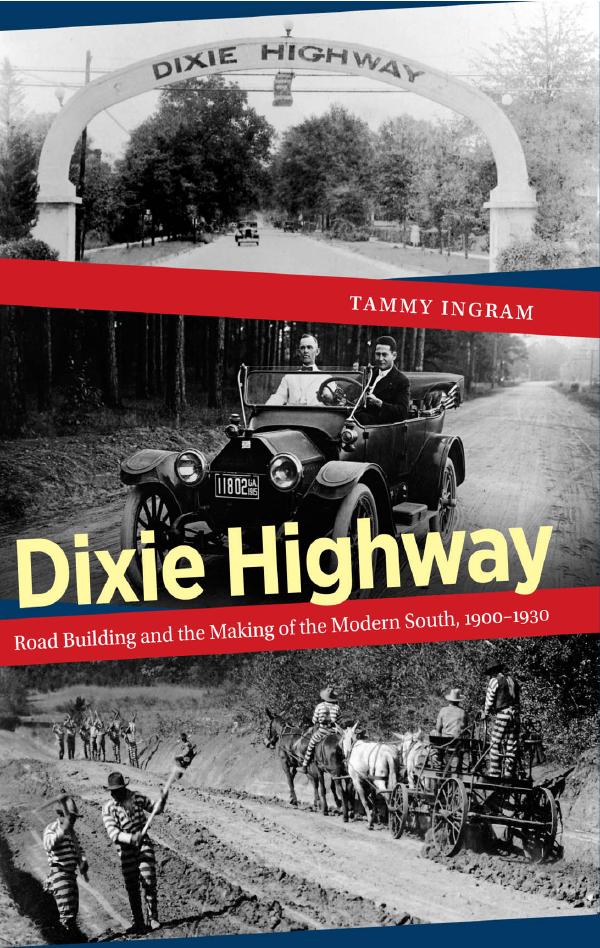
Pop South spoke with Tammy Ingram, Assistant Professor of History at the College of Charleston, a couple of months ago about her new book Dixie Highway: Road Building and the Making of the Modern South. If you’re traveling between Michigan and Miami this summer, you might actually be driving on portions of the Dixie Highway. Read about this road that connected North and South causing some to refer to it as the “Dixie Peaceway.”
PS: Briefly, what is the Dixie Highway?
“The Dixie Highway was the first modern interstate highway system in the country, and it lasted from approximately 1915 to 1925. It was originally planned as a single route between Chicago and Miami Beach, but a fierce routing competition transformed it into an ambitious and sophisticated network of nearly 6000 miles of roads looping through the Midwest and South from the Canadian border all the way to Miami Beach.”
PS: How did the Dixie Highway change the South?
“The obvious ways that the Dixie Highway changed the South were economic: It gave farmers easier and more flexible marketing options for their crops, allowed rural southerners access to larger towns and cities, facilitated the Great Migration of rural African Americans, and opened up the South to new tourist-related businesses. It changed the ways in which people moved around in the South. Before the Dixie Highway, roads were entirely local in both scope and governance. But the Dixie Highway challenged that model by making automobile travel an alternative to railroads for long distance trade and travel. In doing so, the Dixie also transformed southern—and national—politics by centralizing control over massive public works projects. During the brief lifespan of the Dixie Highway, road building shifted from the jurisdiction of local authorities into the hands of state and federal bureaucrats who wielded tremendous political power and controlled massive budgets.”
PS: Since this is a blog on the South in pop culture, can you tell us about the ways that the DH entered into American popular culture?
The DH also made it into popular song. Image credit: IN Harmony Sheet Music Collection, Indiana University
“Although many people have never heard of the Dixie Highway, a century ago it helped to create the modern automobile tourism industry. Gas stations, roadside motels, and tourist attractions were unheard of in most of the country—and certainly in the South—before the Dixie Highway, but by the mid-1920s they lined the route from Michigan to Miami Beach.
The highway also helped to turn the South itself into a destination instead of just an obstacle for wealthy northern and Midwestern tourists bound for Florida resorts. Enterprising southerners marketed everything from antebellum mansions to peach and cotton farms to automobile tourists, and northern businesses named (or in some cases, re-named) their establishments in honor of the Dixie Highway. “Dixie” motels and gas stations in Michigan, Illinois, Indiana, and Ohio were commonplace. So were songs, postcards, magazines, and road maps that advertised (and celebrated) the Dixie Highway.”
PS: As a native Georgian, how do you think being a southerner adds to your perspective on the Dixie Highway?
“I learned how to drive on narrow, rural dirt roads that were not entirely unlike those that comprised the original route of the Dixie Highway. Navigating those roads could be difficult even in the best of weather. When it rained, some of the roads were impassable. We obviously also had modern, paved roads in South Georgia by the 1980s, but we were isolated in other ways: We were among the last places to get things like cable television and even dial-up internet, and the only tourists who ever passed through town were on their way to the beaches in the Florida panhandle. When I discovered the Dixie Highway while doing research for my original dissertation topic on the Great Migration, I think I was drawn to it because the struggles rural people were facing at the turn of the twentieth century felt a little bit familiar to me.”
PS: What projects are you working on next that followers of Pop South would find interesting?
Tammy Ingram, author of a new book on the Dixie Highway. Photo credit: College of Charleston
“I’m excited about my next book project, which is tentatively titled Dixie Mafia: Sex, Race, and Organized Crime in the Sunbelt South. It covers a wide array of organized crime activities in the postwar South, but it focuses on a story that has long fascinated me: The murder of Albert Patterson in Phenix City, Alabama in 1954. Like many other small towns situated near military bases, Phenix City’s main industry in those days was vice: Mobsters made tens of millions of dollars a year on gambling and prostitution, and local law enforcement and city leaders were getting a cut of the profits in exchange for their cooperation. Patterson became a target for the mob because he ran for attorney general and promised to go after them. But they went after him, instead. It’s a fascinating story, and all the more so when you consider it within the context of the Civil Rights Movement and the Cold War.”
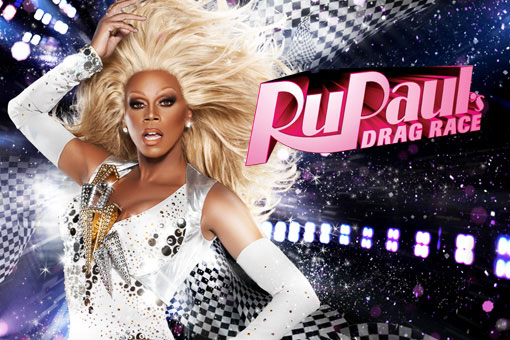
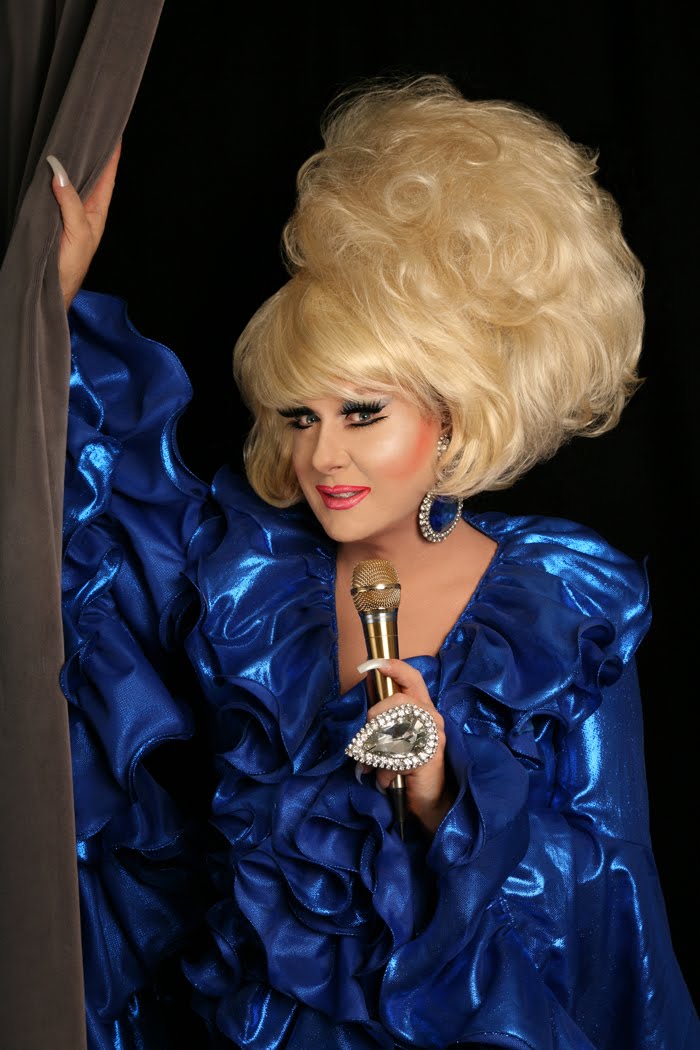
RuPaul began performing in Atlanta, GeorgiaLady Bunny’s southern roots are in Tennessee
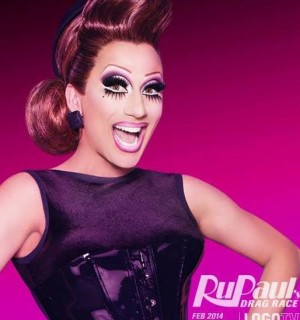
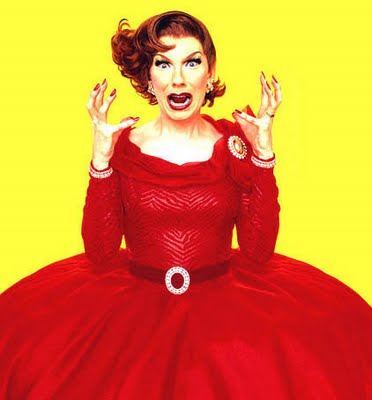
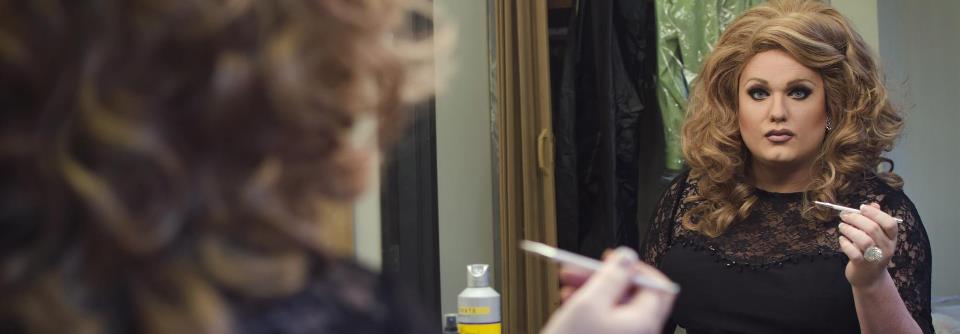
I enjoy a good drag performance and southern queens are among the best. Some of the best-known drag performers in the U.S. are from the South. RuPaul (Atlanta, GA), Lady Bunny (Chattanooga, TN), and Lypsinka (Hazlehurst, MS) hold celebrity status in the world of drag. RuPaul achieved superstar status in the mid-1990s with his hit song “Supermodel (of the World)” and a short-lived talk show on VH1. He is once again riding high with RuPaul’s Drag Race.
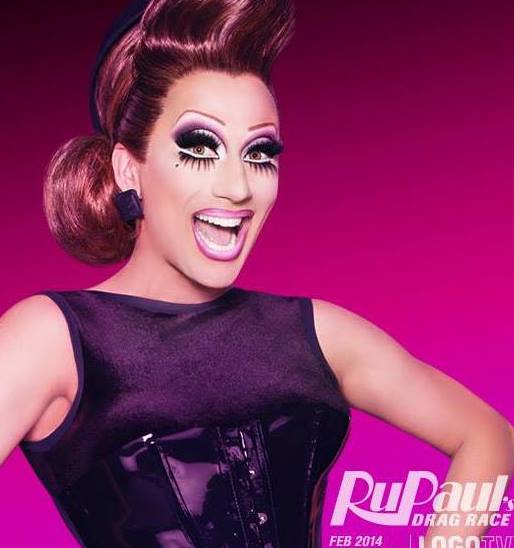
Drag Race Winner, Bianca Del Rio, began her career in New Orleans
Drag Race has featured many a southern drag queen in its competition to find “America’s next drag superstar” and this year is no exception. In fact, Bianca Del Rio (Roy Haylock), the winner of this year’s competition hails from New Orleans, but currently lives in New York (or better yet, hotel rooms since she is now performing around the country and out of it, too.)
I attended my very first drag show in 1990 in Greensboro, North Carolina, at the now defunct, but long-lived club known as The Palms. I was quite nervous about it and I learned my first lesson in drag shows–do not sit near the stage or you’ll likely be drawn into the performance. In my case, I sat at a table near the dance floor and before I knew it a very tall and plus-sized performer, who was offering her illusion of Madonna (circa Blonde Ambition Tour), walked over and grabbed one of my hands and placed it on one of her–cough, cough–cones. As nervous as I was about that interaction, needless to say, I was henceforth hooked on drag–especially southern drag performance.
Mississippian Lypsinka is known for her “Old Hollywood” performances
I went back to The Palms after that and saw drag illusions of Patsy Cline, Tammy Wynette, and Dolly Parton–gay icons all–who were staples in the pantheon of southern drag performance. (Dolly still is.) When I moved to Mississippi a year after the cone incident, I became familiar with an entire world of drag performers with names like Misty Love, Rose Petal, Deli Delmonte, and Katrina Del Ray. I even judged a couple of pageants, including Miss Dixie and Miss Sweetheart.
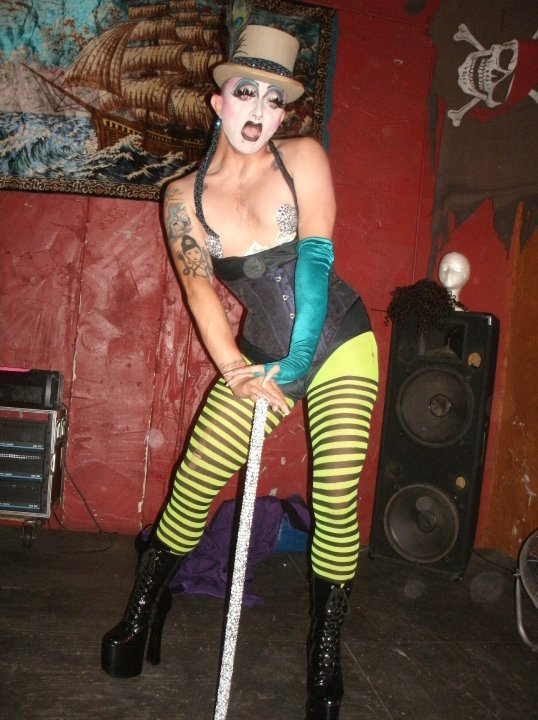
Lilith Deville, Charlotte, NC
Drag pageants in the South mirror beauty pageants for those born biologically female. There’s usually a talent portion, an evening gown competition, and even a question round. The effort and money put into drag performance (and especially the pageants) is really impressive, especially when you consider that many a young queen I met in Hattiesburg, MS, was working a minimum wage job or might have been a struggling college student.
Drag, of course, isn’t just about pageants, but it IS always about performance and I’ve always appreciated the talent that goes into it. Southern drag has changed a lot since I first went to a show. Today, you will see all kinds of drag performance (comedy, goth and celebrity illusion) and I enjoy the variety that’s out there, but I will always have a soft spot for the pageant girls. They are the gift that keeps on giving.
Charlotte performer Roxy C. Moorecox as Adele (Photo credit: roxyintheqc.com)
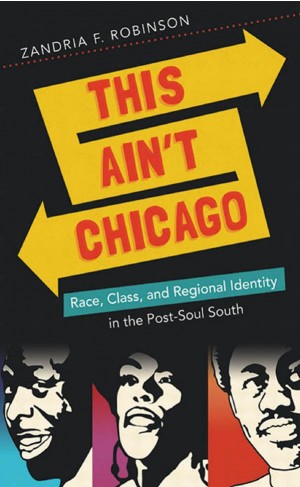
Pop South is pleased to introduce its readers to Zandria Robinson, Assistant Professor of Sociology at the University of Memphis where she’s also an alumna. Dr. Robinson’s new book This Ain’t Chicago: Race, Class, and Regional Identity in the Post-Soul South delves into black southern identity in Memphis, Tennessee. You should also peep her blog New South Negress where she extends the conversation on race, region, and culture she began in her book. (Note: This interview will also appear on this blog under “Porch Talk” as “This Ain’t Chicago with Zandria Robinson”.)
PS: For the uninitiated, tell us about how you arrived at the book’s title “This Ain’t Chicago?”
The title is actually a direct quote from many of my respondents, black southerners I interviewed in Memphis over the course of five years. Initially I noted it as something that people said frequently, but did not immediately grasp its import. I thought that folks were responding to the fact that they thought I was from Chicago because I was attending graduate school there. Later, as respondent after respondent made this comment and gave me varied but similar reasoning about why “this” wasn’t Chicago, I realized they weren’t talking about me, or Memphis, or even Chicago. They were saying, the South isn’t the North; the South is qualitatively differentfrom anywhere else. Once when I was talking to one of my advisors, Chas Camic, about my findings, I told him, “people keep saying, ‘this ain’t Chicago, this ain’t Chicago.’ He said, “sounds like a good title for a book.” And it stuck. It was also a convenient dig at the Chicago School of Sociology, recognized as the “founding” school of American sociology at the University of Chicago, which has dominated how we think about black life and urban studies for nearly a century. (But others like Earl Wright II have shown that actually W. E. B. DuBois founded the first American school of sociology at Atlanta University.) So “this ain’t Chicago” is like the descendants of those African Americans who never left the South, for Chicago or anywhere else, talking back to the descendants of those migrants who have made up the majority of the stories about black life in sociology since WWII, as well as talking back to scholars and others who have ignored the contemporary black southern experience.
PS: What do you mean by a “Post-Soul South?”
Dr. Zandria Robinson
Post-soul is a term popularized by the cultural critic Nelson George and expounded upon by Mark Anthony Neal to delineate the contours of the cultural moment after the civil rights movement. For me, “soul” is a cultural shorthand for the music, art, and ideas in black culture between WWII and the assassination of King. King’s assassination is like a scratch across that long soul record that shuts down the party, and though the music began again, it did so with a new aesthetic influenced by the massive social and political changes that came about as a result of the civil rights acts, the deployment and then rolling back of affirmative action, the crack epidemic and mass incarceration, further disinvestment in black neighborhoods, and a host of other deliberate practices that sought to limit the rights of black folks in America. The art produced in and influenced by this context is “post-soul.”
While the South experienced the changes sweeping across all of America beginning in the 1970s—the effects of deindustrialization and globalization, the entrenchment of neoliberalism, suburbanization and destabilization in the urban core, etc.—the notion of a post-industrial, post-soul, or post-civil rights moment means something different in the place where rural patterns of government and industry prevailed, the blues was still being created and lived, and government officials had publicly declared segregation forever. Further, the legacy of slavery, evangelical religiosity, higher black-to-white population ratios, and the expansion of plantation power affected how southerners experience the historical and cultural moment after King’s assassination as well.
PS: Why do you believe Memphis is an ideal place for discussing the American South’s racial and regional identity?
As my colleague and sociologist Wanda Rushing argues, Memphis is “neither Old South or New South,” by which she means it doesn’t have a legitimate legacy of the Old South like your major slave ports on the eastern seaboard with their towering plantation homes and wealth, nor does it have the glitz and progressive shine of a bustling New South metropolis like Dallas or Atlanta. For me, Memphis sits at the intersection of soul and post-soul, rural and urban, civil rights, and post-civil rights. It is the site of the creation of some of the most important soul music ever, which is now sampled in the post-soul era all throughout hip-hop and R&B music and beyond, all over the world. It is symbolically, historically and geographically linked to the Mississippi Delta, which historian Jim Cobb has aptly called “the most southern place on Earth,” and the city is populated with country folks who make and are re-made by the southern urban landscape here. And it is a place where King was assassinated and today the African American infant mortality rate is amongst the highest in the nation. The social justice goals that need to be met here—addressing poverty, investing in children and human capital, eliminating health disparities, challenging environmental racism, amongst others—are directly related to the unfinished legacy of King. They also echo throughout the South, where negative outcomes abound for the most vulnerable groups. Essentially, Memphis is a place where you can examine snippets of “old” and “new” South as they collide with one another in urban space. It’s where the things that we popularly think make southerners southern intersect with the things that we popularly think make black folks black.
PS: Since this is a blog that examines the South in popular culture, how does your book engage with popular culture?
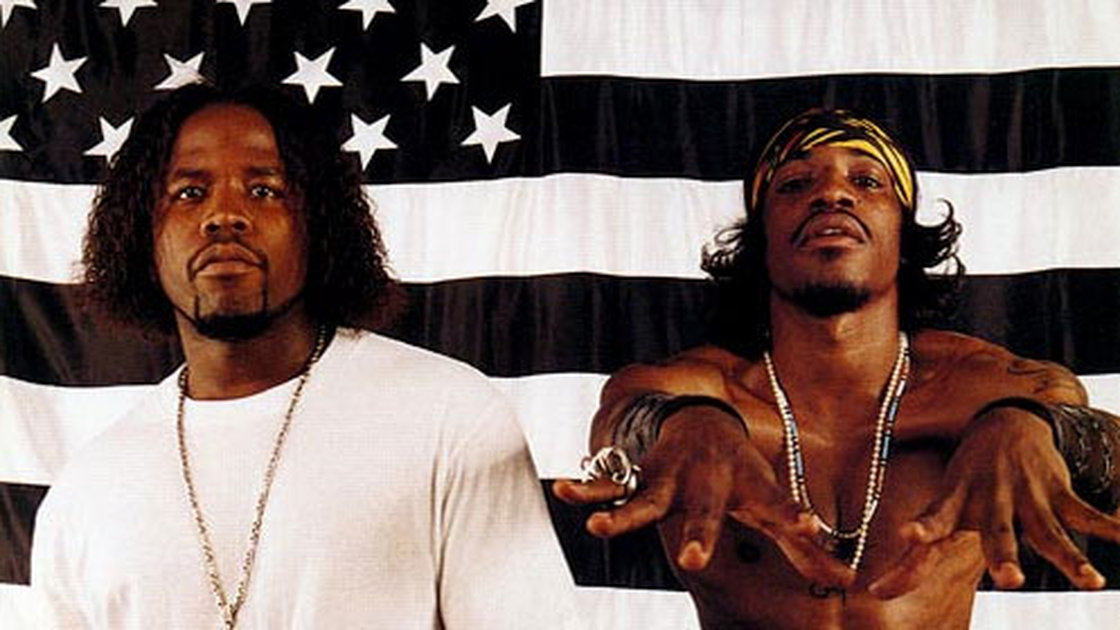
Outkast’s Big Boi and Andre 3000 from their album Stankonia
This Ain’t Chicago is really about my love affair with popular culture, and black southern popular culture in particular. In the middle of an analysis of some ethnographic data you’ll find gestures towards Outkast lyrics. At first, I set out to write an urban sociological text, one that inserted a southern city into the urban sociological landscape to shake us out of our disciplinary deference to Chicago, New York, and Los Angeles. But my background in literary criticism, as well as the fact that it was in popular culture where the work on the contemporary black South was being done, meant that This Ain’t Chicago became much more about the relationship between people’s ideas and popular culture representations of their experiences. I take popular culture just as seriously as “data” as I take my respondents’ sentiments. In fact, it is black southern popular culture, and hip-hop in particular, that was doing the ethnographic work about the South when sociologists were not. Three Six Mafia, Gangsta Boo, 8-Ball and MJG, Arrested Development, Ludacris, T.I., Outkast, Nappy Roots—the list goes on and on—were giving us a visual and lyrical ethnographic analysis of the post-soul South through their music and music videos while sociologists were still talking about Chicago, New York, and Los Angeles and historians were talking about everything before King’s assassination. So popular culture is really a starting place for me in thinking through questions about racial and regional identity, and I bring analyses of hip-hop, film, and other popular culture artifacts to the fore in the book.
PS: What projects are you working on next that followers of Pop South would find interesting?
I’m working on a project about black southern bohemians, sort of poking at the whiteness of the notion of bohemians in the South (Austin, TX, Athens, GA, Asheville, NC) and the New York-ness of the notion of black bohemians. In particular, I’m thinking about how black southerners create and maintain bohemian cultures that manifest in art, music, photography, and other aesthetic practices. And I’m also thinking about how race and regional identity affect black southern bohemianism. André 3000 of Outkast is often seen as sort of the black southern bohemian as if he is an anomaly of some sort. But there are other examples in popular culture and certainly on local black arts scenes that demonstrate that for black southerners, bohemianism is a cultural and aesthetic response to the constraints of race, class, and region on black life that many folks employ. So, I’m exploring these ideas through the same sort of mix of ethnograpy and popular cultural analysis that This Ain’t Chicago employs.
Check out Professor Robinson’s interview with Dr. Regina Bradley for her series Outkasted Conversations:

 This weekend in Atlanta, the city “too busy to hate,” there will be a meeting of the Southern Historical Association. Men and women, professors and graduate students will attend to learn about the latest scholarship on the American South, buy the latest books in the field, and visit with old (and new) friends.













 Pop South