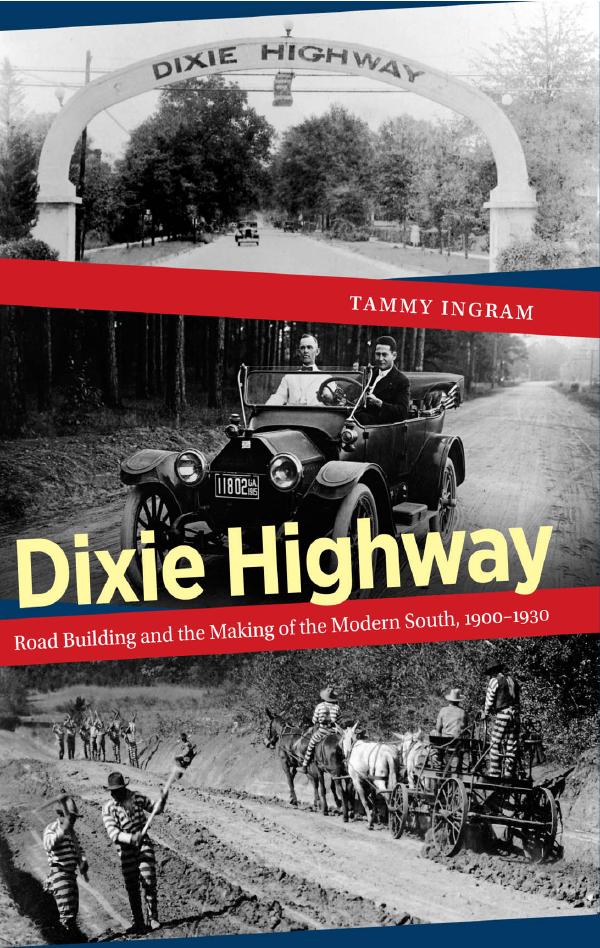
Headin’ South on the Dixie Highway

dixiehighwayPop South spoke with Tammy Ingram, Assistant Professor of History at the College of Charleston, a couple of months ago about her new book Dixie Highway: Road Building and the Making of the Modern South.  If you’re traveling between Michigan and Miami this summer, you might actually be driving on portions of the Dixie Highway.  Read about this road that connected North and South causing some to refer to it as the “Dixie Peaceway.”

PS: Briefly, what is the Dixie Highway?

“The Dixie Highway was the first modern interstate highway system in the country, and it lasted from approximately 1915 to 1925. It was originally planned as a single route between Chicago and Miami Beach, but a fierce routing competition transformed it into an ambitious and sophisticated network of nearly 6000 miles of roads looping through the Midwest and South from the Canadian border all the way to Miami Beach.”

PS: How did the Dixie Highway change the South?

“The obvious ways that the Dixie Highway changed the South were economic: It gave farmers easier and more flexible marketing options for their crops, allowed rural southerners access to larger towns and cities, facilitated the Great Migration of rural African Americans, and opened up the South to new tourist-related businesses. It changed the ways in which people moved around in the South. Before the Dixie Highway, roads were entirely local in both scope and governance. But the Dixie Highway challenged that model by making automobile travel an alternative to railroads for long distance trade and travel. In doing so, the Dixie also transformed southern—and national—politics by centralizing control over massive public works projects. During the brief lifespan of the Dixie Highway, road building shifted from the jurisdiction of local authorities into the hands of state and federal bureaucrats who wielded tremendous political power and controlled massive budgets.”

PS: Since this is a blog on the South in pop culture, can you tell us about the ways that the DH entered into American popular culture?

The DH also made it into popular song. Image credit: IN Harmony Sheet Music Collection, Indiana University

“Although many people have never heard of the Dixie Highway, a century ago it helped to create the modern automobile tourism industry. Gas stations, roadside motels, and tourist attractions were unheard of in most of the country—and certainly in the South—before the Dixie Highway, but by the mid-1920s they lined the route from Michigan to Miami Beach.

The highway also helped to turn the South itself into a destination instead of just an obstacle for wealthy northern and Midwestern tourists bound for Florida resorts. Enterprising southerners marketed everything from antebellum mansions to peach and cotton farms to automobile tourists, and northern businesses named (or in some cases, re-named) their establishments in honor of the Dixie Highway. “Dixie” motels and gas stations in Michigan, Illinois, Indiana, and Ohio were commonplace. So were songs, postcards, magazines, and road maps that advertised (and celebrated) the Dixie Highway.”


PS: As a native Georgian, how do you think being a southerner adds to your perspective on the Dixie Highway?

“I learned how to drive on narrow, rural dirt roads that were not entirely unlike those that comprised the original route of the Dixie Highway. Navigating those roads could be difficult even in the best of weather. When it rained, some of the roads were impassable. We obviously also had modern, paved roads in South Georgia by the 1980s, but we were isolated in other ways: We were among the last places to get things like cable television and even dial-up internet, and the only tourists who ever passed through town were on their way to the beaches in the Florida panhandle. When I discovered the Dixie Highway while doing research for my original dissertation topic on the Great Migration, I think I was drawn to it because the struggles rural people were facing at the turn of the twentieth century felt a little bit familiar to me.”

PS: What projects are you working on next that followers of Pop South would find interesting?

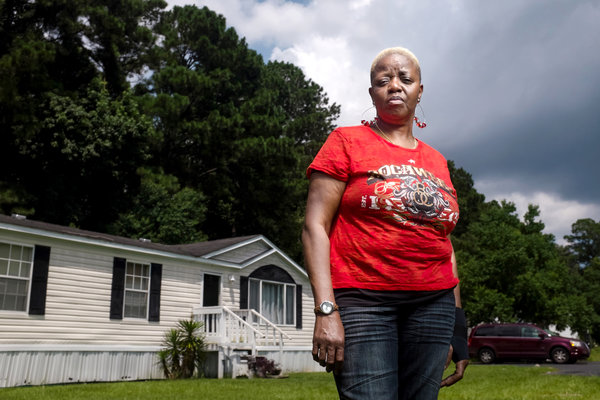
Tammy Ingram, author of a new book on the Dixie Highway. Photo credit: College of Charleston

“I’m excited about my next book project, which is tentatively titled Dixie Mafia: Sex, Race, and Organized Crime in the Sunbelt South. It covers a wide array of organized crime activities in the postwar South, but it focuses on a story that has long fascinated me: The murder of Albert Patterson in Phenix City, Alabama in 1954. Like many other small towns situated near military bases, Phenix City’s main industry in those days was vice: Mobsters made tens of millions of dollars a year on gambling and prostitution, and local law enforcement and city leaders were getting a cut of the profits in exchange for their cooperation. Patterson became a target for the mob because he ran for attorney general and promised to go after them. But they went after him, instead. It’s a fascinating story, and all the more so when you consider it within the context of the Civil Rights Movement and the Cold War.”
 

Pop South at the University of Maryland Baltimore County

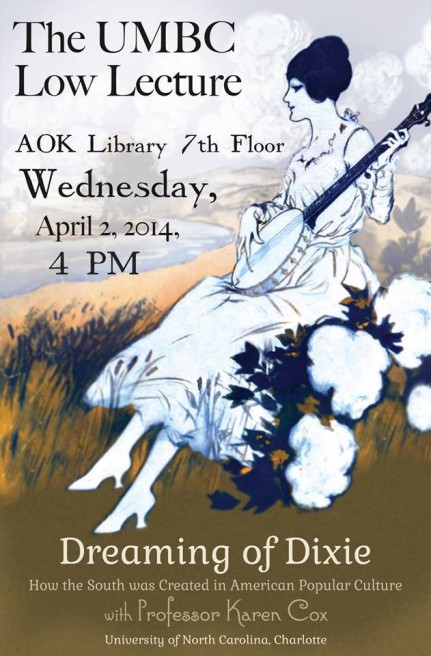
I am speaking about the early years of the South in pop culture.

Next week I’ll be giving the annual Low Lecture, co-sponsored by the Department of History, at the University of Maryland Baltimore County.  The good people there made this nice poster to accompany the talk.

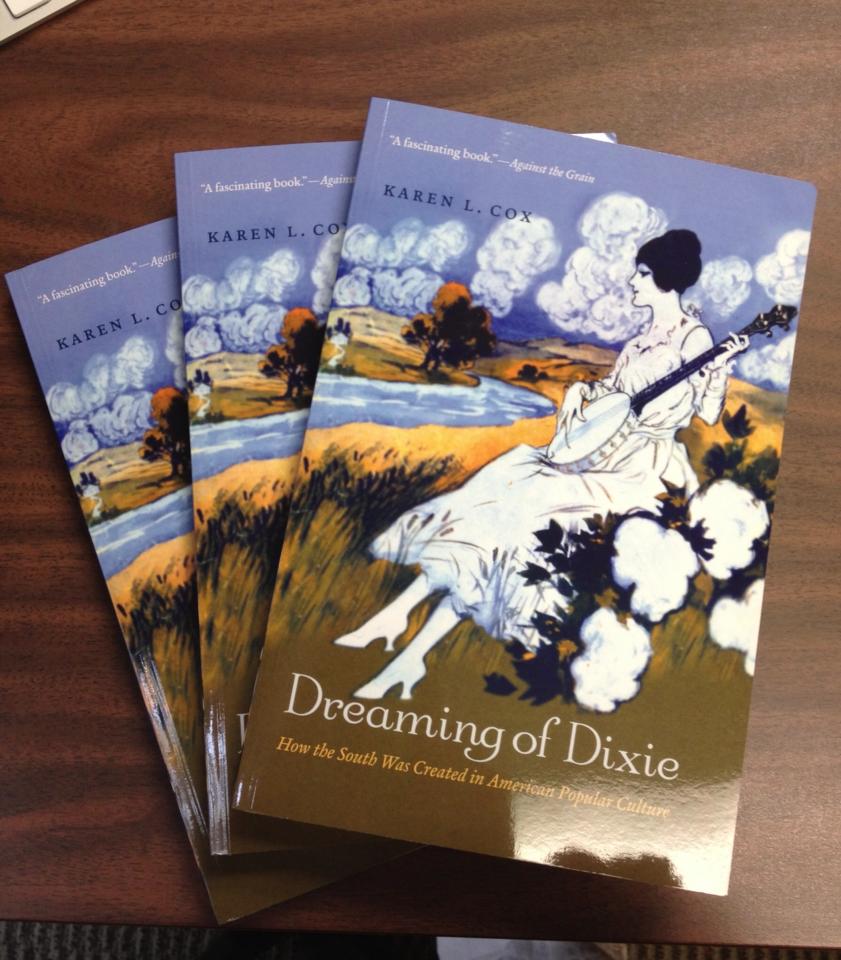
Dreaming of Dixie is now in paperback

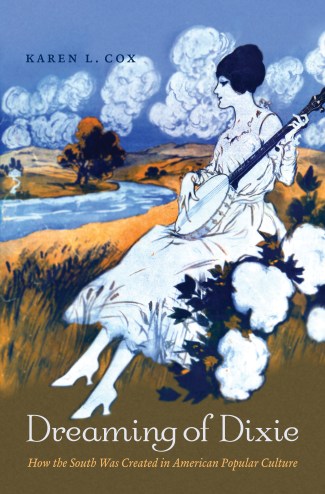
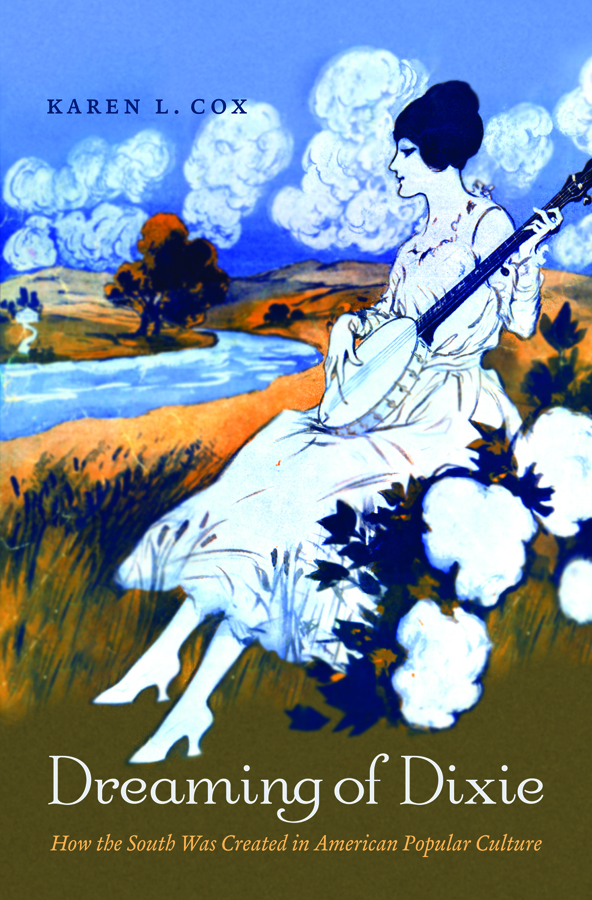
paperbacksWell, that didn’t take too long.  Dreaming of Dixie, the paperback version, is now available from online bookstores and through the publisher, the University of North Carolina Press. In fact, if it weren’t for the press, there’d probably be no Pop South.

What it means to be a “soul sister” in a southern kitchen

dora-charles-paula-deen
Dora Parker, the woman Paula Deen called her “soul sister.” Photo credit: New York Times.

I encourage readers of Pop South to read today’s New York Times op-ed by Rebecca Sharpless providing historical perspective on Dora Charles, the woman Paula Deen called her “soul sister.”

Ms. Charles, who helped open Deen’s restaurant Lady & Sons as well as train other cooks who worked there, was recently interviewed by the Times about her relationship with Deen.  That interview is, in many ways, even more revealing about who Paula Deen is than the deposition she gave in the lawsuit brought against her by a white woman, Lisa Jackson.

I also encourage you to read Rebecca Sharpless’s book, Cooking in Other Women’s Kitchens: Domestic Workers in the South, 1865-1960 (UNC Press, 2010). It’s a great read.

Paperback version of Dreaming of Dixie to be released in August

DreamingFinal

I’m pleased to announce that my book Dreaming of Dixie: How the South Was Created in American Popular Culture is coming out in paperback.  You can pre-order now through UNC Press for the book’s release in August.  Fun reading and great for classes!

Pop South Goes North to Clark University in Worcester, MA

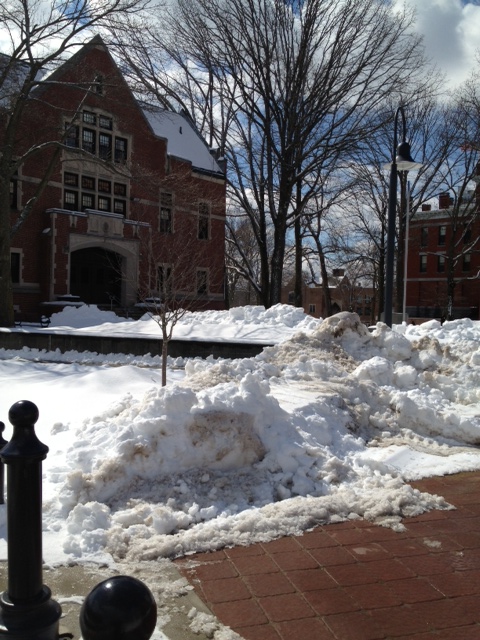
New England didn't get the memo that it was the second day of Spring.
New England didn’t get the memo that it was the second day of Spring.

What a thrill it was to be asked to come North to discuss my scholarship with the wonderful people at Clark University in Worcester, Massachusetts.  I was invited several months ago by Dr. Janette Greenwood of the History Department to speak with students and to deliver the annual Bland-Lee Lecture, which is supported by a generous donation from the Chester Bland family in honor of former history professor Dr. Dwight Lee.

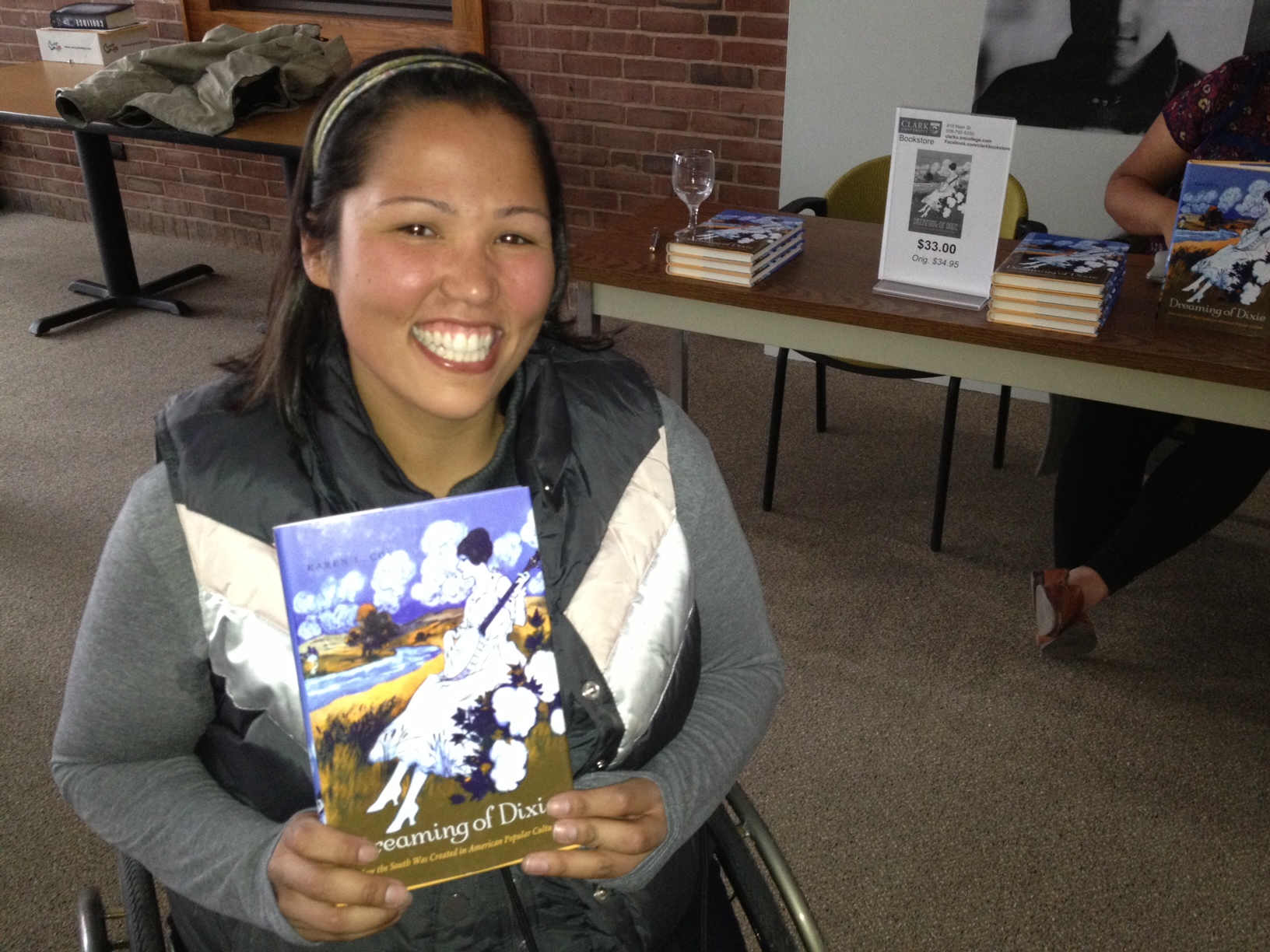
My first talk was with students from two different classes, one on public history and one on collective memory and mass violence. We met in the Goddard Rare Book Room of the library, a room filled with beautiful volumes of books, perfect for a salon-like discussion. While there I talked with students about the work of the United Daughters of the Confederacy in preserving Confederate Memory in the era of the New South. Students asked terrific questions, many of which were based on their reading of my book Dixie’s Daughters.

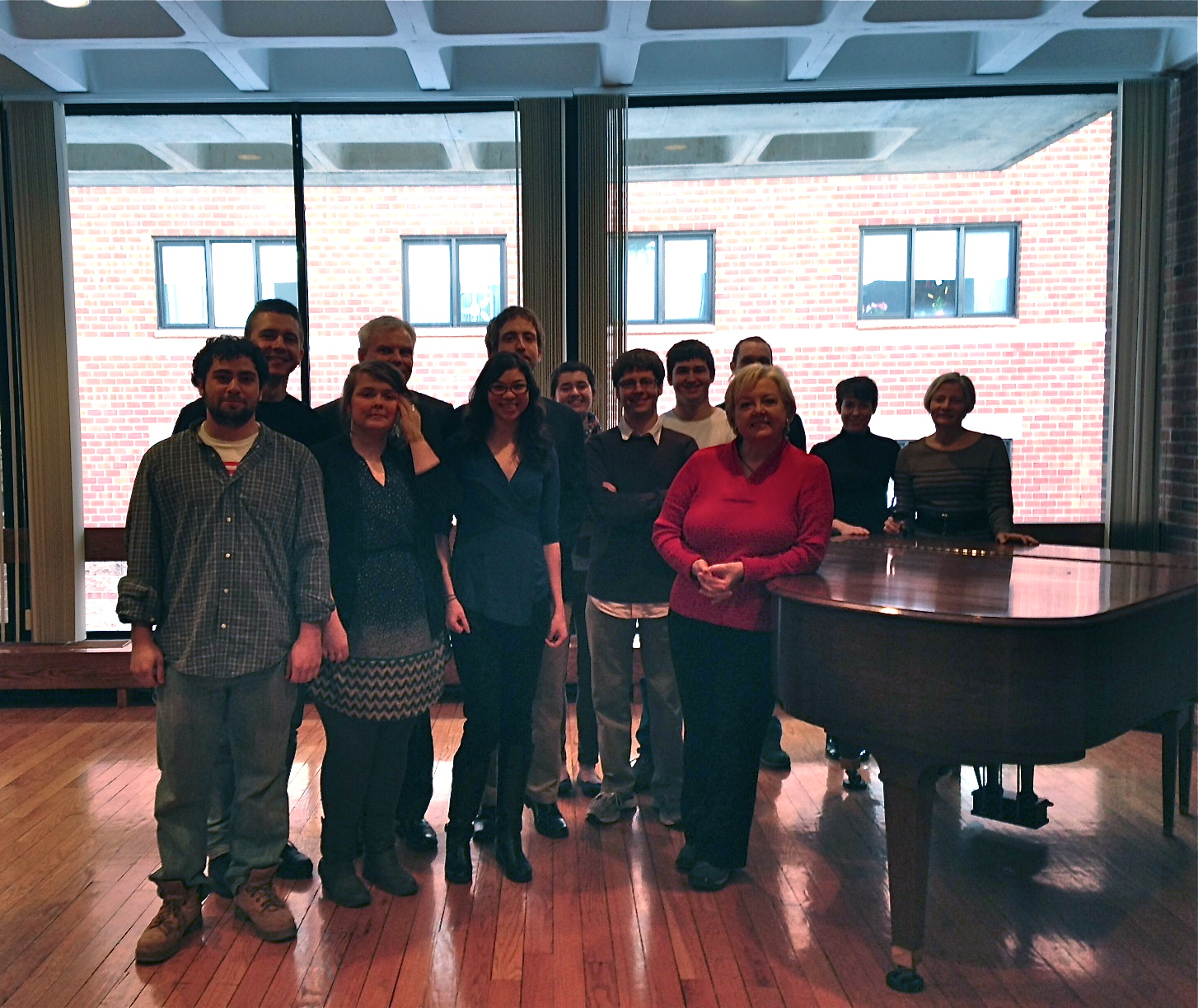
Me with the great students I met at Clark University.

Later in the day, after a very welcome plug by golocalworcester, I had the privilege of speaking before a crowd of close to 75 people about the northern origins of the romanticized South.  It was the first time I’ve had the opportunity to discuss my work with a northern audience, so I was pleased to hear their thoughts.

I began by asking those gathered (including Clark University President David Angel) if they had ever spent time in the South.  Many raised their hands, although I’m not sure how much time they had actually spent here. Then I asked, “how many of you have preconceived notions about the South?” A majority of the hands in the audience went up.  Then, I proceeded to illustrate the ways in which the North and northern purveyors of popular culture have been responsible for how we as a country perceive the South, including up to the present day. Afterward, I fielded questions for more than 30 minutes. To the point of exhaustion.  I realized that, to this day, northerners still don’t quite understand the South.  It is still regarded as a region of “others.” But to be fair, I imagine many southerners look askance at northerners as well.  And so it has been since we’ve been a nation.

Jennifer Fitzroy, a student from nearby Boston College, surprised me by attending the talk.

One of the pleasant parts of my visit was the opportunity I had to speak with Clark students.  They were smart, engaged, community-minded, and all-around outstanding individuals.  All of them serve as reminders that a strong liberal arts education is an outstanding foundation upon which to build our future.

Panel Discussion of Dreaming of Dixie at UNC Charlotte, February 21st

The Center for The Study of the New South will convene a panel discussion of Dreaming of Dixie: How the South Was Created in American Popular Culture, by Dr. Karen Cox, on Tuesday, February 21, 2012 at 3:30 in the Halton Reading Room, in the J. Murrey Atkins Library.

Participants will include David Goldfield (history), Richard Leeman (communication studies), Debra Smith (Africana Studies), and Mary Newsom (Urban and Regional Affairs). Sonya Ramsey (History) will serve as moderator.

This campus event will be the precursor to the Center for the Study of the New South’s annual lecture, on Tuesday, March 13, at the Levine Museum of the New South. This year’s distinguished speaker will be Dr. Cox.

“What about The Help?”

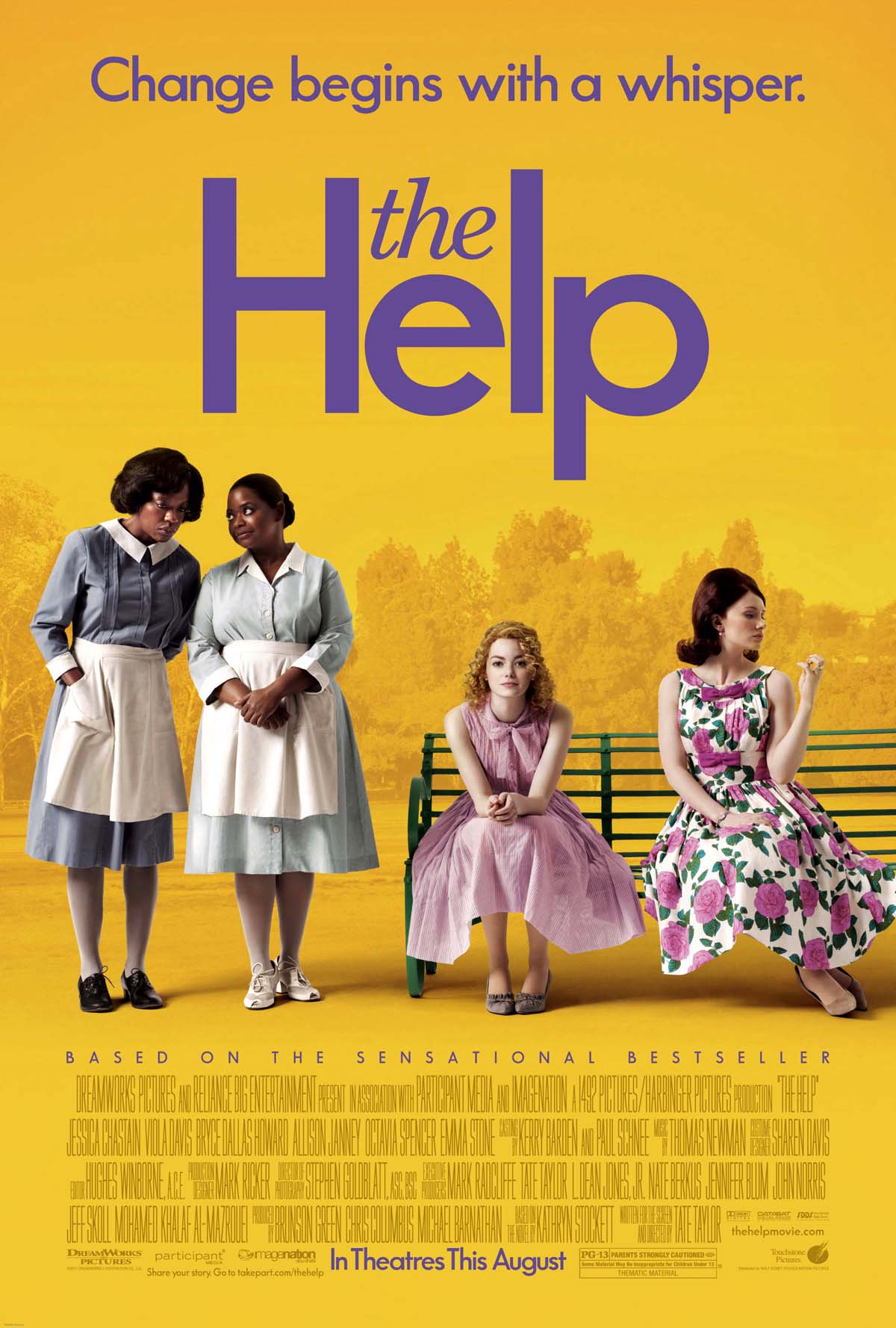
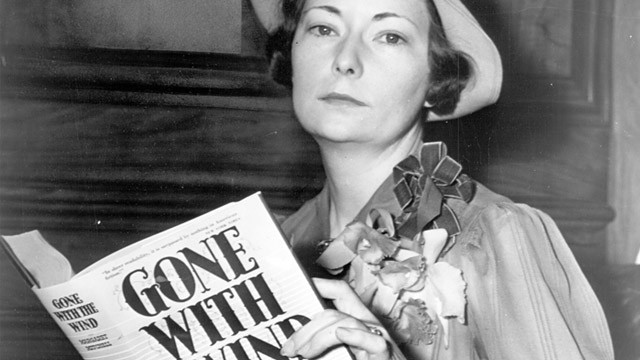
For the past several weeks, I have been traveling to promote the publication of my book Dreaming of Dixie—a study that explores representations of the South in popular culture up to World War II.  Still, even after explaining the book’s time frame, I am regularly asked “What about The Help?”  (One woman, more pointedly said “You didn’t even mention The Help!). In other words, what do I think of that book and its representations of the South?  The first time it happened, it took me off guard, because I had not read it (yes, it’s true). Instead, I was prepared to discuss the impact of Gone With the Wind.   So, I punted and happily recommended Rebecca Sharpless’s fine book Cooking in Other Women’s Kitchens and suggested they read it if they wanted a more historically accurate portrait. 

The thing about novels and movies that deal in history is that they so often get it wrong.  Gone With the Wind was a good story, and so is The Help, but let’s not kid ourselves that either makes the best history.  And yet, the success of a book like The Help means that historians will have to clear up the mistakes made in both the book and the film for a long time to come. (See, for example: An Open Statement to the fans of The Help from the Association of Black Women Historians.)

Still, I was curious as to what some readers of Stockett’s novel had to say.  As I write, there are more than 4,800 reviews of the book on Amazon.com, the majority of which are positive.  However, there are 261 readers (none who identify as historians) who gave the book less than stellar reviews.  It is clear that they, too, are concerned—not only by historical inaccuracies, but also the ways in which the book perpetuates stereotypes, specifically through the use of dialect.  As one reader put it (and very well, I might add):

“The way she presents it, the black vernacular becomes both abhorrent and belittling, particularly in that throughout most of the novel, Stockett avoided the use of the southern white vernacular when telling the story in the voice of the two main white characters, ‘Miss’ Skeeter, and ‘Miss’ Hilly.”

This particular remark seemed all too familiar to me, as I had read a similar criticism about Gone With the Wind when it was published.  In 1944, Earl Conrad, a vocal critic of Jim Crow, referred to writers who used dialect as “neo-Confederates,” because they used it to infer inferiority.  He considered Margaret Mitchell one of the worst offenders, because while she employed black dialect she never once used the nuances of language to illustrate a white southern drawl.  That book was published in 1936.  Stockett’s book—2009.

Seven decades after the publication of Gone With the Wind, it seems that a novel set in the Jim Crow South could and should move beyond the use of dialect.  As Conrad suggested, such writing “Jim Crows” African Americans by relegating them to the status of second-class citizens.

And that’s the “what” about The Help.

Nightmares about Dixie: Monsters in America…and in the American South

In honor of Halloween, I invited fellow historian Scott Poole, who teaches at the College of Charleston, to guest blog about southern horror.  In this post, we learn about pop culture’s representations of the South as a peculiar site of horror, from Deliverance to True Blood and eerie things in between.  What does a horrific South say about southern identity?  Read what Scott has to say. 

Scholars of the American South spend a great deal of time reflecting on the nature of southern distinctiveness.  An earlier generation of historians of the region labored under what C. Vann Woodward famously labeled “the burden of southern history.” A fun, if frequently reductionist, version of this scholarship turns everything from barbeque to moon pies to stock car racing into attributes of ethnicity, claims for a peculiar and allegedly charming southern essentialism.

Over the last two decades, the scholarship has, luckily, become much more complex. Southern historians take seriously the role of imagined difference and how representations of the South often reflect historical misunderstandings. Scholars have shown how frequently the region has functioned for the rest of the country as a metonym of the exotic. To quote the blogmeister herself, we understand just how much time Americans have spent “dreaming of Dixie.”

I’d like for us to ponder the macabre side of this story. Let’s think about America’s nightmares about Dixie.

Horror has always played a role in representations of the South. Abolitionist leaders rightfully described the barbaric treatment of human beings under slavery in their broadsides against the peculiar institution. They often did this by evoking the most lurid aspects of plantation life in order to, in the words of Boston abolitionist Theodore Weld, “thrill the land with horror.”

In the 20th century, racial segregation, uneven and makeshift economic development and the sometimes adversarial relationship of southern traditionalists with modernity helped create new monster traditions.  In pop and folk culture, “the hillbilly” and “the redneck” became images of horror. The gothic south of decaying ancestral lineages and the lurid south of tobacco roads meet somewhere along these borders of the monstrous and the terrifying.

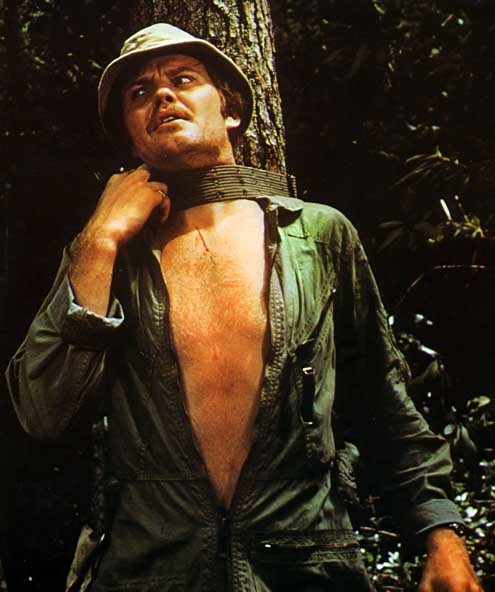
Jon Voight in "Deliverance" (1972)

In American films from the 1970s forward, this the portrayal of the South as the trackless region of horrors, the place off the highway where civilization meets savagery, became common. This view of the South has two dark fathers, Texas Chainsaw Massacre and Deliverance.

These are both important aesthetic documents with more to say than simply “beware the hicks.” Indeed, both are deeply subversive documents. Hooper’s TCM launches a full-frontal assault on any romanticisms of the American past, turning the frontier cabin into, literally, a slaughterhouse where counter-cultural teens must face the horrific violence of the past. This is the horrific South as horrific America, Daniel Boone come back as cannibal, the true and secret history of American violence that southern violence both reflects and symbolizes.

Deliverance calls into question the relationship between modernity and traditionalism in the South while also critiquing various kinds of southern notions of masculinity. Burt Reynolds, for example, exhibits an interesting variant of southern gender identity, the suburban “hell of a fella” (to borrow and rephrase the W.J. Cash template). He’s the original NASCAR dad but one with more authenticity than camo can provide.

And yet he becomes for our unlucky wilderness travelers a guide into hell. He preaches a gospel of deliverance in the wilderness and finds instead an Appalachia facing encroaching modernity with one last rebel yell.  Deliverance ironically becomes a new version of the Puritan captivity narrative, “the errand into the wilderness” gone horribly wrong.

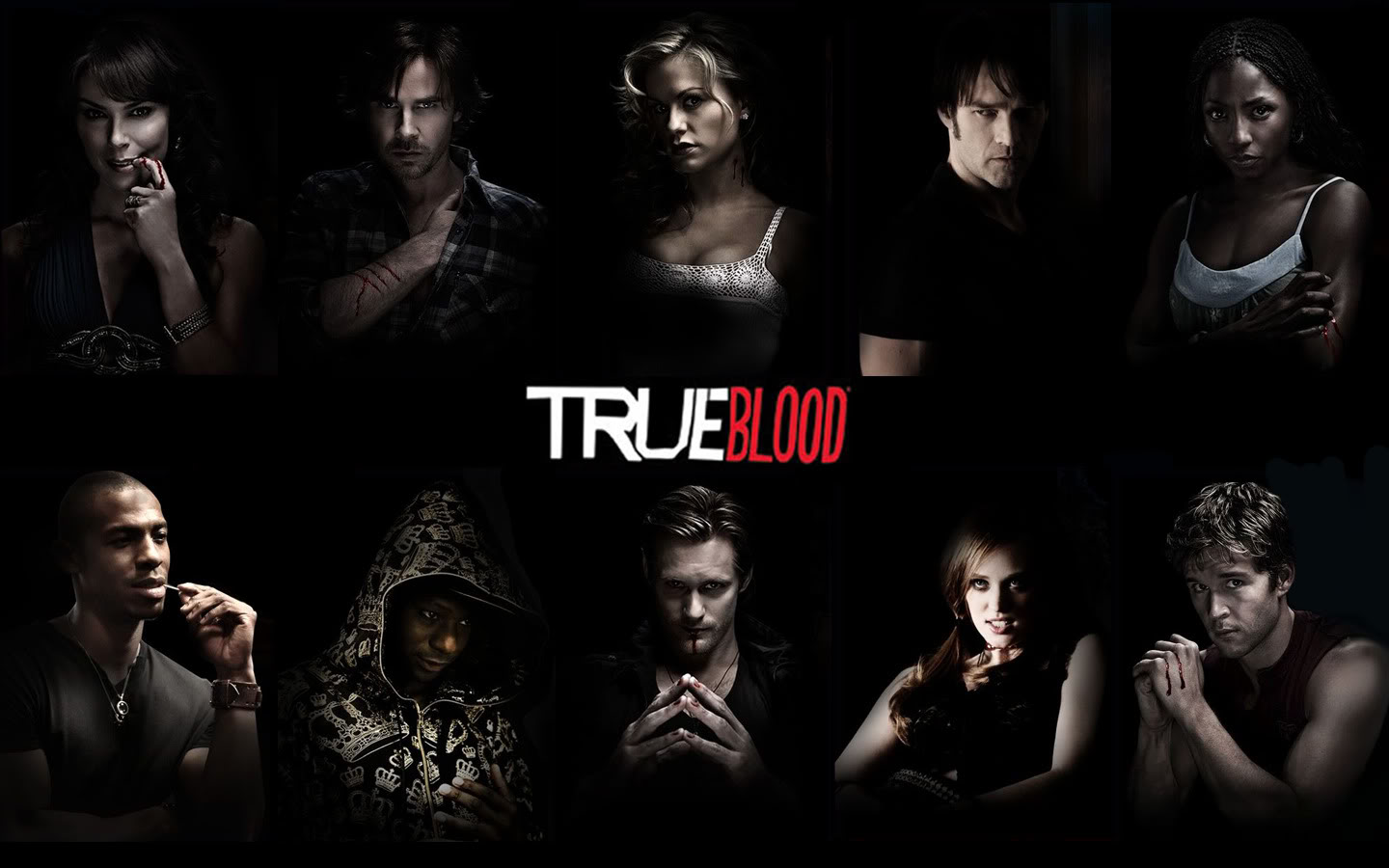
HBO’s True Blood has borrowed certain aspects of this tradition of backwoods grotesquerie. For many of us, a favorite part of the show is the opening montage of deep-fried southern religion in black and white mingled with images of southern sexuality that include stereotyped representations of the proletarian south. It’s a set of images that writers as diverse as Faulkner, Erskine Caldwell, Harry Crews and Ron Rash would recognize and could have narrated. It’s a south that wants to do bad things with you—and to you.

I praise Alan Ball and True Blood pretty highly in Monsters in America. Despite what some see as its egregious use of camp and schlock, I see the show as an important moment in the American monster mythos. Locating the vampire mythos in the heart of the South Americanizes the vampire mythology, indeed bundles it up with the rich and textured regional mythologies about identity and gender.

Its also important to remember that the AMC series The Walking Dead features the zombie apocalypse played out on a ruined southern landscape. Anything especially southern about those zombies? Not really. But Rick Grimes is every inch the post-civil rights image of the southern sheriff, a combination of toughness and western-film influenced masculinity.

It’s also a show that has established itself as a southern apocalyptic landscape by introducing race and racism as a continuing facet of post-zombie southern experience. In what we have seen of the second season, the religious aesthetic of the South has even made an appearance, an idea I’d love to see the show explore more thoroughly (and with a bit more research…Southern Baptist churches usually don’t have a gigantic crucifix like you might find in a Catholic parish).

These pop culture representations of southern horror raise lots of questions about southern identity, southern representation and southern terror. I hope that southern scholars will investigate the haunted and the monstrous south more thoroughly in their work on popular culture and folk belief.

W. Scott Poole is the author of Monsters in America: Our Historical Obsession with the Hideous and the Haunting (Baylor University Press, 2011)Follow Scott as he haunts America on Twitter @monstersamerica.

Historians on ‘The Help’: Vanessa May and Rebecca Sharpless Respond

Historians on ‘The Help’: Vanessa May and Rebecca Sharpless Respond.

So many people ask me questions about The Help (both the book and the film version), that I thought it would be better to let some historians, whose research can shed light on the subject, offer you a little context. Click on the link above.  Editor, Pop South