Taragate–A Gone with the Wind Scandal? Not exactly.

If you were to drive south on I-77 and exit onto Arrowood Road in Charlotte, North Carolina, you would eventually run across a development called “Taragate Farms.”  I had no idea it existed until recently, when I was invited to have dinner at a home in the neighborhood.
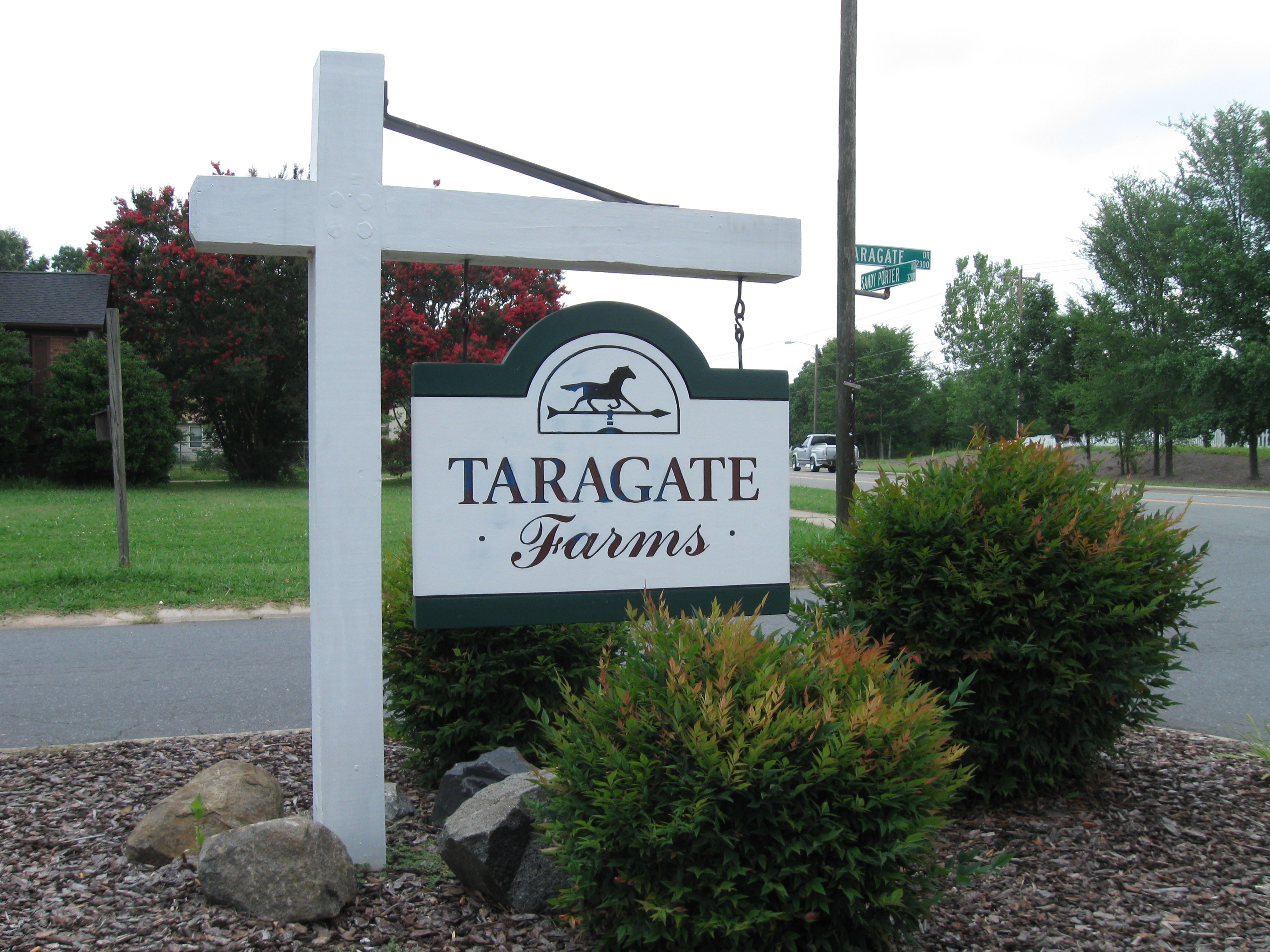
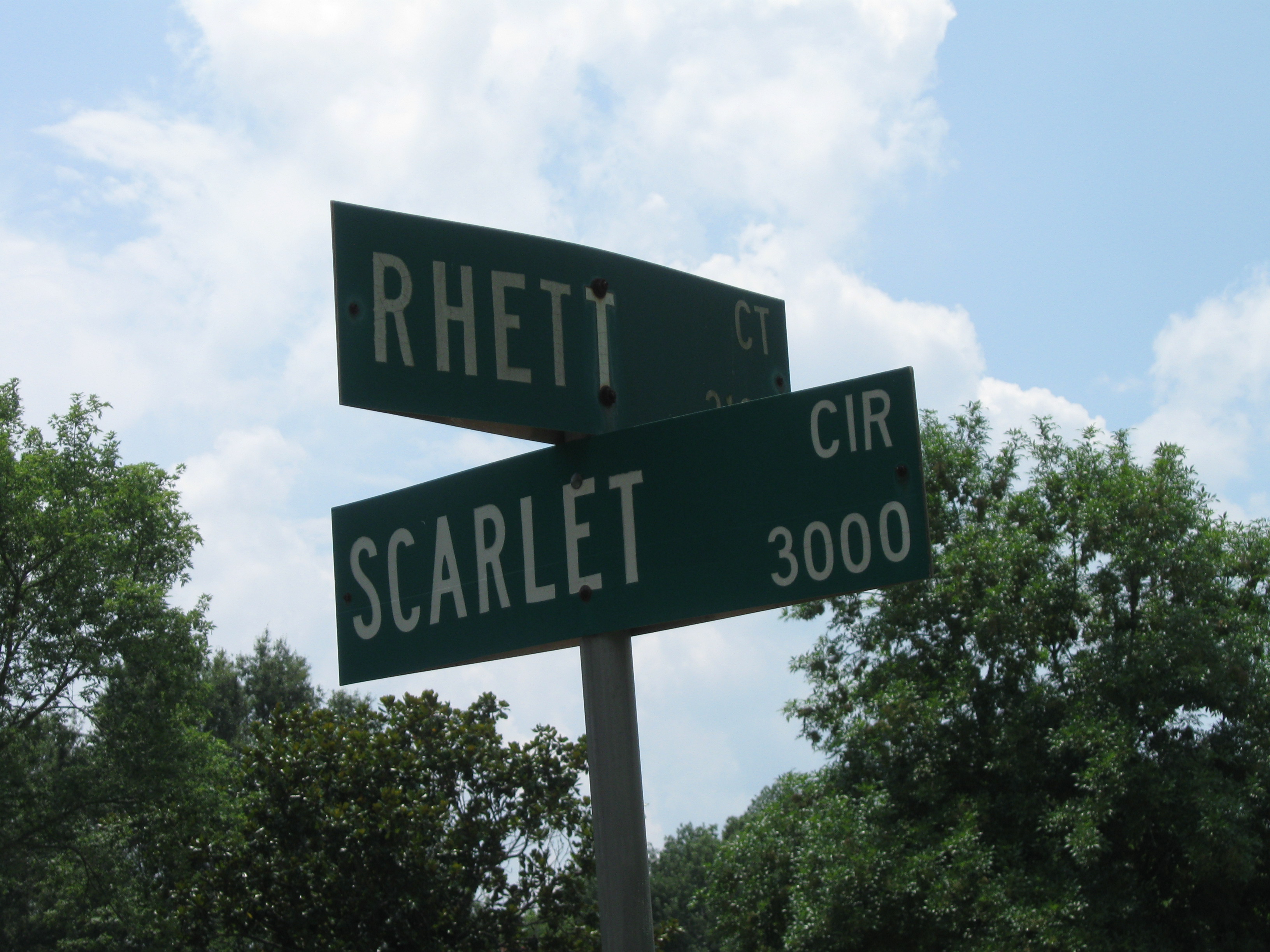
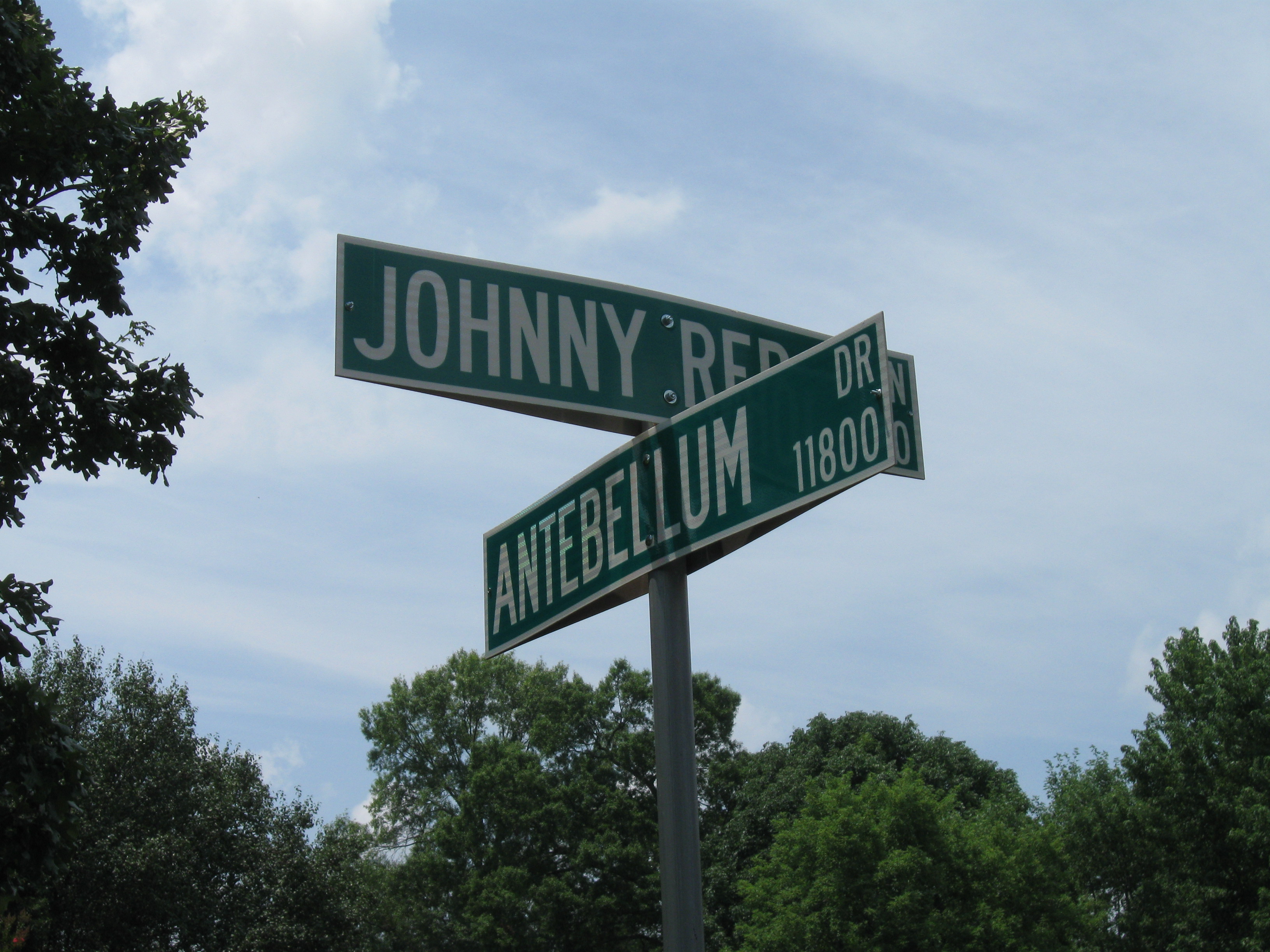
At first, I didn’t think too much about the sign that sets out in front announcing one is entering “Taragate.”  However, as I followed directions on my Garmin I started noticing street names.  Driving down “Scarlett Circle” my eyes were alerted to themes of Gone with the Wind and the Old South. In the same neighborhood, just off of Scarlett Circle is “Rhett Court” and “Rice Planters Road.”  “Julep Lane” intersects with “Pitty Pat Court.”  “Antebellum Drive” is just off of “Johnny Reb Lane,” and “Sherman Drive” (appropriately) crosses over “O’Hara Drive.”
Well, of course, I had to investigate.  It turns out that sometime in the 1980s, Ryan Homes created Taragate and, hold on to your hoop skirts, “Twelve Oaks”–two neighboring housing developments in an area that is so far south of the city, one might call it the Deep South of Charlotte.

I have no idea to whom they were marketing these neighborhoods twenty-five years ago, but today the residents reflect a far more diverse population than one would expect to be living in a development with attachments to the Old South or Gone with the Wind.  Indeed, my dinner hosts were African American, and their neighbors were both white and Asian.

On the one hand I was impressed by the extended marketing reach of the novel and the film, such that in the 1980s developers wanted to “recreate” Tara and Twelve Oaks.  Yet,  I also wondered what my dinner hosts thought about it–you know, with references to plantations and all.  But while I was fascinated, they seemed unfazed.
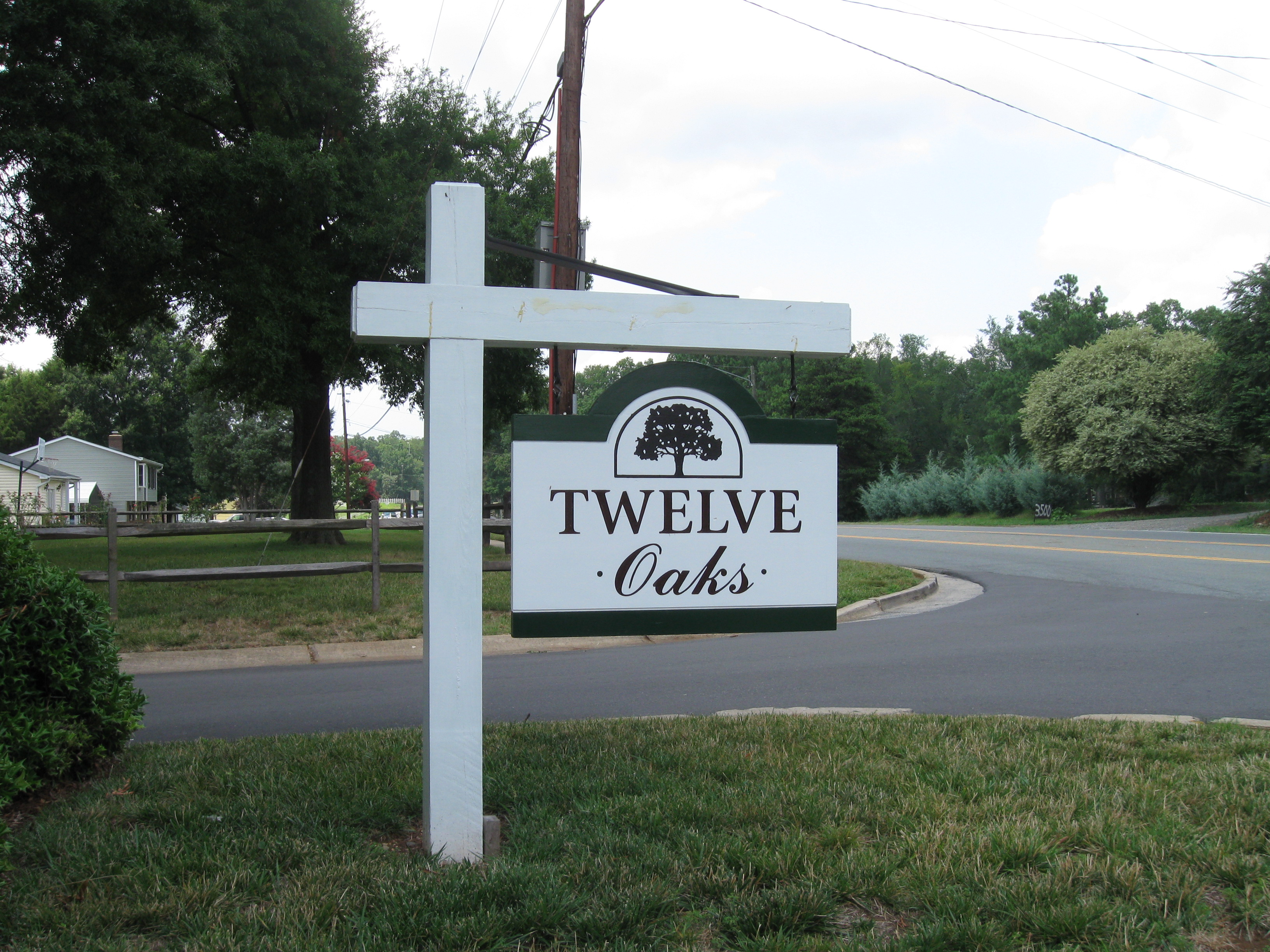
Clearly, Gone with the Wind has lost some of its relevance, despite the big 75th anniversary celebrations of the book going on this year.  Today, however, neither the book nor the film does the kind of damage it once did to the progress of race relations in the United States, even though the portrayals of African Americans remain offensive.  Although people around the globe will be commemorating Margaret Mitchell’s tome on the Old South in 2011, at Taragate and Twelve Oaks there will be folks wondering what the fuss is all about.
Gone with the Wind as Southern History

Unless you have been living under a rock, you know that this year marks the 75th anniversary of the publication of Margaret Mitchell’s Civil War epic, Gone with the Wind.  The book and its characters are being celebrated and discussed around the world.  From Atlanta to Calcutta, people have weighed in on why they like the book, how many times they’ve read it, and how it has influenced their lives.

Aside from the personal connections readers have made with the book and its characters, however, Gone with the Wind’s most enduring legacy has been in shaping a popular understanding of the Old South and the Civil War.  From the beginning, fans have accepted as truth the book’s Lost Cause narrative of the pre-Civil War South as a region gilded by romance and whose cast of characters included cavaliers, belles, mansions, and of course, loyal slaves.

Yet it is fair to say that the film, more than the book, has influenced this popular view of the southern past.  Even Margaret Mitchell called this one.

Indeed, a few years after the film premiered, she wrote to her friend Virginius Dabney, editor of the Richmond Times-Dispatch, mortified that she was “included among writers who pictured the South as a land of white-columned mansions whose wealthy owners had thousands of slaves and drank thousands of juleps.”

Her embarrassment derived from the fact that the film had done more to influence what people had learned about the Old South than her book. “Southerners could write the truth about the antebellum South,” she said, but “everyone would go on believing in the Hollywood version.”

One could certainly argue that what Mitchell produced, despite her meticulous research, was not necessarily a “truthful” southern history, but one in step with the Lost Cause version she grew up with. Yet, Mitchell was on target about the film’s influence in shaping a popular understanding of southern history.

“People believe what they like to believe,” she wrote, “and the mythical Old South has too strong a hold on their imaginations to be altered by the mere reading of [my] book.”  This was true.  As the most influential medium of popular culture in the first half of the twentieth century, movies shaped what people learned about history.  And during the 1930s, movies set in the Old South were very popular.

When the book was made into a film, Gone with the Wind became Hollywood’s first blockbuster, and as such it cemented an image of southern history in the popular imagination—much to the chagrin of African American leaders who recognized that this kind of popular “history” not only damaged the morale of their race, but hurt the cause of civil rights nationally.

This year’s celebrations of the book and the film probably won’t lead most people to think, much less hold serious discussions, about Gone with the Wind’s influence on popular perceptions of southern history.  That would ruin the historical fantasy that Margaret Mitchell created and which they love.  And frankly, I’m not sure they give a damn.

Note:  This blog post originally appeared on the UNC Press Blog.