Pop South Goes North to Clark University in Worcester, MA

New England didn't get the memo that it was the second day of Spring.
New England didn’t get the memo that it was the second day of Spring.

What a thrill it was to be asked to come North to discuss my scholarship with the wonderful people at Clark University in Worcester, Massachusetts.  I was invited several months ago by Dr. Janette Greenwood of the History Department to speak with students and to deliver the annual Bland-Lee Lecture, which is supported by a generous donation from the Chester Bland family in honor of former history professor Dr. Dwight Lee.

My first talk was with students from two different classes, one on public history and one on collective memory and mass violence. We met in the Goddard Rare Book Room of the library, a room filled with beautiful volumes of books, perfect for a salon-like discussion. While there I talked with students about the work of the United Daughters of the Confederacy in preserving Confederate Memory in the era of the New South. Students asked terrific questions, many of which were based on their reading of my book Dixie’s Daughters.

Me with the great students I met at Clark University.

Later in the day, after a very welcome plug by golocalworcester, I had the privilege of speaking before a crowd of close to 75 people about the northern origins of the romanticized South.  It was the first time I’ve had the opportunity to discuss my work with a northern audience, so I was pleased to hear their thoughts.

I began by asking those gathered (including Clark University President David Angel) if they had ever spent time in the South.  Many raised their hands, although I’m not sure how much time they had actually spent here. Then I asked, “how many of you have preconceived notions about the South?” A majority of the hands in the audience went up.  Then, I proceeded to illustrate the ways in which the North and northern purveyors of popular culture have been responsible for how we as a country perceive the South, including up to the present day. Afterward, I fielded questions for more than 30 minutes. To the point of exhaustion.  I realized that, to this day, northerners still don’t quite understand the South.  It is still regarded as a region of “others.” But to be fair, I imagine many southerners look askance at northerners as well.  And so it has been since we’ve been a nation.

Jennifer Fitzroy, a student from nearby Boston College, surprised me by attending the talk.

One of the pleasant parts of my visit was the opportunity I had to speak with Clark students.  They were smart, engaged, community-minded, and all-around outstanding individuals.  All of them serve as reminders that a strong liberal arts education is an outstanding foundation upon which to build our future.
Lynyrd Skynyrd and “Heritage, Not Hate”

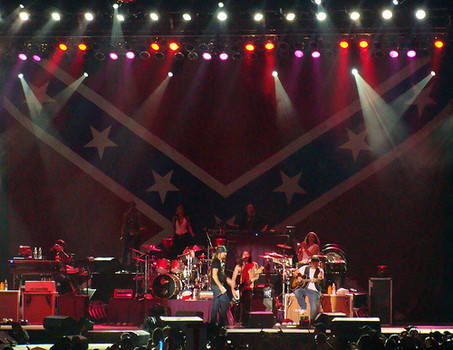
Wow, that was quick.  Less than a week ago, members of the band Lynyrd Skynyrd were giving an interview on CNN in which lead guitarist Gary Rossington explained that the band had disassociated itself from the image with which it’s long been known – the Confederate battle flag.  Just a few days later?  Rossington, the last remaining member of the original band, all of a sudden got his Confederate memory back and told fans on the band’s website “The Confederate flag means something more to us, Heritage not Hate.” He needed to do something, because the band’s fans threatened to secede from Lynyrd Skynyrd nation and take their dollars with them.

Photo courtesy of examiner.com

Actually, he was right the first time when he told CNN that the image had “became such an issue, about race and stuff.”  Yea, race and stuff.

That stuff, as he initially pointed out, was that groups like the KKK, skinheads, and let’s go ahead and say segregationists (please) had, in his words, “kidnapped the Dixie or rebel flag from the Southern tradition and the heritage of the soldiers.”  Well, yes, but it’s more complicated than that.

THAT flag, as we know, is one of many Confederate flags, but it’s the one that draws the  most ire.  Yes, it was used by southern soldiers as they headed into battle, but let’s be clear:  by 1863 the war was over the institution of slavery and the Confederate army was there to protect it.  States’ rights?  Yes, a state’s right to maintain slavery.  There’s no getting around it.

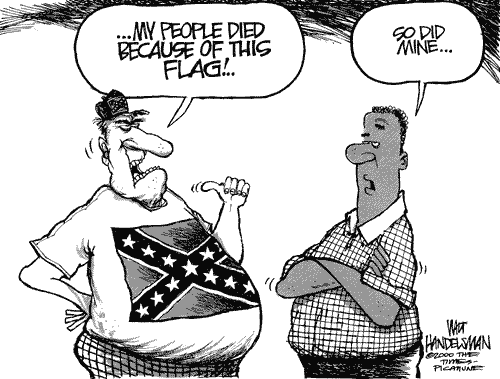
So, let’s say you buy the idea that this was simply about southern soldiers and therefore the “Heritage, Not Hate” slogan works for you, because you don’t want to be thought of as a racist.  Then what can you say about the heritage of that symbol since the Civil War?  The war lasted 4 years, but the battle flag has often been used over the last 150 years as a symbol of racial hatred.  What about THAT heritage?

The flag’s heritage is indelibly tied to the institution of slavery. Courtesy: Times Picayune, 2000.

Lynyrd Skynyrd is free to do what is best for its fan base and especially its bottom dollar, but as the saying goes “don’t get it twisted”–in this case, the history.  Gary Rossington was right the first time when he said that the negative connotations of the flag had to do with “race and stuff.”  The vitriol with which the fans have responded over the band’s initial decision to quit using the flag is proof enough that race is still at issue.

And just because you say it’s about “heritage, not hate,” doesn’t make it so.

Confederate Tchotkes and the American Dream

On a recent vacation to Lake Lure, North Carolina, I drove over to the small town of Chimney Rock where people can hike to Hickory Nut Falls, grab a bite to eat, do a little gem mining, and perhaps stop in a souvenir shop to buy mementos of their trip.  I didn’t necessarily want a souvenir, but given the heat and humidity it made sense to duck into a few of the shops to cool off and to see what was for sale.

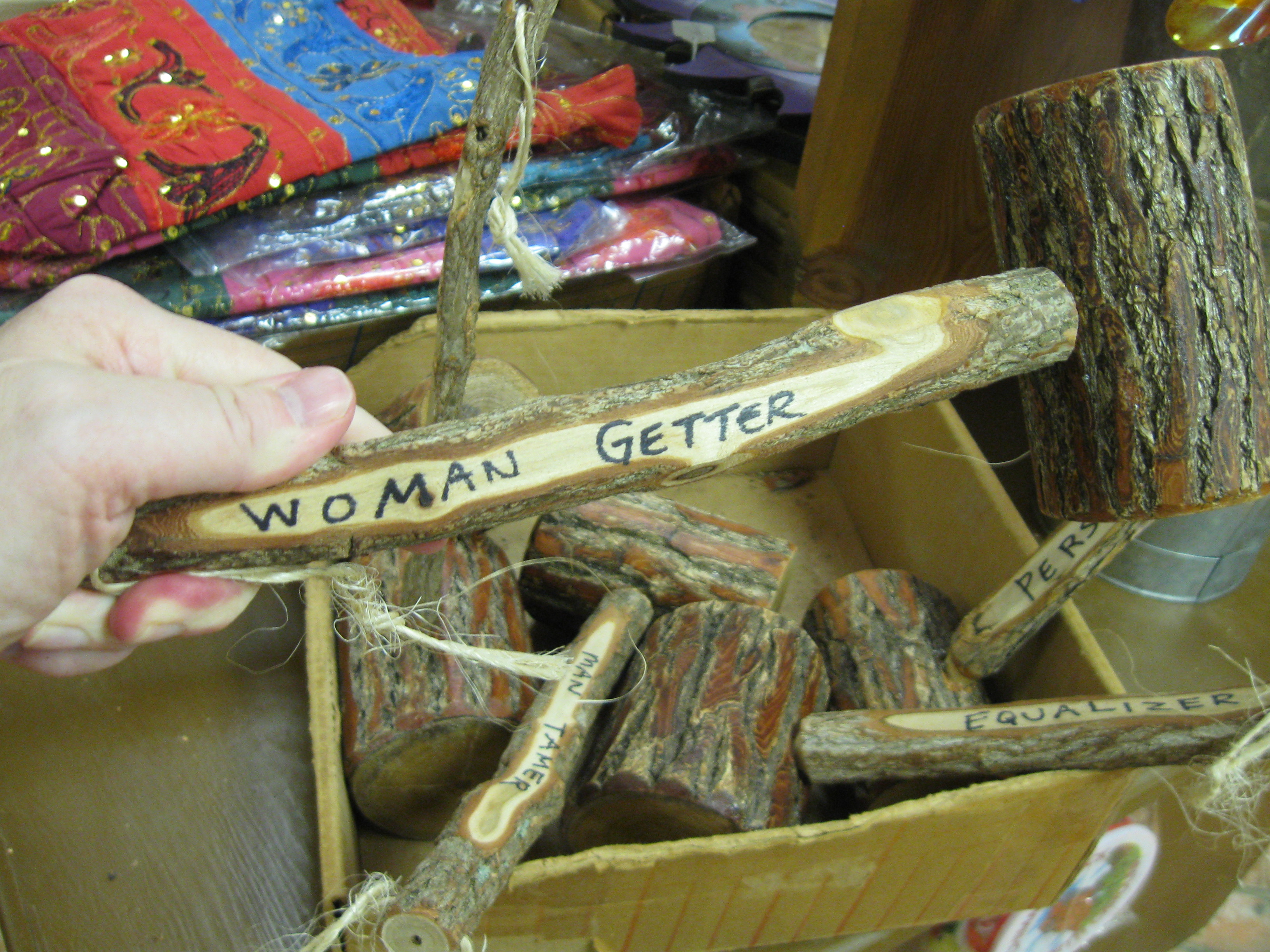
The "Woman Getter" a.k.a. the "Persuader," a.k.a. the "Man Tamer"

And boy was I in for a treat.  In addition to some of the ridiculous hillbilly items being sold (note photo of the “Woman Getter” a.k.a. the “Persuader,” a.k.a. the “Man Tamer”), Confederate tchotkes were everywhere and not just in one store.

This, of course, is surprising since the mountain South is not known for loyal Confederates.  Tourists who follow the signs along North Carolina’s Civil War Discovery Trail near Hickory Nut Gorge learn not about staunch Confederates, but about Union General George Stoneman’s raiders and his order to Colonel William Palmer to join in the pursuit to capture Confederate President Jefferson Davis, whose flight from Richmond had entered North Carolina in late April 1865.

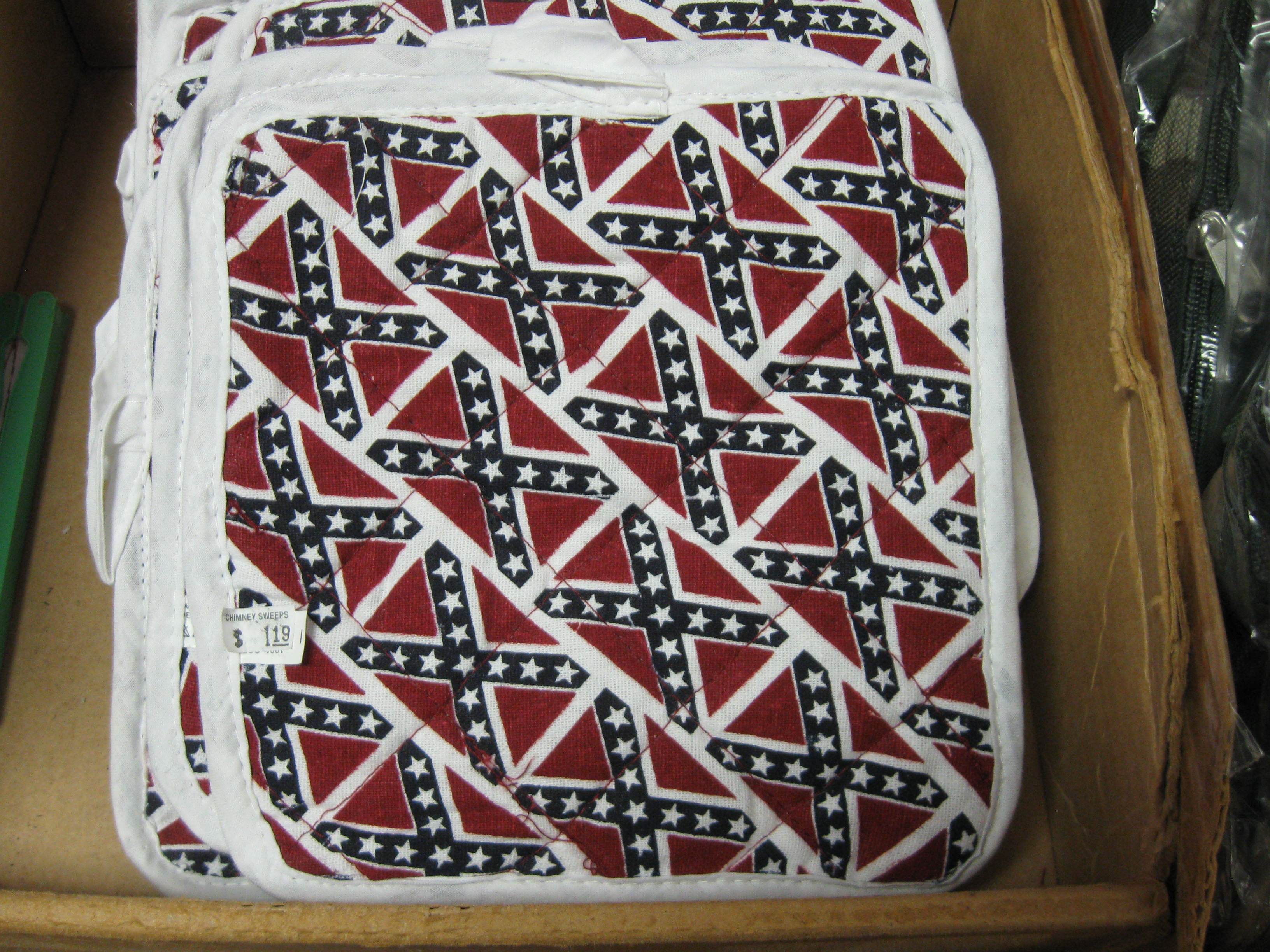
Rebel Potholders

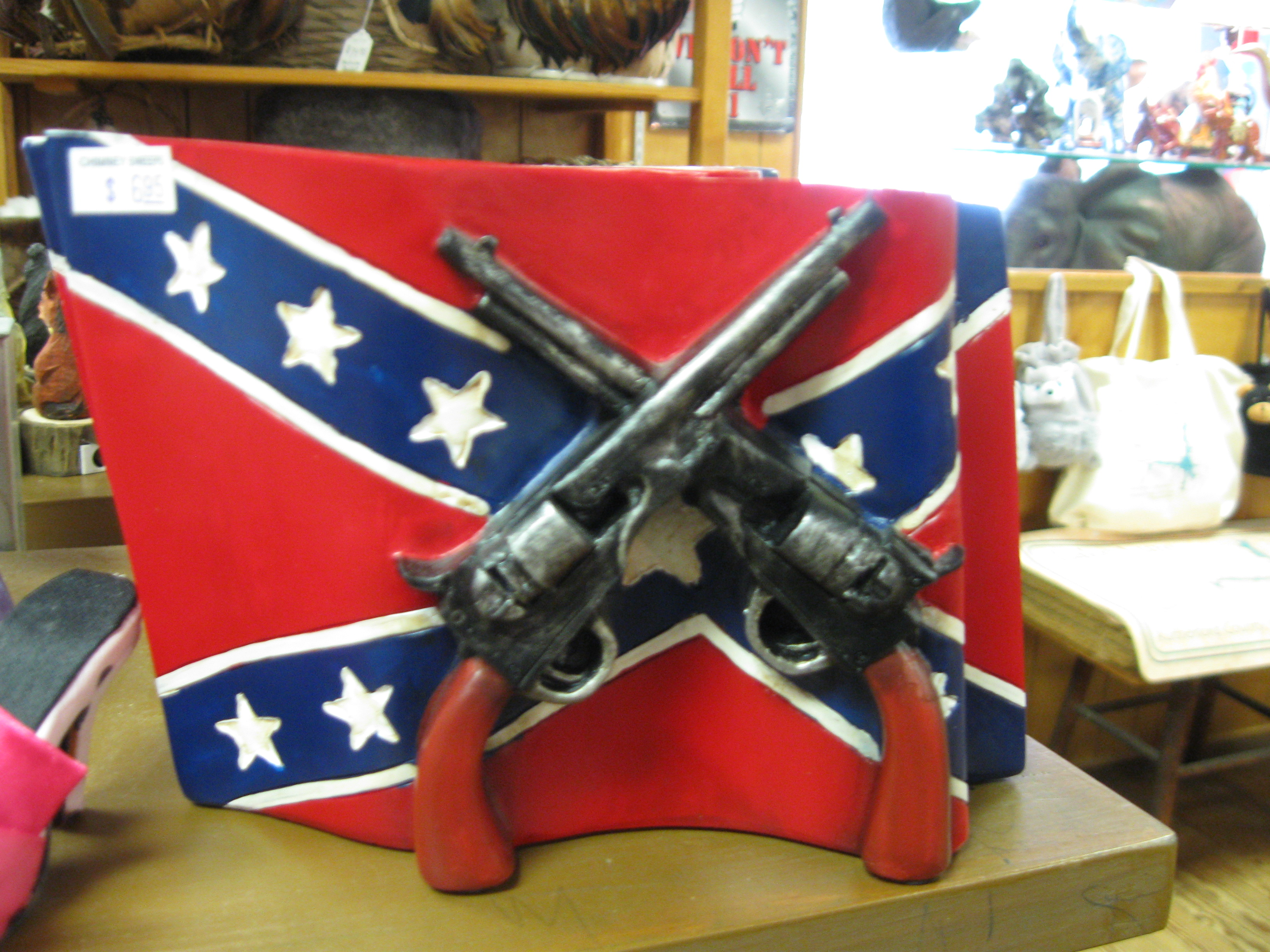
Well, in the same store that carried the “Woman Getter” there were items emblazoned with the Confederate battle flag ranging from a pot holder, useful for Rebel-hot recipes from the Confederate Cookbook, to bookends with three-dimensional pistols attached to protect your copies of Southern By the Grace of God or When the South was Southern.

Battlin' Bookends

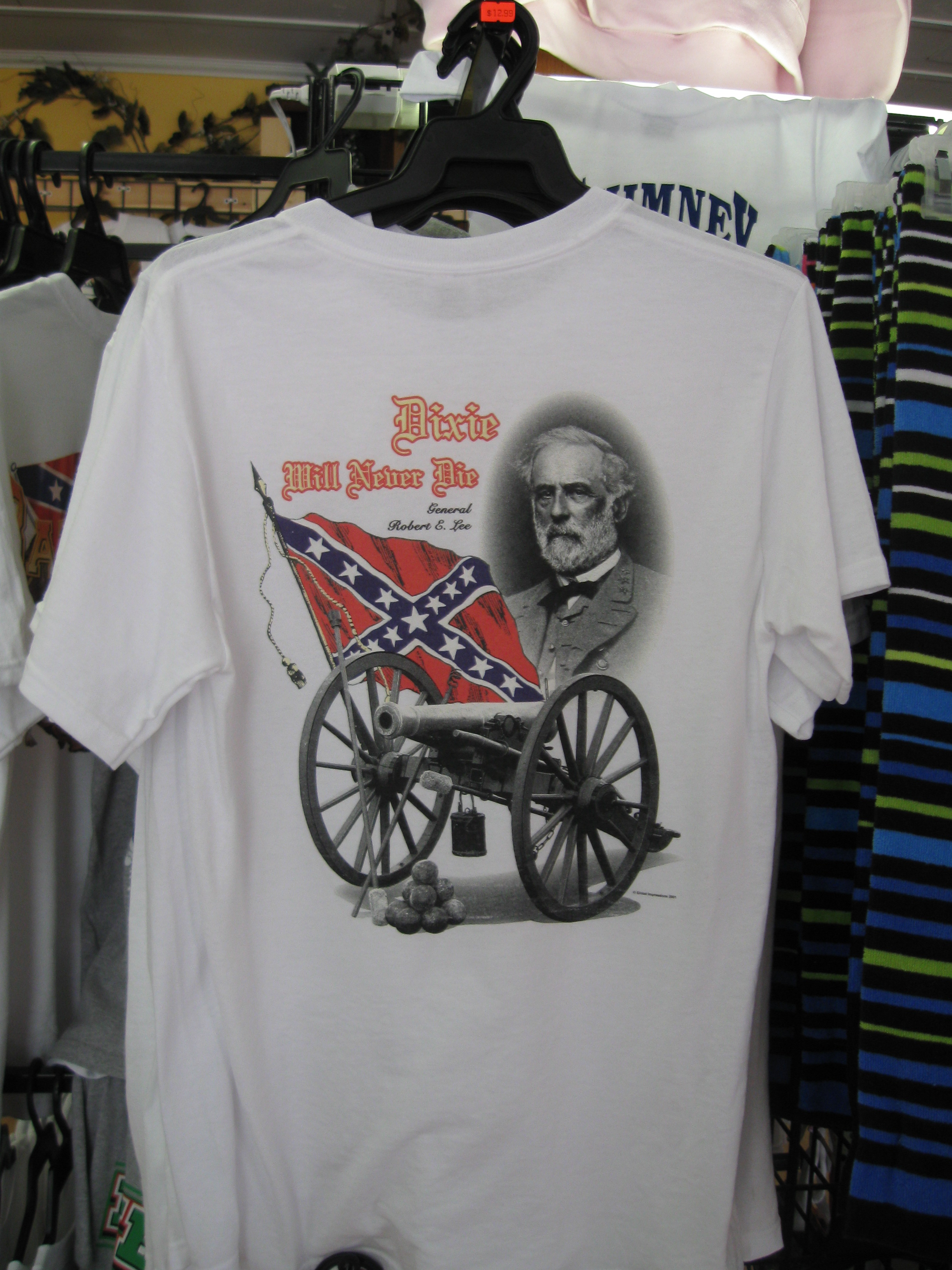
In a second store where I sought a reprieve from the heat there was an enormous selection of t-shirts from Dixie Outfitters—a merchandiser that offers a wide array of items displaying messages of “pride in the Southern way of life.”  Perhaps you’ve seen them.  Using images of Confederate soldiers, Robert E. Lee, and yes, the Confederate battle flag, the shirts practically scream that the Civil War is still alive and well in the hearts and minds of some southerners (those who would buy these shirts).

"Dixie Will Never Die"

On one, with an image of Lee, the slogan reads “Dixie Will Never Die,” and another for the “Southern Girl” tells you that among her many qualities are “Boot Scootin’,” “Handgun Packin’,” “Pickup Drivin’,” and “Bass Fishin’.” Of course, she wouldn’t be complete without also being a “Belle of the Ball.”

While I’m a historian, I must be part sociologist.   The historian in me understood that the history of this area of North Carolina ran counter to the sale of such pro-Confederate souvenirs.  Yet the sociologist in me could not help but notice that this store was owned by two immigrants, living the American Dream.  The couple, a Hispanic man and his wife, who I guessed to be from Eastern Europe, were the proprietors of the store.  When I asked her why they were selling all of these pro-Southern t-shirts she responded vehemently “I am from southern!”  She couldn’t have known I asked out of curiosity and perhaps thought I was challenging her in some way.  Thinking on it, I wondered if she indeed had been challenged about it before. Maybe by some of those present-day Confederate sympathizers (a.k.a. “Neo-Confederates) who, let’s face it, are very likely to be anti-immigrant in their thinking.

A "Southern Thang?"

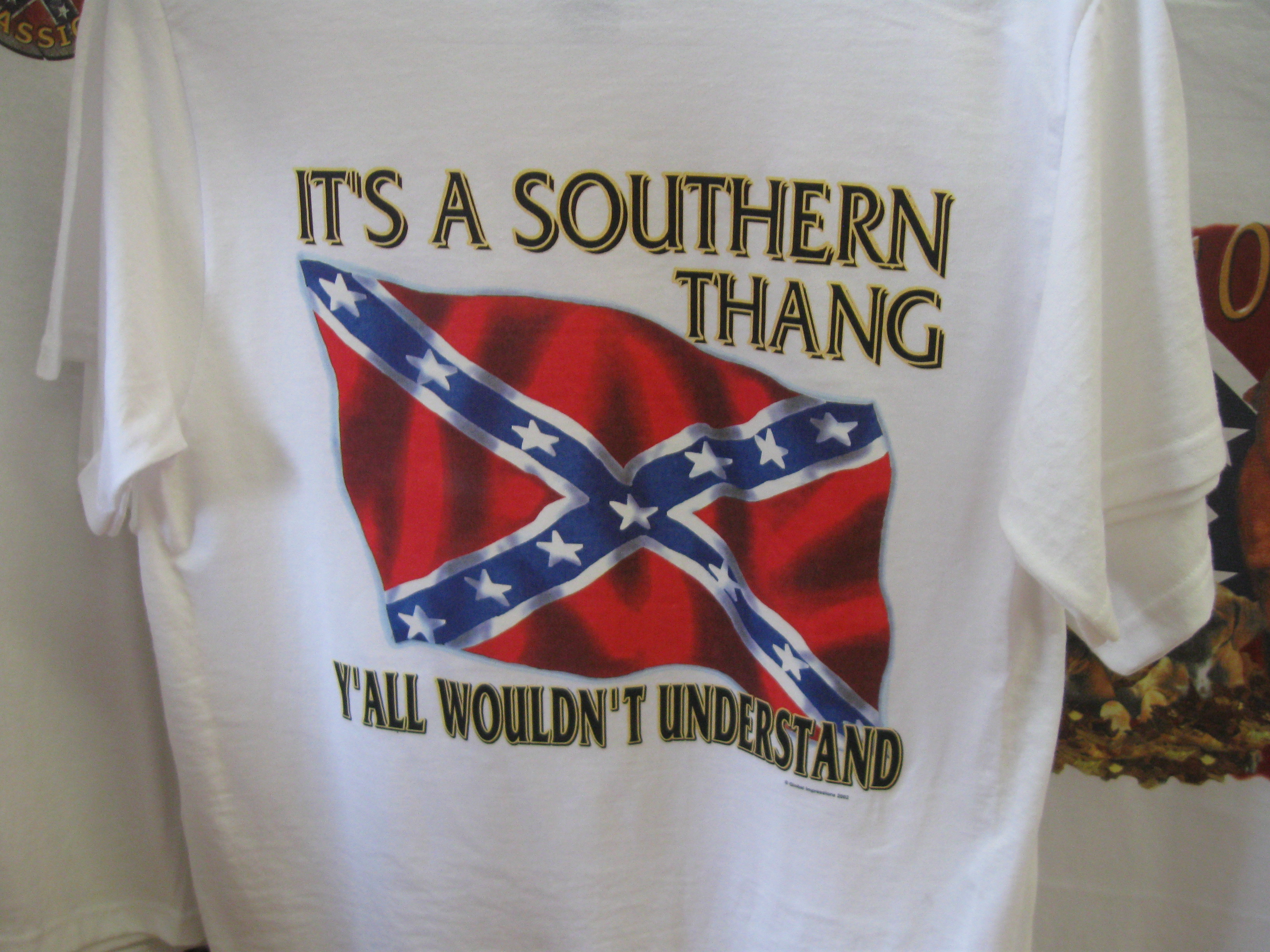
I wanted to write this piece in an effort to unravel the complexities of what I was experiencing there in the little town of Chimney Rock:  the Confederate souvenirs in what, historically, was not so Confederate.  The immigrants selling shirts emblazoned with “It’s a Southern Thang, Ya’ll Wouldn’t Understand,” a slogan that is clearly a ripoff of “It’s a Black Thing, You Wouldn’t Understand.”  So, I turned to Winston Churchill.  Yes, Churchill.

Speaking about Russia during World War II, Winston Churchill said:  “I cannot forecast to you the action of Russia. It is a riddle, wrapped in a mystery, inside an enigma; but perhaps there is a key. That key is Russian national interest.”  I felt very similarly about my experience—that what is going on in Chimney Rock and in similar tourist attractions around the South is a riddle, wrapped in a mystery, inside an enigma, but perhaps there is a key.  That key is capitalism.