Double Divas or Our Cups Runneth Over with Southern-based Reality TV

As I’ve said many times, the explosion of southern-based reality television series make it difficult for me to keep up.  One of the more recent is Lifetime‘s Double Divas, starring Molly Hopkins and Cynthia Richards, owners of LiviRae Lingerie in Kennesaw, Georgia. Lifetime may refer to it as a “docu-series,” but that’s just a highfalutin term for reality show.

The premise of Double Divas is that Molly and Cynthia are out to help women, one bra at a time, who’ve been frustrated in their effort to find one that fits.  Their motto “no bust too big or too small” is the premise of their business, although there’s nothing particularly southern about that. Women from all over the country can appreciate a well-fitted bra.

While Lifetime describes the show as one that brings “southern charm and hospitality,” a claim made by many southern-based reality shows, what makes it “southern,” in my opinion, are Molly and Cynthia’s accents.  Having grown up in the South, I truly appreciate a southern accent, of which there are several variations.  Yet sometimes it seems that Cynthia lays it on a bit thick with hers, almost to the point where I have to hit the mute button.  Still, I can’t help but wonder if the production company is behind the exaggeration.

NorthSouth productions, with offices in New York, Los Angeles, (and Knoxville?), produces this show and others in the greater Atlanta area, including Say Yes to the Dress, where a strong southern accent seems to be a requirement. The company also produced You Don’t Know Dixie, a show that promoted southern stereotypes, as I’ve written about previously.

Despite the exaggerated accents, there is something very likeable about Molly who seems genuinely interested in helping women find a bra that boosts their confidence as well as their breasts.  And while Cynthia’s accent can get on my last nerve she, too, seems to really want to help women by creating the right bra for them.

I think women are watching this show (and heading to LiviRae Lingerie in droves) because so many of us are eager to get a bra that fits. That’s no joke. Even I might make the trip to LiviRae for that reason.  Still, you don’t really need a southern accent or characters to sell you on that simple truth, but in the world of reality TV it’s a big part of what sells the show.

Duck Dynasty: Those Beards are Nobody’s Fool

51HD+GY+eRL._SX500_
Image credit: A&E Television

The guys with the beards are back.  On reality television that is.  Duck Dynasty’s new season premiered last night and its legions of fans tuned in to see the latest happenings in the Robertson family, especially those of the hirsute men of the clan.

Duck Dynasty has become the most successful of the reality shows set in the South.  It’s part of what I like to call the “Louisiana genre” of reality TV that includes other successful show like Swamp People and Billy the Exterminator.  Though let’s not forget the lesser known Cajun Pawn or Cajun Justice.

What makes Duck Dynasty different, for me at least, is that the guys with beards are nobody’s fool.  So much of southern-based reality TV seems geared toward stereotyping people from the region.  Very often they are placed in ridiculous situations for comedic effect and their speech is accompanied by subtitles. This is most famously the case with the Thompson Family in Here Comes Honey Boo Boo.  Not so with Duck Dynasty.

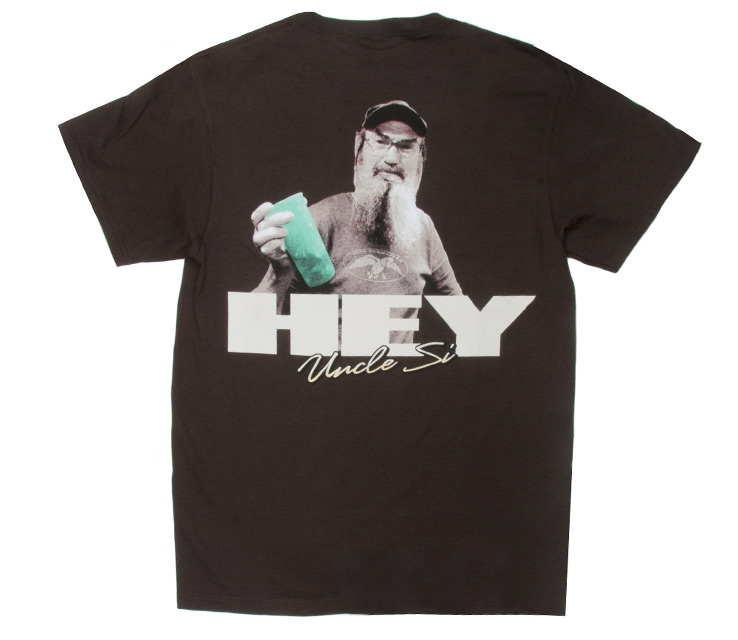
One gets the impression that Willie and the boys are very much in control of their show and while there’s humor, it’s the kind where we can laugh with them and not at them.  Uncle Si might be the one in the family who’s picked on, but “hey,” he and the rest are in on the joke.  Moreover, the show about these self-made millionaires, whose company Duck Commander makes duck calls among other products, seems more like a strategic move on the family’s part to further their brand.  And it’s worked like a charm.

duck_commander_hey_uncle_si_t_shirt_1306579_1_og
Uncle Si Robertson and his catch phrase on a T-Shirt

Now the brand includes the show itself.  The success of Duck Dynasty has resulted in sales of all sorts of items that have less to do with duck calls and more to do with the family’s keen marketing sense.  Products range from bobble heads of father Phil and his sons Willie and Jase to shirts and coffee mugs with Phil’s saying “Happy, Happy, Happy,” to images of Uncle Si and his catch phrase “Hey!” printed on t-shirts. The Robertson women are also in on the boondoggle with products of their own.

One of the reasons I enjoy the show is that I can see that the Robertsons are very grounded, self-aware, and clearly wise to the ways of the world.  When their fame dissipates, they will still be doing well financially.  Unfortunately, this is the exception to the rule when it comes to southern-based reality TV.  True, many of those stars may temporarily be enjoying some windfall, but they are not as savvy as the beards.  And that’s too bad.

Hillbilly Redux: MTV’s “Buckwild”

A year and a half after writing an op-ed for the New York Times about the South in reality television, I am here again with the latest installment of the trend.  “Buckwild,” MTV’s newest “reality” program, is a look at the shenanigans of a group of young men and women from my home state of West Virginia.  Set in Sissonville, just outside of the state capitol of Charleston, MTV tells us that this show and this group of 20-somethings is going to take over where “Jersey Shore” left off.  My prediction:  “Buckwild” dies a quick death after the first season and none of the show’s cast members will see the kind of money that Snooki or “The Situation” has enjoyed.

buckwild
The cast of MTV’s “Buckwild”

So what do we have in “Buckwild?”  After a first look at the show, what I saw was very contrived.  The cast seemed a little nervous to be on film at all, and their conversations didn’t seem as organic as they likely are when the cameras aren’t on.  There were also several places within the first episode where you could almost hear a producer telling cast members what to do next.  “Okay, you two girls, jump in that mud hole and start wrestling.”  Because that would seem natural for two hillbillies from West Virginia.

If you’re from the state, you have a right to be embarrassed.  On the one hand, the antics of youth can be found anywhere.  But there’s always a spin when the show is set in the South, or in this case, Appalachia.

First, you have the subtitles as most of these shows have, which indicates that the people in this place speak with a foreign tongue–but mainly foreign to urban ears. (I find I am distracted and annoyed by the subtitles in southern-based reality shows, because the speech and/or accents are often perfectly understandable.)  Second, you have some activity that suggests to you that the place is a cultural backwater, literally.  Cue the hoses to create a mud pit and send in trucks to splash through it or young women to roll around in it.

Now, some would say “these people really do exist.”  Sure they do, but are they representative?  I’m from West Virginia and my cousins and their children are all hardworking, decent and smart people.  And they don’t get their kicks wallowing in mud.  Why don’t we see THAT represented?  Because then we wouldn’t have people we could laugh at.

You see, this hillbilly stereotype goes back for more than a century and has often been used for purposes of humor.  Very often this stereotype highlights the urban and rural divide in American culture.  The city slicker versus the country rube.  So, “Buckwild” just continues to perpetuate that long held stereotype, so that urban dwellers can get a cheap laugh at hick culture and feel superior about it while they do.  If MTV, or any other reality show (like “Moonshiners”) truly wanted to represent the diversity of Appalachian culture they would.  But they are content to make money by striking the same note–over and over–much to the chagrin of so many people who live far richer lives there, in those same mountains, than what is presented. That’s a shame, but I doubt we’ve seen the last of shows like these.

Cue a toothless man holding a moonshine jug with XXX marked on the side.

In Defense of Honey Boo Boo

This is an excellent guest post by Abigail Gautreau for Katie Stringer’s blog entitled “Something Old, Something New.”  I suggest you read it and reconsider your views on Honey Boo Boo and the Thompson Family.  Thanks, Pop South

In Defense of Honey Boo Boo

Alana and her family


Being Gay in the South–Uncle Poodle Is Beside the Point

I wish to take a few minutes, in the spirit of civility, to respond to Jonathan Capehart’s Washington Post columns (in spite of the condescension and the personal barbs) which have taken aim at my New York Times op-ed “We’re Here, We’re Queer, Y’all.”  For the record, the idea of using Uncle Poodle’s appearance on Here Comes Honey Boo Boo as a hook (not an argument) was not my own, but that of an editor. The real argument was based on my own personal experience.  I could have shared dozens of stories, because as he learned from my friend Helen, both she and I and all the other gays and lesbians I know living in the South are indeed consequential and not because we were or were not raised in an urban environment.  I made it clear in my editorial that there was a real limit to acceptance in the region.  The point was that being gay in the South should not be seen in black or white, all or nothing, because there are clearly shades of grey.

What I saw coming out of Capehart’s columns and also some messages I received was a disagreement with me for countering the narrative about the South as a cold, angry, place where gay people could not possibly want to live and would set out for New York, DC or San Francisco as soon as they got the chance.  Some of them surely have, but many others have not.  And the decision to leave may have to do with the limits of acceptance, and maybe not. Perhaps they simply want to experience a different part of the country. The decision to stay, however, is often (in my personal experience) that they don’t want to leave their families or communities.  If they leave the small town South, they often move to larger cities in the South.  New Orleans, Dallas, Atlanta, even Charlotte.

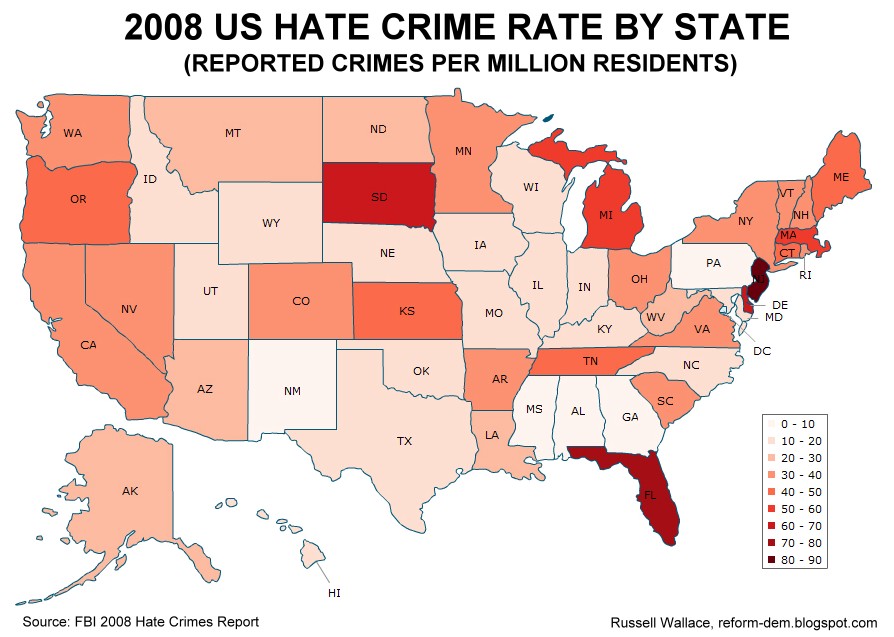
As this map shows, New Jersey had the highest hate crime rate in the nation in 2008–more than any other southern state, including Texas. For more recent statistics from the FBI see: http://www.fbi.gov/about-us/cjis/ucr/hate-crime/2010/tables/table-12-agency-hate-crime-reporting-by-state-2010.xls

Capehart used the case of the gay Texas couple who was recently harassed by the local minister and received threatening messages from his followers to make his point “that this says more about the South than ‘Uncle Poodle’ ever will.” Really?  Is this a southern phenomenon?  To read his piece, you’d think it is.  I know that it was timely in that it fit his argument, but hate crimes take place in the urban North (New York, DC, Minneapolis, etc) that don’t receive nearly the same amount of media attention. Yet when it takes place in the South, the national media makes hay of it, because it supports the narrative of a sinister South where such things must only happen here.  This does not mean that I don’t condemn what happened to the couple in Texas because I absolutely do.

The Uncle Poodle reference–again, an editorial decision–was used because of it’s pop culture relevance, but is beside the point.  I have lived a very rich and wonderful life in the South and wouldn’t choose to leave.  Has it always been easy? No, but I could have said this had I been raised in another region of the country.  Are there problems still? Yes, and here in my own state of North Carolina I voted against the marriage amendment and will support Equality NC in its efforts to derail it. I’d also have to do this in several other states, not all of which are in the South.  However, neither that amendment nor a hateful evangelical minister (there is one who proselytizes in the free speech zone on the campus of UNCC with some regularity) is enough to make me flee because this is my home.

In the end, and despite the criticism, I am pleased that my editorial ignited a conversation about the South as a place where LGBT people can and do live happily, work, and have families, etc. because it’s a much more complicated and nuanced region than it’s given credit for being.

Honey Boo Boo and the Country Ghetto

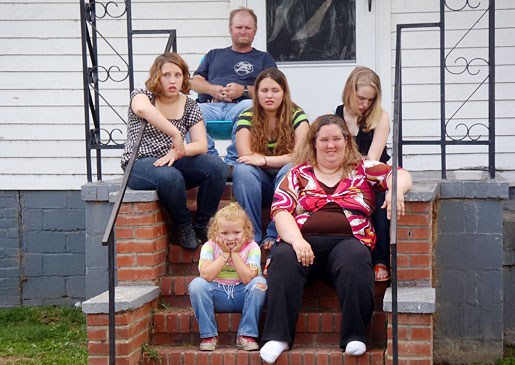
After watching the first two weeks of “Here Comes Honey Boo Boo,” the tragic comedy reality show on TLC, it’s clear that some “hixploitation” is going on at the network.  The cast of characters–at the center of which are Mama June and her pageant queen daughter Alana–are what you might call “country ghetto.”  They rattle off phrases (“A dolla makes me holla” and “I’m all that and a pack of crackers”) that Helena Andrews writes makes them appear as if they channeled an “angry black woman” from a ’90s sitcom. (See her article in The Root, Aug. 15, 2012).

Alana and her family

Yet, Alana (a.k.a. “Honey Boo Boo”) and her family are firmly situated in rural Georgia, and what I see is more than just the language of the ghetto.  This family literally lives IN a country ghetto.  They are, as a friend suggested, like the Evans family on the sitcom “Good Times” because they have to laugh to keep from crying about the poverty which they can’t seem to escape.

I see the cycle of rural southern poverty on full display.  Underneath all that sass is a family that struggles to stay afloat financially, while also gambling on Honey Boo Boo.  If you listen closely, in between all the colloquialisms (ignoring the subtitles even when they aren’t needed), you’ll hear Mama June tell you that her “baby daddy” works 7 days a week and that she got pregnant at 15, which meant that her education was cut short, although to her credit she finished her GED.  And now her 17 year-old daughter is repeating the cycle of teen pregnancy, and there will be one more mouth to feed.  In addition to “extreme couponing,” June also goes to food auctions and her family happily accepts a deer carcass, even if it was roadkill, because the meat they preserve from it will save them money.  Her older daughters complain that their mother considers anything over $5 expensive.

People may find it irresponsible that Mama June would spend the money she’s scraped to save to invest in Alana’s pageants. But this is consistent with people who live in poverty who pin their hopes on a gamble they hope will pay off.  It’s no different than if they were playing Powerball or scratching off tickets–maybe one day they’ll hit the jackpot, although the odds are stacked against them.

This isn’t just moralizing on my part, because I’ve experienced poverty and can remember a time as a little girl when my Mom (a single mother who scraped by on a secretary’s salary) gave me $2 to purchase a raffle ticket in hopes of winning a new car since we didn’t have one. I still remember the look in her eyes that even she knew this was a long shot.  Of course, we didn’t win, but I hoped with everything we would because it might make life a little easier.  I can see this in little Alana.  She’s a sassy kid, to be sure, but underneath she’s vulnerable and still just six years old. She desperately wants to win that Miss Grand Supreme title and it hurts her a little more each time when she doesn’t.  It hurts June, too.  This is what makes it hard to watch, because I understand how poverty makes you feel “less than” and so I also hurt a little for them.

Maybe they have hit a small jackpot with their show (no doubt TLC has).  During commercials, you’ll see that the network is offering ringtones of Alana’s sayings like “a dolla makes me holla.”  I just hope TLC is cutting Alana a check for those ringtones, since it is profiting by exploiting her.  Maybe she will earn enough to fund a college education, break her family’s cycle of poverty, and escape the country ghetto.  I’m rooting for her.

Here Comes Honey Boo Boo, and There Goes TLC

The Learning Channel (TLC) recently announced the upcoming premiere of its new series “Here Comes Honey Boo Boo,” featuring Alana, the “breakout star” of “Toddlers & Tiaras.” Alana, as some viewers will recall, is the little pageant queen whose mother June gives her “go-go juice,” a mixture of Mountain Dew and Red Bull, to give her that special energy she needs to perform.  Doing so brought June severe criticism, but that hasn’t stopped her from placing her entire family in front of the camera for what TLC describes as “the unapologetically outrageous family life of the Honey Boo Boo clan,” from rural Georgia.  Here’s a taste of what’s to come:

A quick read of the TLC press release lets me know that the most unapologetic people involved with this series, debuting in August, are the producers at Los Angeles-based Authentic Entertainment who developed the show, and The Learning Channel, its distributor.  TLC, owned by Discovery Communications, claims it “celebrates extraordinary people.”  So, the company is “celebrating” Alana and her family, is it?

What the folks at TLC are celebrating in this tragic production is that a ripe plum for exploitation fell right into their laps.  It has all the elements of the depraved South, which production companies like Authentic Entertainment create for public consumption and profit.  Rural Georgia? Check. Rednecks? Check. Do they roll around in the mud? Check. Are there people with nicknames (besides “Honey Boo Boo,” there’s “Sugar Bear,” “Pumpkin,” “Chickadee,” and “Chubb”)? Check, check, check, and check.

The kicker is this line in the press release, which says as much about the producers as it does the family:  “When she’s not chasing after crowns, Alana’s with her family in rural Georgia doing what her family does best: four-wheeling through mud pits and picking up road kill for the family cookout.” Really, this is what they do best?  And how about Authentic Entertainment and TLC?

“Here Comes Honey Boo Boo” is an unabashedly shameless series that scrapes the bottom of the reality television barrel, and it is unsurprising that the rural South is used to make it happen.  Videos that parody this little girl and her mother already populate YouTube, an indication that the show may do well for TLC.  Yet those parodies suggest something worse going on here, as they predict that Alana grows up to be a pathetic, drug-addicted adult.  One can’t help but find a kernel of truth in this, and she may well have TLC to thank.  I am not suggesting that Alana’s mother June get a pass for exploiting her child, but neither should TLC or its partner in crime, Authentic Entertainment.

Just because it’s called “Cajun” doesn’t make it so

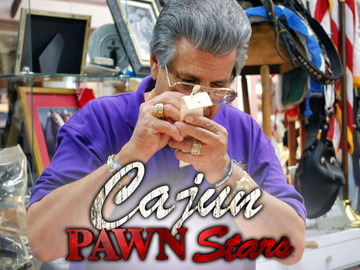
One “Cajun” pawn star with a 1950s Pompadour

I’ve written a few blogs entries on Pop South about Louisiana-based reality television shows.  There are so many that it’s hard to keep up.  One of the more recent ones (I will have to blog about Duck Dynasty another time) is Cajun Pawn Stars, set in Alexandria, Louisiana.  And, as those in the know will tell you, it isn’t even in Cajun country.

It seems that the abundance of the shows set in Louisiana often play the “Cajun card” in order to draw in viewers and to create some sense of authenticity.  This particular show, which airs on The History Channel (boo, hiss), must strive for some authenticity if it’s going to get the thumbs up from The Big H, but as we all know by now the H stands for anything BUT history (hysterical, hokey, and hollow might do).   In this case, Frances Coleman, a native of Alexandria and a writer for the Mobile Press-Register writes, it’s time to cry “foul.”  She says it better than I can, so read her editorial here, and take all those “Cajun” shows with a grain of salt (or Tony Chachere’s.)

Call me “Professor Swamp People”

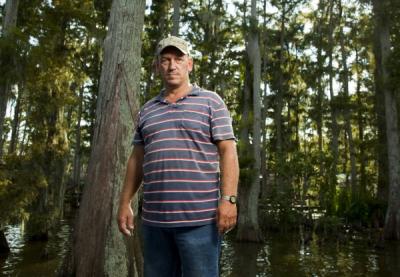
Troy Landry, one of the stars of History Channel's "Swamp People"

I was recently interviewed by Cara Bayles at the Houma Courier in Louisiana about the flood of reality television shows that are set in Louisiana.  We had a terrific talk that lasted a good half an hour, but all that ended up in the paper was a couple of sentences, which you can read here.  Just before we hung up the phone, I asked Cara “How did you find me?” to which she responded “I Googled ‘professor swamp people.'”

When I set out to write Dreaming of Dixie, I had no idea that it would lead to my becoming some “expert” on reality TV shows set in the South, although “Professor Swamp People” has a nice ring to it.  It began with the op-ed in the New York Times, which led to an interview about “hixploitation” for the Louisville Courier-Journal(KY) and similarly-related articles elsewhere.

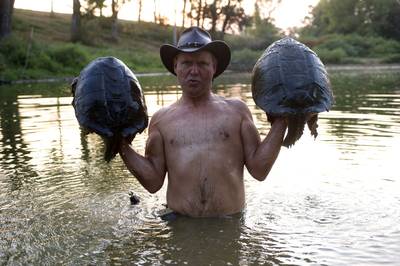
Ernie Brown, Jr. a.k.a. "Turtleman," from "Call of the Wild Man" on Animal Planet

It may seem a huge leap to go from an analysis on the impact of Gone With the Wind to that of Swamp People, but from where I sit the purveyors of popular culture have, since the early nineteenth century, simply decided to emphasize what it believes to be the South’s cultural distinctiveness–whether or not it applies to the broader region.

And yet, therein lies the problem. So often nonsoutherners (including seasoned journalists) who don’t know the region’s history and have not spent time in the South, will often buy into those differences they find in popular culture. And as long as they do, I will continue to answer to the name “Professor Swamp People” when called.  Choot’em!!

Billy the Exterminator in Arizona?

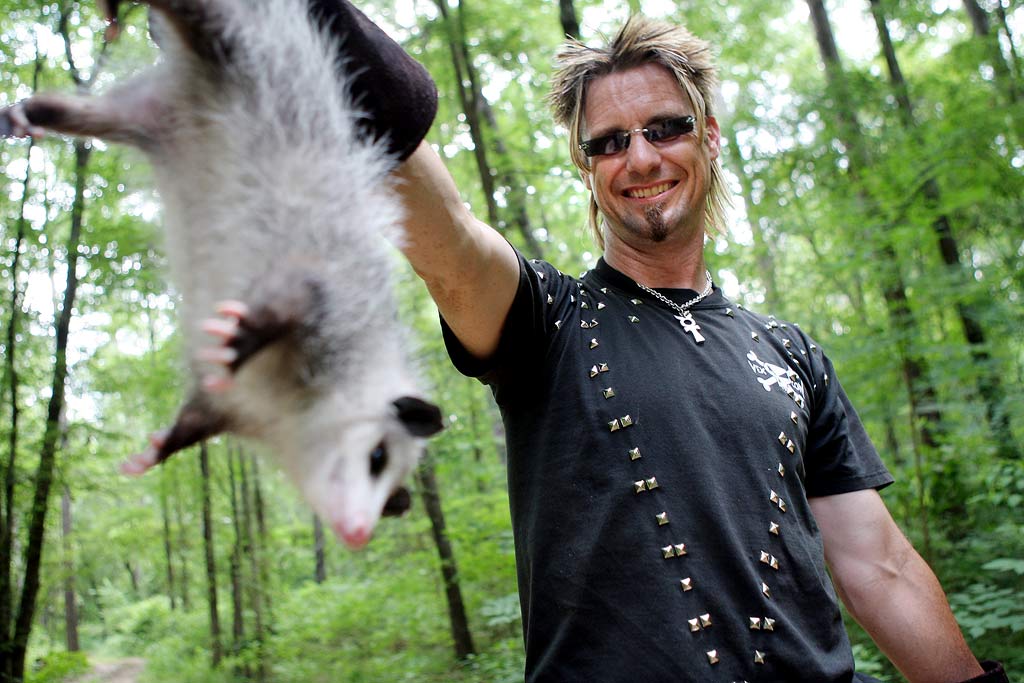
Billy the Exterminator

I watch a lot of reality television and am always on the lookout for new southern-based reality shows, but one I liked almost right away was Billy the Exterminator.  The show, which is set in Louisiana, follows Billy and his brother Ricky (with help from his parents Donnie and Bill, Sr.) whose company Vexcon is set up to help people get rid of snakes, wasps, cockroaches, and raccoons, among other critters that have invaded their homes.  Billy, the show’s star, does his work while wearing all black (in the Louisiana heat and humidity) spiked wristbands, very often a hat, and his trademark thin sunglasses.  He’s a bit wild man, and a bit rock ‘n’ roll.

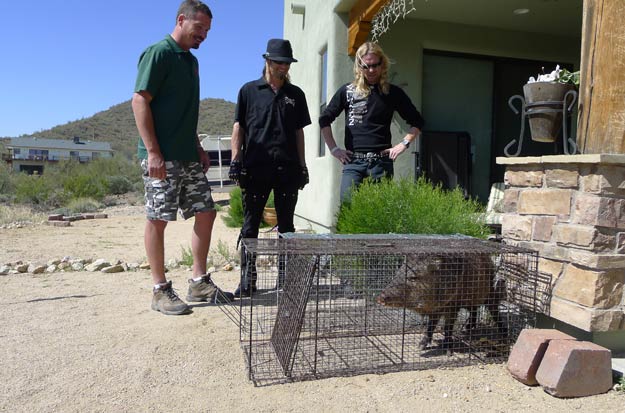
Billy and Ricky in Arizona with captured Javelina

This season the producers have taken Billy on the road to assist people in catching vermin in other states–Texas, Florida, and even Arizona, but I’m not so sure that Billy the Exterminator on the road is such a good idea.  Some people might like to see him try his hand at catching a Javelina (which looks like a miniature wild boar) in the Arizona desert, but something about that episode didn’t resonate with me. While Billy is certainly the star of the show, in some ways so is the State of Louisiana.  Louisiana is like another of the show’s characters.  Having Billy and Ricky work in the desert may have seemed like a good idea to the producers, but he looks out of place and the show’s chemistry seems off.

I don’t think the producers should mess with what is clearly a successful formula. They might be able to take Billy out of Louisiana, but you can’t take Louisiana out of the show.  That’s just not right.