
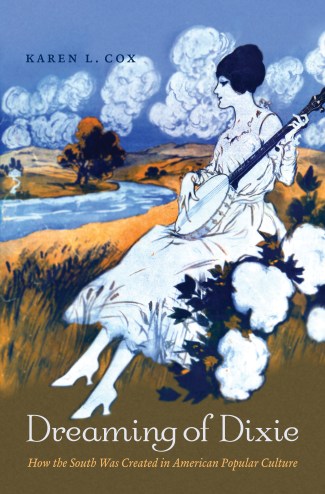
I’m pleased to announce that my book Dreaming of Dixie: How the South Was Created in American Popular Culture is coming out in paperback. You can pre-order now through UNC Press for the book’s release in August. Fun reading and great for classes!
I’m pleased to announce that my book Dreaming of Dixie: How the South Was Created in American Popular Culture is coming out in paperback. You can pre-order now through UNC Press for the book’s release in August. Fun reading and great for classes!

I’m pleased to be able to participate in the annual Historic Natchez Conference this week from Wednesday, April 17 through Saturday, April 20th. The focus of the meeting is “Civil War to Civil Rights.” I’ll be speaking about my new project about a murder case that made national headlines in 1932. It’s known locally in Natchez as the “Goat Castle Murder.”
William C. Davis, professor of history at Virginia Tech, is giving a keynote address. He is the author of Look Away! A History of the Confederate States of America (2003).
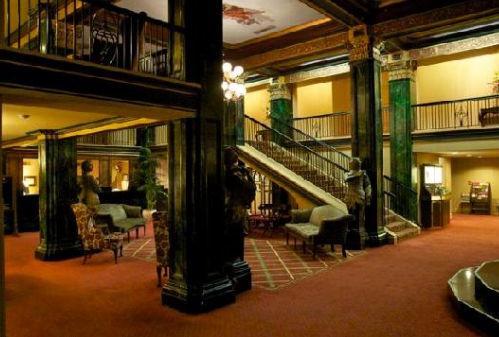
The conference will be headquartered at the historic Eola Hotel. As with many small towns with nary an airport in sight, folks there know how to show people a good time.
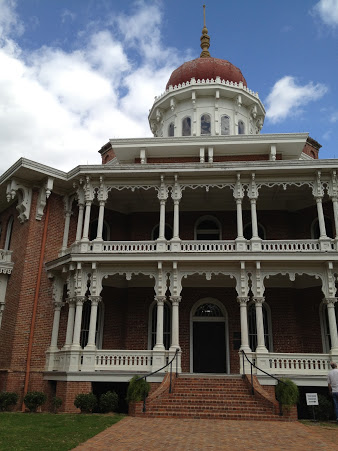
If you ever get to visit Natchez, you should. As they say there, “Natchez is in this world, but not of it.” Seeing is believing.
I had the pleasure of joining numerous historians at Gettysburg College this past weekend for The Future of Civil War History: Looking Beyond the 150th conference–a meeting that considered how we can better interpret the American Civil War to gain a fuller, more complex, and multilayered understanding of its impact on the nation and its people. During this, the sesquicentennial of the war, the conference sought to set a far different tone than the celebratory centennial (1961-1965), which many scholars have noted was swathed in the rhetoric of the Lost Cause.
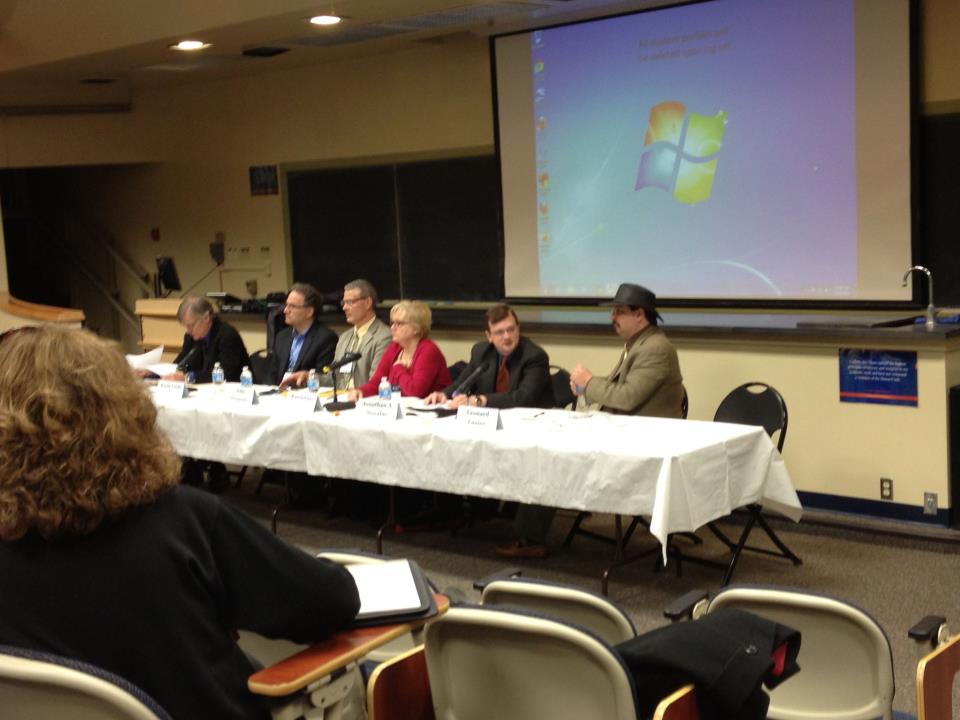
This gathering at Gettysburg certainly set a different tone as it brought together public historians and academic historians to tackle issues of memory and history, of slavery and gender, of trauma and even the smells and sounds of the battlefield. I participated in the session “Interpreting Issues of Civil War memory for the Classroom and Museum Audiences,” alongside Kevin Levin, who maintains the very successful blog Civil War Memory, Jonathan Noyalas, an instructor at Lord Fairfax Community College, John Hennessey of Fredericksburg & Spotsylvania National Military Park, and Leonard Lanier, assistant curator at the Museum of the Albemarle (NC). Our moderator was David Blight of Yale University and author of the very important and influential book Race and Reunion: The Civil War in American Memory.
One audience member asked us if we were doing a better job of interpreting the Civil War during the sesquicentennial. Time will tell, but I’d like to think that given the vast array of subjects covered at this conference that we’ve more than improved on the discussions held during the centennial.
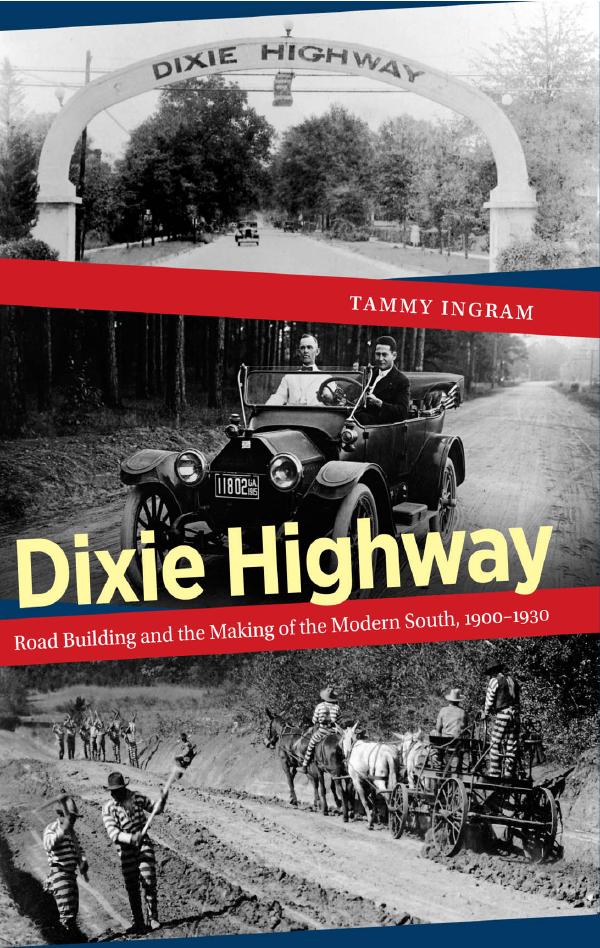 Pop South welcomes this post by Tammy Ingram, Assistant Professor of History at the College of Charleston. Her book Dixie Highway: Roads and Modernization in the South, 1900-1930 is forthcoming from the University of North Carolina Press.
I like to drive. My dad taught me how when I was seven or eight years old and turned me loose with his old one-ton flatbed truck. With the tattered bench seat pushed all the way forward, I toured the back roads around our South Georgia farm with my trusty co-pilot, a chihuahua named Scooter, perched on the seat next to me. When I was older (and legal), I ventured farther, this time with a stack of maps by my side. My best memories are from those road trips—my first solo long-distance drive to college; a cross-country journey with an old boyfriend; and speeding across the Tappan Zee Bridge at 4:00 AM on the 1000-mile trip home during grad school.
I got to know the South from behind the wheel of an automobile, just like the farmers and tourists I write about. But the South they encountered looked very different. At the turn of the twentieth century, a jumble of muddy roads covered the South like a bed of briars. Roads were not long-distance routes, but rather short paths that fed local traffic to the nearest railroad depot. Main roads branched outward from railroad towns, and thousands of miles of secondary roads linked them to farms. There were no road signs or mile markers to guide you. If you weren’t from around these parts, you’d have a hard time navigating the roads that linked isolated farms to nearby market towns but not much else.
These problems became the focus of a grassroots campaign called the Good Roads Movement. Though it began among urban bicyclists in the 1880s, by the 1910s the automobile craze had transformed it into a nationwide crusade to improve rural roads.
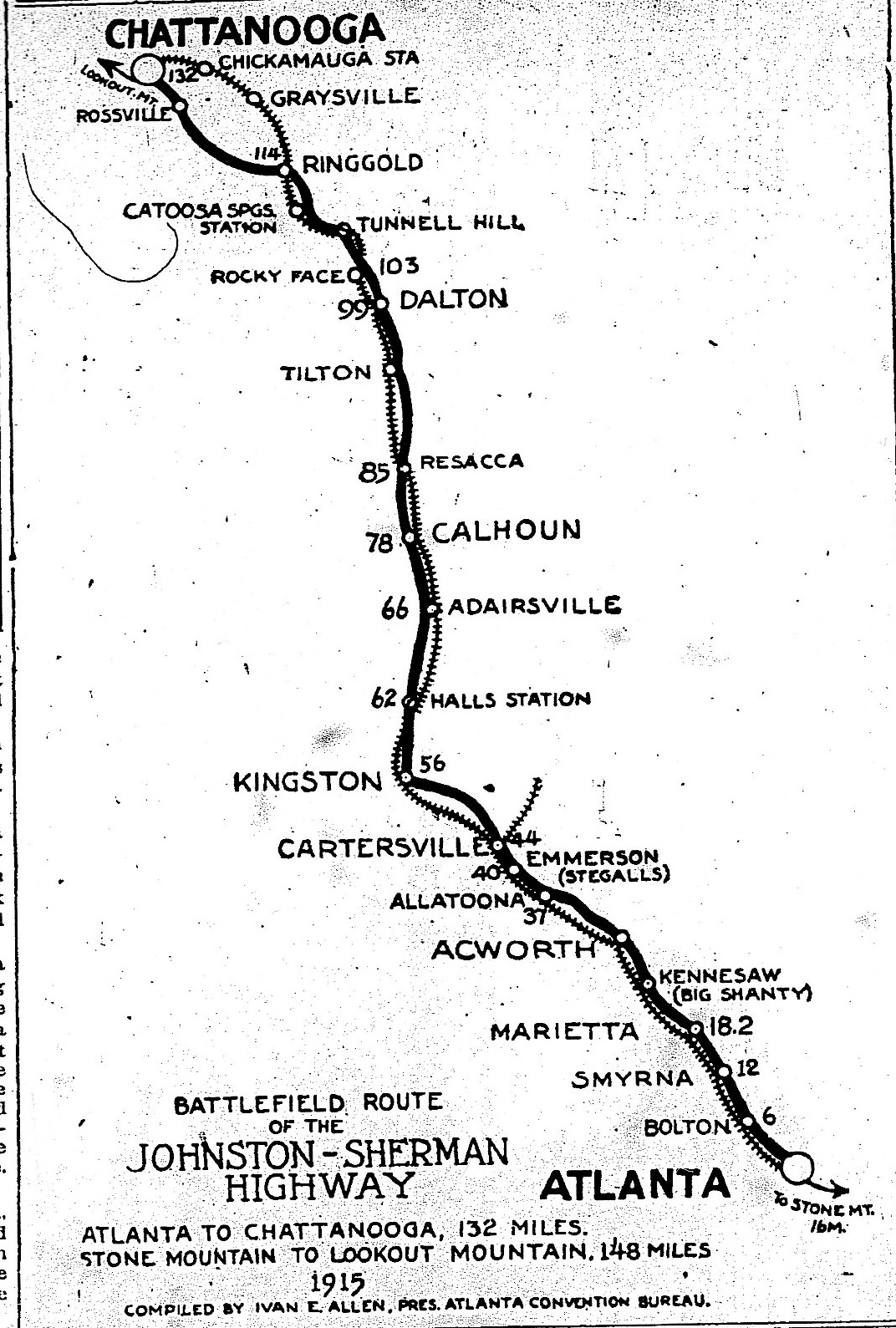
Between 1915 and 1927, the Dixie Highway served as the centerpiece the Good Roads Movement in the South. Made up of hundreds of local roads stitched together, the Dixie Highway looped 6000 miles from Lake Michigan to Miami Beach and back up again. It was originally planned as a tourist route to steer wealthy motorists from the Midwest to fancy vacation resorts in South Florida, but within a few years the Dixie Highway became a full-fledged interstate highway system—the first in the nation—and served tourists, businessmen, and farmers, alike.
The highway that helped to transform and modernize the South, however, reflected profoundly conservative ideas about the region’s place in the nation.
The Dixie Highway was the brainchild of Carl Fisher, an eccentric Indianapolis millionaire, and his wealthy friends in the auto industry. With the support of others in the Good Roads Movement, they used the highway to lobby for state and federal highway aid. Southern support was critical to this process. Yet in the Hoosiers’ imagining of the Dixie Highway route, the South was little more than an unavoidable place on the way to vacation paradise in South Florida.
In order to promote the highway to northern tourists, they had to market the South as a destination in and of itself, not just an obstacle separating Chicago snowbirds from the warm Florida sunshine. And in order to persuade southern voters and taxpayers to fund long-distance highways, which they derided as “peacock alleys” that served only wealthy motorists, they had to convince them that tourism in the South would pay.
They started with the name. Originally called the Cotton Belt Route, by early 1915 they had adopted a snappier sounding name that, as this blog’s author Karen L. Cox has argued, was not just a geographic reference but a brand that evoked popular nostalgia for the Old South. The Dixie Highway sounded like a road to the past as much as a road to a place. It presented the South as an exotic locale, and idea, to explore and exploit.
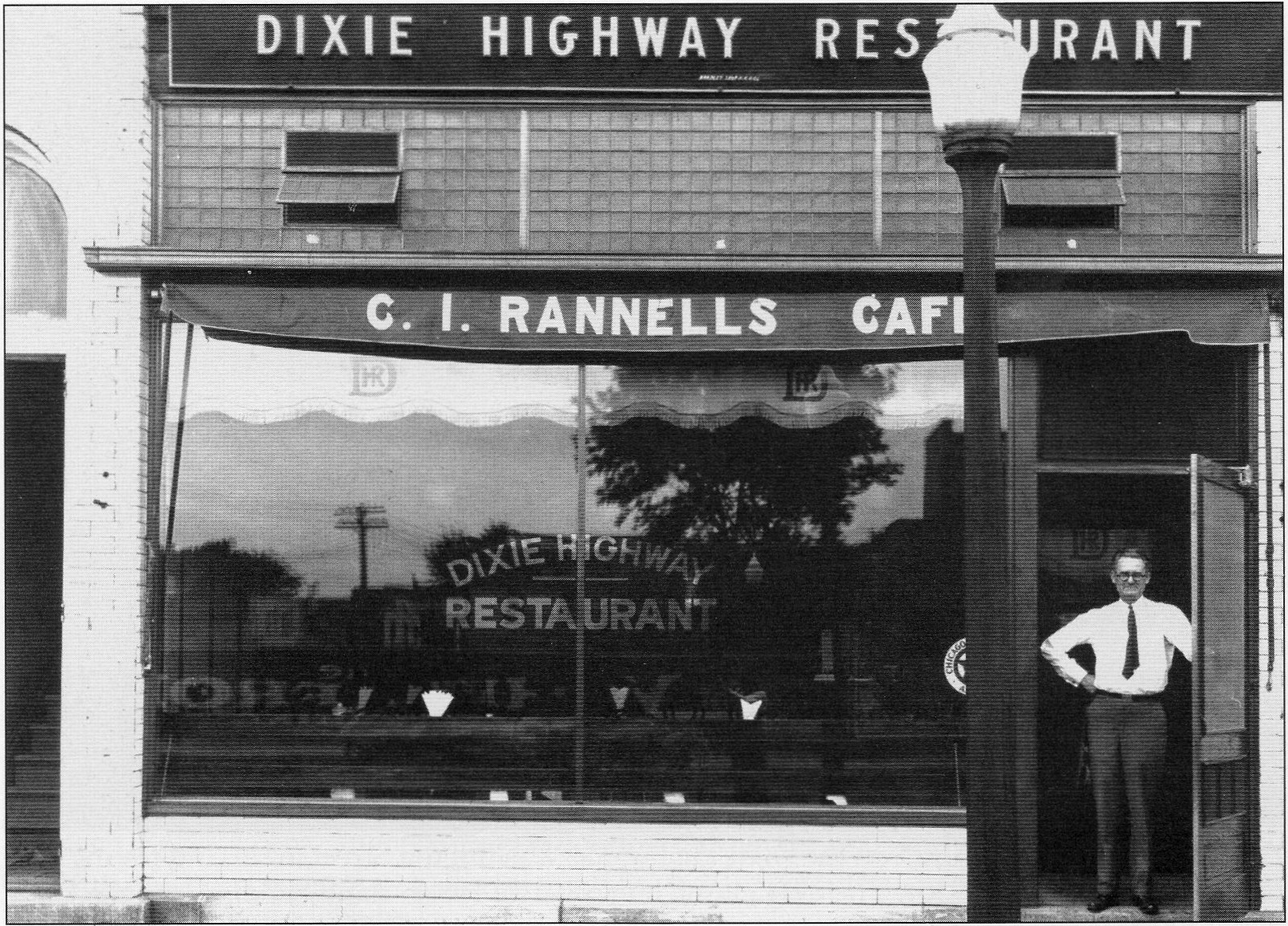
Although traffic would flow both ways along the Dixie Highway, its Hoosier boosters envisioned it as a path “leading down into the South,” where there existed “wonderful scenery that is most unusual and attractive” to Midwestern motorists. Some even believed the Dixie Highway could ease lingering sectional tensions. The New York Times dubbed it the “Dixie Peaceway” and mawkishly described it as “a memorial . . . symbolical of the accord between brethren which shall never again be broken.” In Illinois and Indiana, “Dixie” gas stations, restaurants, and hotels conjured up images of an unfamiliar but pleasant destination. Oil and gas companies capitalized on the interest in southern tourism, as well, by distributing road maps to guide tourists through the South.
But Yankee entrepreneurs were not the only ones who drew on stereotypes about the South. In Georgia, Dixie Highway boosters promoted Old South and Civil War tourism.
Looking backward, however, proved incongruous with the challenges of building a modern highway system. Even while southern supporters of the Dixie Highway joined the campaign for state and federal aid, they clung to old social and political institutions that preserved local control.
The most ruinous was the county chain gang. Chain gangs were not unique to the South, but by the 1920s, when state- and federal-aid highways were beginning to take shape, most states outside the region had turned to contract labor. But not southerners. Chain gangs allowed local authorities to control black labor, so southerners preserved them long after other states had abandoned them.
As soon as modern highway building challenged their sacred institutions, southerners retreated. By the time state and federal highway markers began to replace Dixie Highway markers in the late 1920s, the Good Roads Movement was dead. The backlash against the emerging highway bureaucracy did not forestall road work altogether, but it delayed the development of a modern, integrated highway system in the South for decades. The construction of the Eisenhower system in the 1950s and 1960s transformed large parts of the South, but it had little impact on the quality of local roads and state highways miles away from the interstates. In the 1980s, when I was growing up in rural Georgia, a hard rain could wash out half of the county’s dirt roads.
A few years ago, I drove one of the few remaining sections of the original Dixie Highway, a narrow road that winds through peach country near Macon, Georgia. In some spots, you can see in your rearview mirror a stretch of Interstate 75, the modern, multi-lane, limited-access freeway that replaced the Dixie Highway. You won’t see much of the South driving eighty-five miles an hour along the latter route, but the former won’t take you where you need to go. If ever there was a fitting memorial to the Good Roads Movement, this might just be it.
As Charlotte inches closer to playing its role as host of the 2012 Democratic National Convention (DNC), stories of what makes it a southern city (or not) have been trickling in over the last month. Many of the local news stories, and even stories appearing in other online news outlets, let us know that business owners in the Queen City are actively playing the southern card.
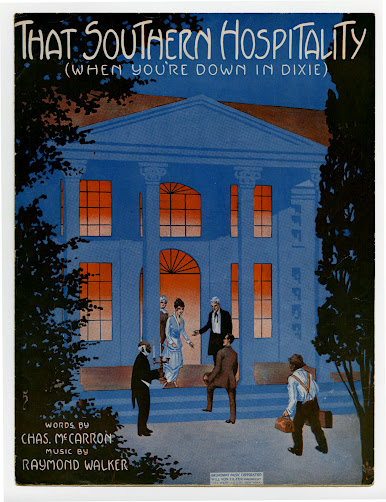
In this case, it usually means using phrases like “southern hospitality” or “southern charm” to describe what’s being sold. As is often the case, these terms are tossed around without considering their historical antecedents in the plantation South. Today, however, such terms are co-opted for purposes of profit, which is more in keeping with Charlotte’s identity as a “New South” city.
So, what does the “southern card” look like?
The Sacramento Bee (among many other news outlets) published the article “Fashion Travel Tips for the South” informing both RNC and DNC delegates what they should wear to their respective conventions. “Whether you’re a first-timer or a convention pro, you may still be new to modern, Southern style,” says Arlene Goldstein, vice president of trend merchandising and fashion direction for Belk stores–headquartered here in Charlotte. Now we know this was a Belk PR piece that was picked up in several news outlets and ties back into the company’s re-branding of itself as the store with “Modern. Southern. Style.” Still, what is “modern, southern style” except brand messaging with a nice ring to it.
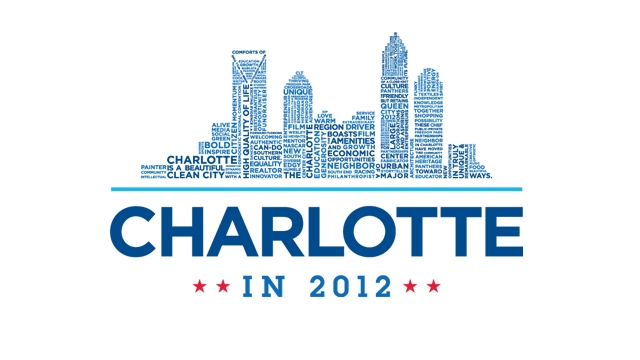
Then there’s Charlotte’s SouthPark magazine, which recently published the article “The DNC Means Big Business.” In it, Kelly Koepel, owner of the branding agency that created the Charlotte DNC logo played the southern card this way: “Woven throughout the image is this message: ‘Charlotte is a beautiful, clean city with a high quality of life where you’ll find both the expected comforts of Southern hospitality and exciting evidence of a forward-thinking, can-do Southern culture.'” There’s the hospitality again, with some “can-do” thrown in.
African American business owners are also playing the southern card in ways that may surprise you.

Rhonda Caldwell, owner of The Main Event, was hired to host a party at Rosedale Plantation for delegates from Florida, Mississippi and Alabama. “I’m such a history buff, and I wanted to take the history behind Rosedale Plantation and incorporate it in every detail,” Caldwell exlained. “I wanted to make the guests feel like they were back in time.” Does this mean there will be slave interpreters waiting on folks? It is a plantation, after all.
As she puts it “I think it’s going to be a lot of genteel southern hospitality because we want to show them Charlotte, [in] particular, and North Carolina in general,” adding “People know that they’re stepping back in time and if you look around at the furnishing, there is almost nothing modern here, so you get that feel of southern charm.” Genteel. Southern hospitality. Southern Charm. Stepping back in time. Say what?
I wonder if she considered what “stepping back in time” means for African Americans like herself? As a business owner Fulton is indebted to the southern civil rights movement such that I doubt she really wants to step back in time, because instead of owning the estate she’d be cleaning it. Yet, it’s a savvy business move since most of the delegates to the convention are white, some of whom probably expect to experience a version of “southern hospitality.” (The white reporter added, “no doubt they’ll be saying ‘y’all’ on their [the delegates] way out.” Um, I doubt it.)
Clearly, Charlotte-area businesses believe that playing the southern card is good for their bottom line. Still, as a historian, I know that what people believe is “southern” can cut both ways–and not just the way of hospitality and charm. I’ll be looking at the flip side in a future blog post.
After writing several blogs, I thought it would be fun to check out the Pop South “wordle” to see the terms that I frequently use. Here’s what it looks like:

In this guest post, Barclay Key, Assistant Professor of History at the University of Arkansas-Little Rock, reflects on the meaning of race and commemoration in the Deep South through his personal recollections of growing up in Lawrence County, Alabama, the same county where Olympic great Jesse Owens was born. Key has a poignant essay about Owens in a forthcoming volume Destination Dixie: Tourism and Southern History.
While I have the vaguest memory, perhaps concocted later, of Al Michaels asking in 1980 if I believe in miracles, the 1984 Summer Olympics figured most prominently in my childhood. As an eight-year-old in rural northwest Alabama, I had already developed a passion for some sports, particularly Dixie Youth baseball and Alabama football, but I had little knowledge of the varieties of athletic competition on display in Los Angeles.
Carl Lewis, Mary Lou Retton, and John Williams clearly inspired something in me because I soon developed my own Olympic events and invited friends to participate. We had the traditional sprints that measured the length of our front yard, but other events required more imagination. The shot put contest consisted of heaving a brick, and my gymnastics routine was limited to hanging from our rusty swing set, swaying a bit, and dismounting letting go. I also managed to incorporate an obstacle course and an Atari game or two. Motivated in part by Red Dawn, I went undefeated versus the Soviets as my games extended into the fall and winter.
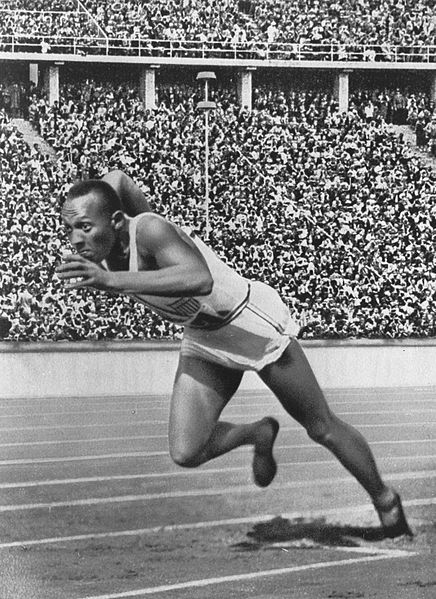
Imagine my delight the following summer when my mother offered to take me to the nearby Jesse Owens monument. I had come to understand that Owens was an Olympic hero. Lewis’s four gold medals in 1984 elicited comparisons to Owens, who had won four gold medals during the 1936 Olympics in Berlin, Germany. And I had recently participated in the Jesse Owens Memorial Run, a new event in my hometown that acknowledged the track star’s local connection to Oakville, a community near our small town.
Even if he wasn’t technically from my town, I thought, he was from Lawrence County, just like me. He became an Olympic hero; maybe I could, too. Or at least I could start at wide receiver for the Univeristy of Alabama Crimson Tide. In a place where one’s identity relates so closely to home and community, there is a sense in which Owens was becoming “one of us.” Although I was naïve about this process and its abundant ironies, local people, particularly whites, were coming to embrace Owens as a hometown hero a few years after his death in 1980.
Owens had been a child—about nine years old, just like me—when he migrated with his family from Alabama to Ohio. To the best of my knowledge, he never stepped foot in the county again. In autobiographical accounts of his childhood, Owens wrote of the “terror of sharecropping in the South” and the “terror of Oakville,” a community he described as “more an invention of the white landowners than a geographical place.” I don’t recall anyone explaining why the Owens family left “our home” or why Owens ran for Ohio State University instead of my beloved Crimson Tide. I completely missed the significance of a black American from Alabama overcoming tremendous odds to represent his own country in an Olympiad often remembered for its Nazi hosts.
Mother’s offer was really more of a bribe. She needed to run an errand near Owens’s birthplace, about ten miles away, and she did not want to leave me alone. The promise of seeing the Owens monument convinced me to cooperate. She provided no details, so my mind ran wild with possibilities. At the very least, I imagined a large statue surrounded by beautiful flowers, or maybe even an elaborate fountain that would give me an opportunity to make a wish and toss a penny.
Twenty minutes into the drive, my mother exclaimed, “There it is!”
“Where?!” I shrieked, exasperated that I couldn’t immediately locate what must have been an amazing sight.
“Right there,” she replied.
I finally caught a fleeting glance of what looked like a tombstone. “Is that all there is?” I asked.
A few years ago, I couldn’t resist an opportunity to write an essay about the commemoration of Owens in Lawrence County for Destination Dixie: Tourism and Southern History. Readers will learn how this modest monument provoked controversy that spilled into the state and national media and how the Jesse Owens Park and Museum later arose out of the same cotton fields that the Owens family picked before their migration. This project was cathartic in several ways. Having navigated the requirements of becoming a “professional historian,” I enjoyed sharing a local story that served as a microcosm of racial tensions and piecemeal efforts at reconciliation that have become more characteristic of the South in recent decades.
My recent interest in the commemoration of Owens illustrates how I too have embraced him as a Lawrence County native, not just an Olympic hero. Although Owens’s experiences were in no way comparable to my own, I have come to appreciate that his story is indelibly tied to my own, to our own. My grandfather was a sharecropper; my father started picking cotton at age five. Their “whiteness” protected them from the racial discrimination that the Owens family faced, both in Alabama and beyond, but we share an ancestral relationship to the land, to work, to want. We are from Alabama. Jesse Owens is my people, just as notorious figures like George Wallace are. Accepting both remains a work in progress for many.
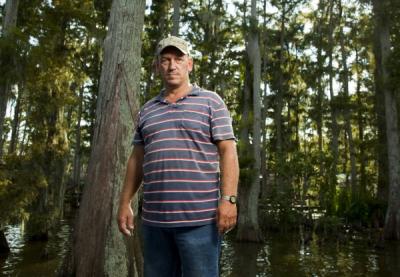
I was recently interviewed by Cara Bayles at the Houma Courier in Louisiana about the flood of reality television shows that are set in Louisiana. We had a terrific talk that lasted a good half an hour, but all that ended up in the paper was a couple of sentences, which you can read here. Just before we hung up the phone, I asked Cara “How did you find me?” to which she responded “I Googled ‘professor swamp people.'”
When I set out to write Dreaming of Dixie, I had no idea that it would lead to my becoming some “expert” on reality TV shows set in the South, although “Professor Swamp People” has a nice ring to it. It began with the op-ed in the New York Times, which led to an interview about “hixploitation” for the Louisville Courier-Journal(KY) and similarly-related articles elsewhere.
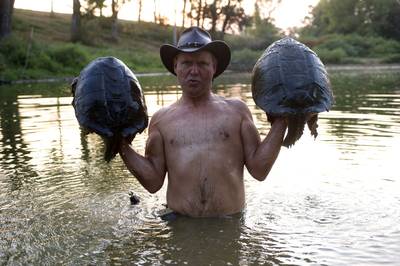
It may seem a huge leap to go from an analysis on the impact of Gone With the Wind to that of Swamp People, but from where I sit the purveyors of popular culture have, since the early nineteenth century, simply decided to emphasize what it believes to be the South’s cultural distinctiveness–whether or not it applies to the broader region.
And yet, therein lies the problem. So often nonsoutherners (including seasoned journalists) who don’t know the region’s history and have not spent time in the South, will often buy into those differences they find in popular culture. And as long as they do, I will continue to answer to the name “Professor Swamp People” when called. Choot’em!!

South of the Border, owned and operated for years by Alan Schafer, began as the South of the Border Beer Depot. According to Nicole King, a professor at the University of Maryland-Baltimore County who has written about the creation of what is known as “S.O.B.”, Alan and his father Samuel had a successful beer distribution company and because they were Jews, could avoid the cultural stigma associated with beer sales that Baptists and other religious conservatives could not. 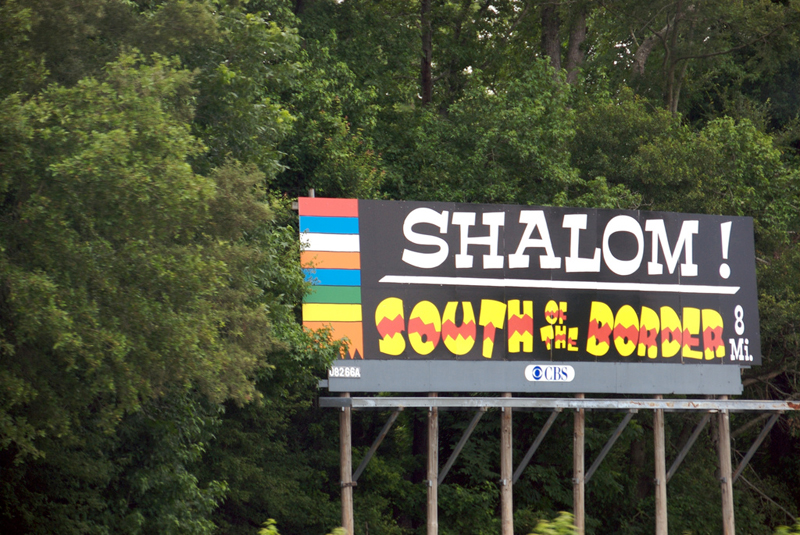 Over the years, especially after the passage of the Interstate Highway Act of 1956, South of the Border grew from beer depot into a souvenir shop to catch the traffic now going up and down I-95.(See King’s article “Behind the Sombrero: Identity and Power at South of the Border, 1949-2001,” in Dixie Emporium: Tourism, Foodways, and Consumerism in the American South, edited by Anthony Stanonis).

What you might not know and what I learned recently through a fellow historian and Facebook friend is that our current Federal Reserve chairman, Ben Bernanke, worked as a waiter one summer at South of the Border. This must certainly be a feather in his sombrero and should have brought him more respect from Republican presidential candidate Rick Perry, who accused his fellow southerner of “treason.” That’s right. Fellow southerner. Bernanke didn’t just work at S.O.B., he is originally from Dillon, South Carolina. Take that, Senor Perry.

South of the Border is complex, just as complex as Alan Schafer, who died in 2001. As King explains, the roadside attraction “memorializes the African American experience by selling ‘authentic souvenirs’ from Africa in a Mexican-themed tourist spot created by a progressive Jewish man in the predominantly Anglo, conservative, and Protestant American South.” And that’s just for starters.
All this is to say S.O.B. is a fascinating place. And it just became more fascinating to me, now that I know that Ben Bernanke, the man who can make economic markets go up or down whenever he speaks, once worked under the big sombrero.
On a recent vacation to Lake Lure, North Carolina, I drove over to the small town of Chimney Rock where people can hike to Hickory Nut Falls, grab a bite to eat, do a little gem mining, and perhaps stop in a souvenir shop to buy mementos of their trip. I didn’t necessarily want a souvenir, but given the heat and humidity it made sense to duck into a few of the shops to cool off and to see what was for sale.
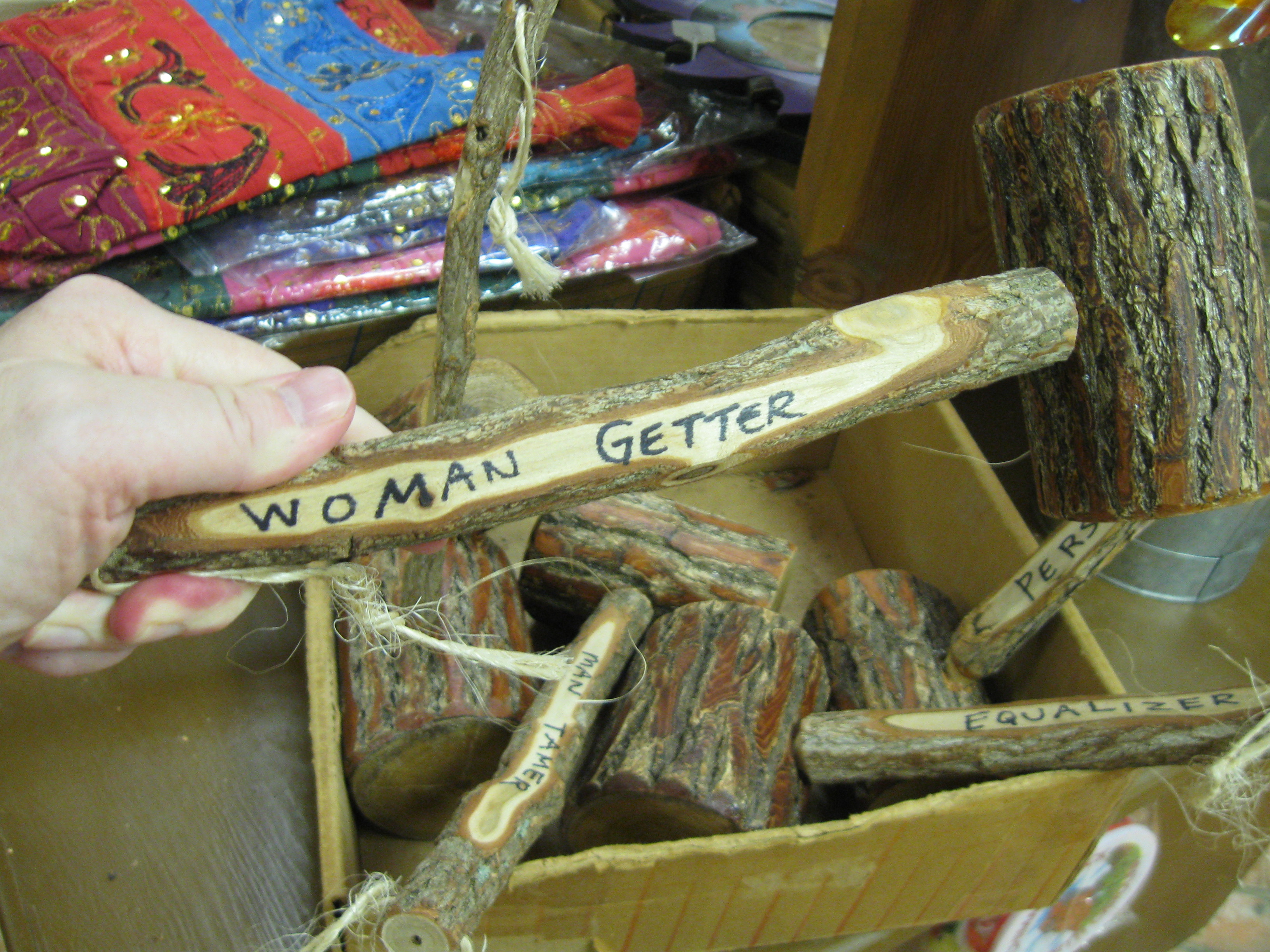
And boy was I in for a treat. In addition to some of the ridiculous hillbilly items being sold (note photo of the “Woman Getter” a.k.a. the “Persuader,” a.k.a. the “Man Tamer”), Confederate tchotkes were everywhere and not just in one store.
This, of course, is surprising since the mountain South is not known for loyal Confederates. Tourists who follow the signs along North Carolina’s Civil War Discovery Trail near Hickory Nut Gorge learn not about staunch Confederates, but about Union General George Stoneman’s raiders and his order to Colonel William Palmer to join in the pursuit to capture Confederate President Jefferson Davis, whose flight from Richmond had entered North Carolina in late April 1865.
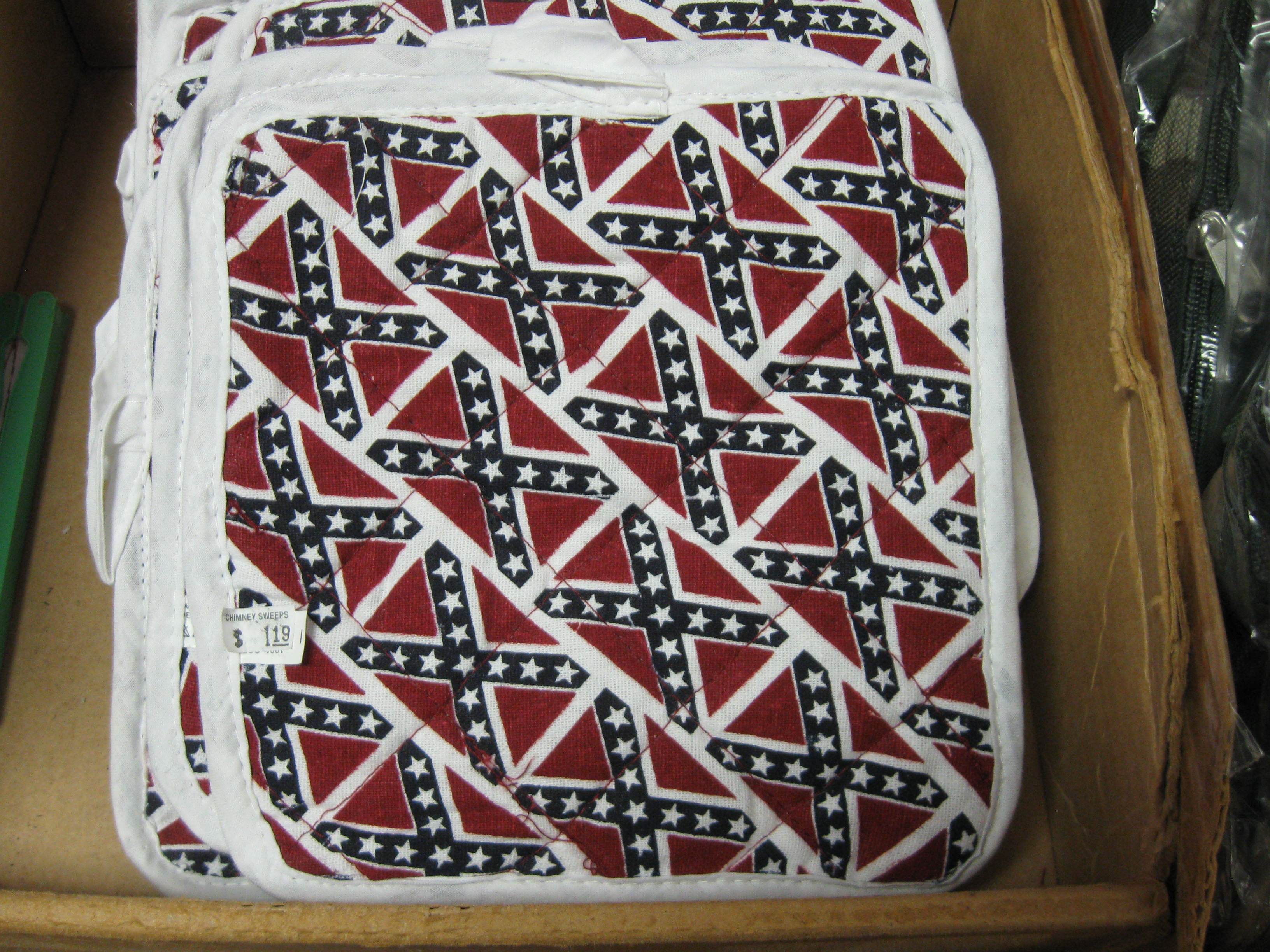
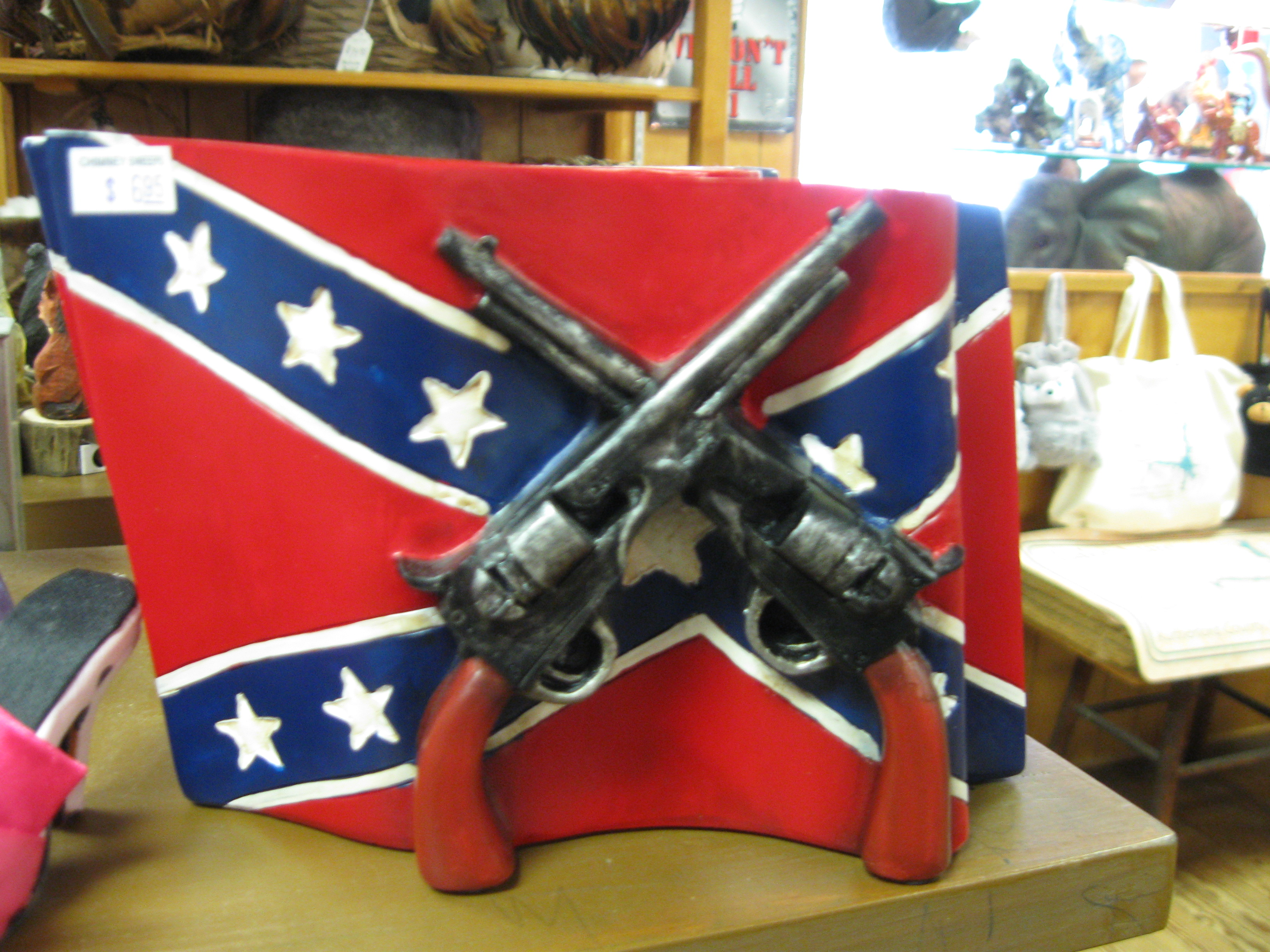
Well, in the same store that carried the “Woman Getter” there were items emblazoned with the Confederate battle flag ranging from a pot holder, useful for Rebel-hot recipes from the Confederate Cookbook, to bookends with three-dimensional pistols attached to protect your copies of Southern By the Grace of God or When the South was Southern.
In a second store where I sought a reprieve from the heat there was an enormous selection of t-shirts from Dixie Outfitters—a merchandiser that offers a wide array of items displaying messages of “pride in the Southern way of life.” Perhaps you’ve seen them. Using images of Confederate soldiers, Robert E. Lee, and yes, the Confederate battle flag, the shirts practically scream that the Civil War is still alive and well in the hearts and minds of some southerners (those who would buy these shirts).
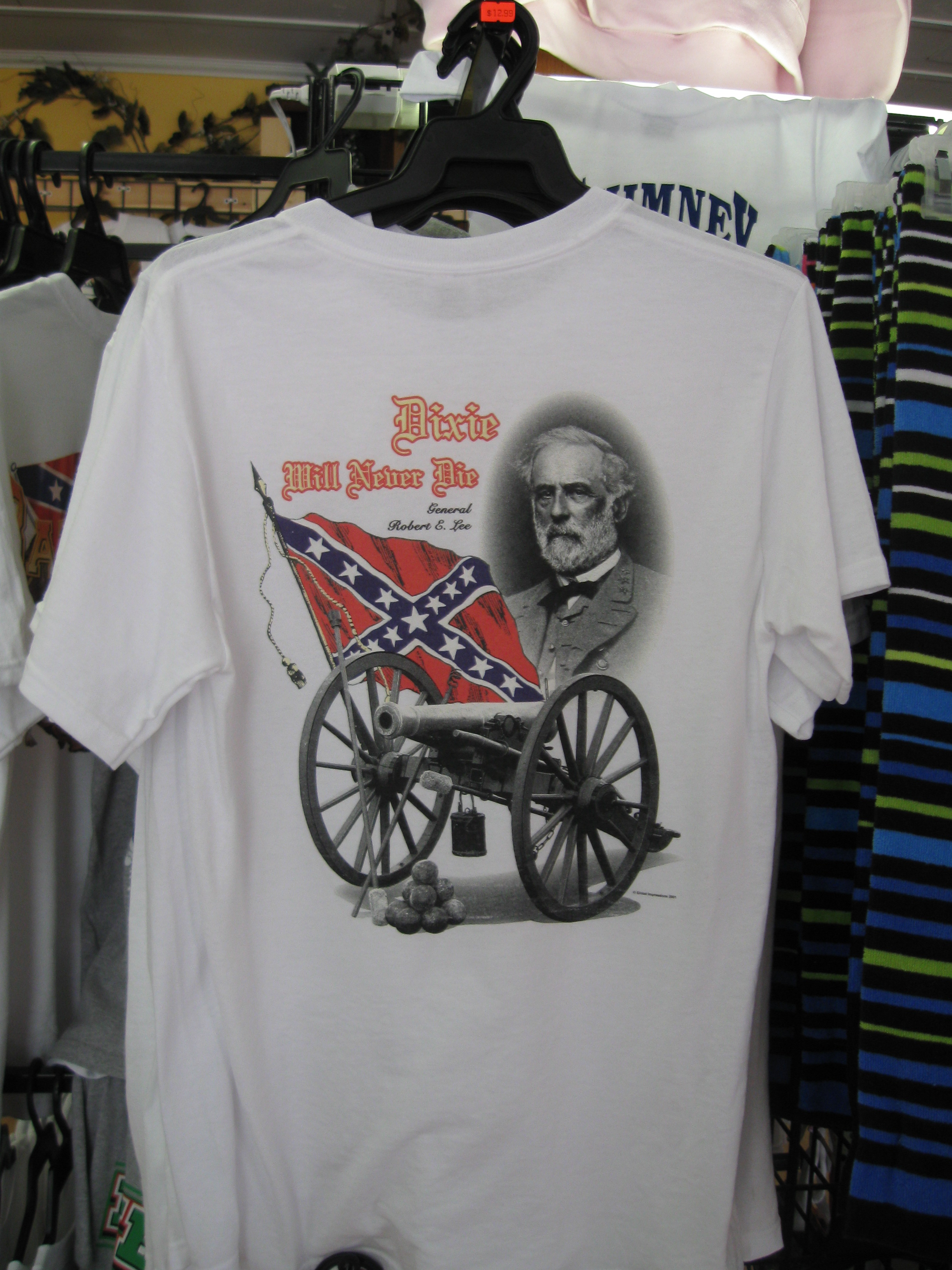
On one, with an image of Lee, the slogan reads “Dixie Will Never Die,” and another for the “Southern Girl” tells you that among her many qualities are “Boot Scootin’,” “Handgun Packin’,” “Pickup Drivin’,” and “Bass Fishin’.” Of course, she wouldn’t be complete without also being a “Belle of the Ball.”
While I’m a historian, I must be part sociologist. The historian in me understood that the history of this area of North Carolina ran counter to the sale of such pro-Confederate souvenirs. Yet the sociologist in me could not help but notice that this store was owned by two immigrants, living the American Dream. The couple, a Hispanic man and his wife, who I guessed to be from Eastern Europe, were the proprietors of the store. When I asked her why they were selling all of these pro-Southern t-shirts she responded vehemently “I am from southern!” She couldn’t have known I asked out of curiosity and perhaps thought I was challenging her in some way. Thinking on it, I wondered if she indeed had been challenged about it before. Maybe by some of those present-day Confederate sympathizers (a.k.a. “Neo-Confederates) who, let’s face it, are very likely to be anti-immigrant in their thinking.
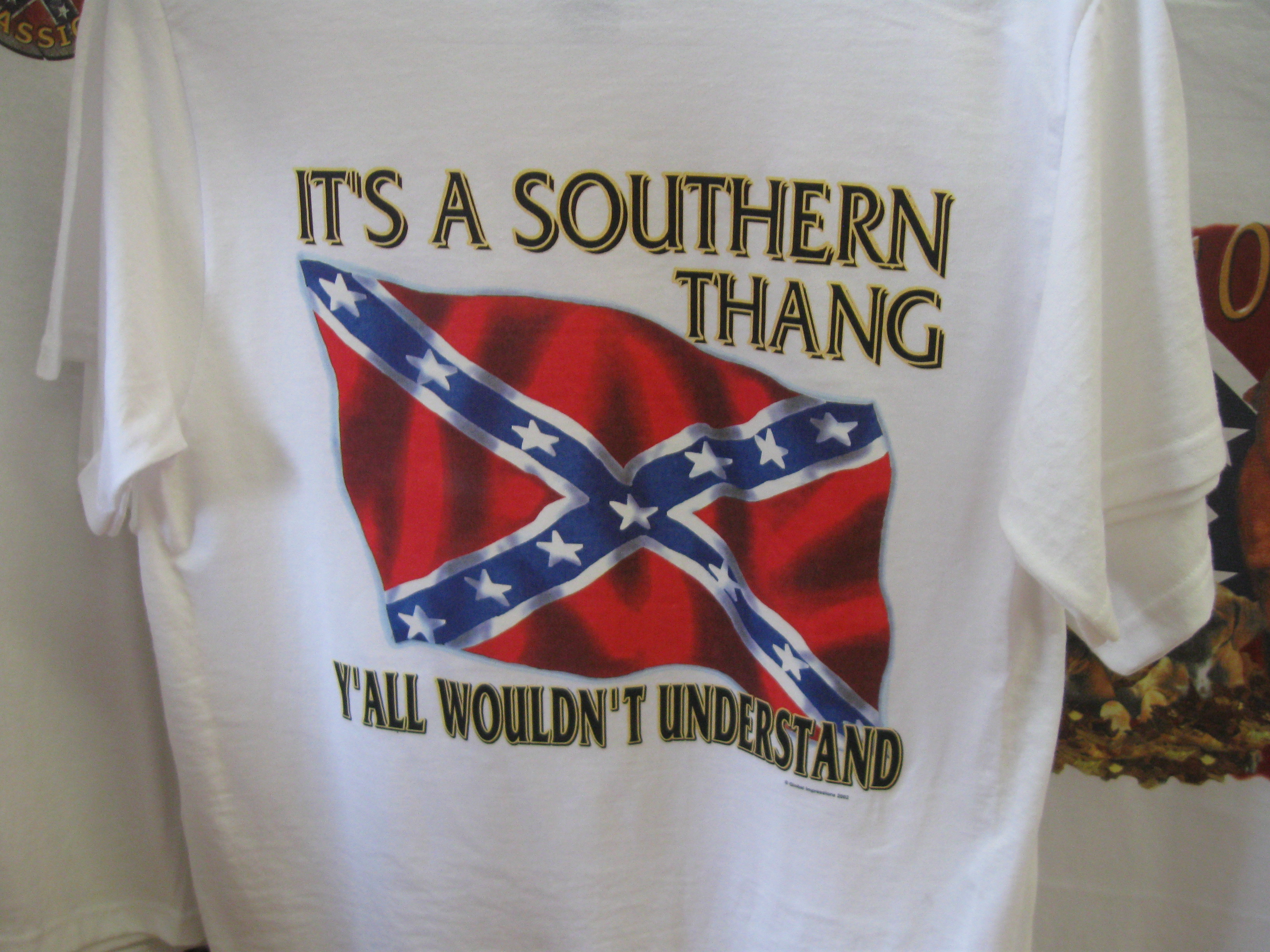
I wanted to write this piece in an effort to unravel the complexities of what I was experiencing there in the little town of Chimney Rock: the Confederate souvenirs in what, historically, was not so Confederate. The immigrants selling shirts emblazoned with “It’s a Southern Thang, Ya’ll Wouldn’t Understand,” a slogan that is clearly a ripoff of “It’s a Black Thing, You Wouldn’t Understand.” So, I turned to Winston Churchill. Yes, Churchill.
Speaking about Russia during World War II, Winston Churchill said: “I cannot forecast to you the action of Russia. It is a riddle, wrapped in a mystery, inside an enigma; but perhaps there is a key. That key is Russian national interest.” I felt very similarly about my experience—that what is going on in Chimney Rock and in similar tourist attractions around the South is a riddle, wrapped in a mystery, inside an enigma, but perhaps there is a key. That key is capitalism.
 Pop South