Yes, indeed, what DID happen to the Slavery Museum?

history4everyone's avatarHistory4everyone's Blog

Susan Svrlunga for The Washington Post, February 11, 2012:

Nearly 20 years ago, former Virginia governor L. Douglas Wilder announced that he wanted to create a museum that would tell the story of slavery in the United States. He had the vision, the clout, the charm to make it seem attainable, and he had already made history: the grandson of slaves, he was the nation’s first elected African American governor.

He assembled a high-profile board, hosted splashy galas with entertainer Bill Cosby promising at least $1 million in support, accepted a gift of some 38 acres of prime real estate smack along Interstate 95 in Fredericksburg and showed plans for a $100 million showstopper museum designed by an internationally renowned architect.

And then . . .

“Governor Wilder disappeared,” said Rev. Lawrence Davies, the former longtime mayor of Fredericksburg who was a member of the board. Davies stopped getting notices about board…

View original post 1,322 more words
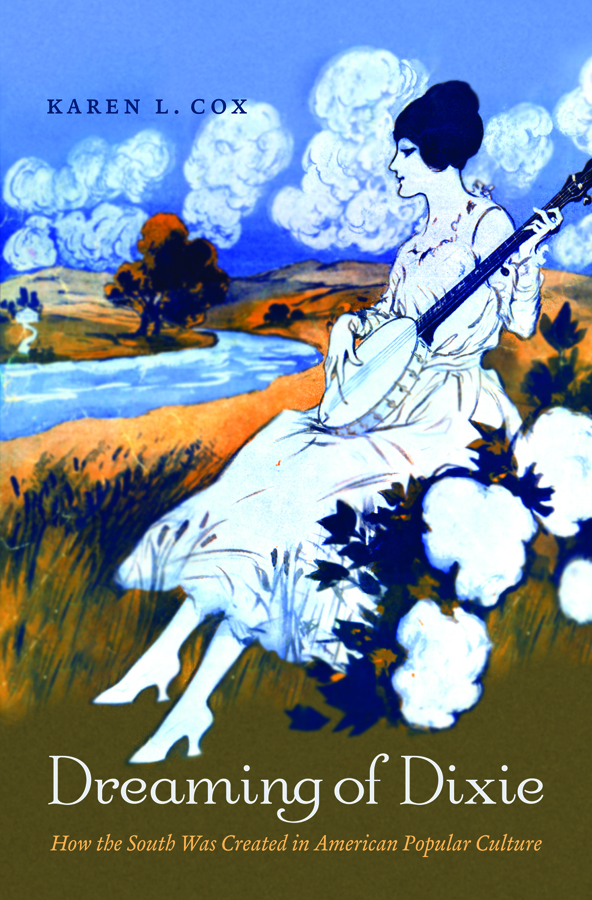
Panel Discussion of Dreaming of Dixie at UNC Charlotte, February 21st

The Center for The Study of the New South will convene a panel discussion of Dreaming of Dixie: How the South Was Created in American Popular Culture, by Dr. Karen Cox, on Tuesday, February 21, 2012 at 3:30 in the Halton Reading Room, in the J. Murrey Atkins Library.

Participants will include David Goldfield (history), Richard Leeman (communication studies), Debra Smith (Africana Studies), and Mary Newsom (Urban and Regional Affairs). Sonya Ramsey (History) will serve as moderator.

This campus event will be the precursor to the Center for the Study of the New South’s annual lecture, on Tuesday, March 13, at the Levine Museum of the New South. This year’s distinguished speaker will be Dr. Cox.

What the hey, NAACP?

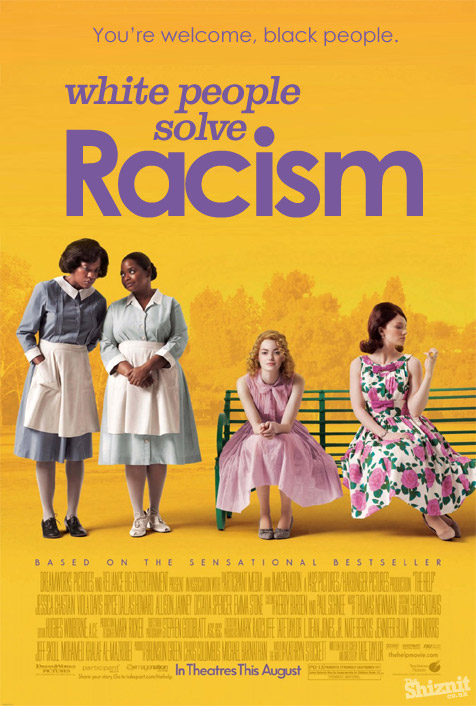
As I’ve written about before, I found the “history” reflected in the film “The Help” to be problematic on many levels.  I agreed with the Association of Black Women Historians in their criticism of the film’s message about black women in the era of Jim Crow. I also found Melissa Harris-Perry’s review of the film to be on point when she described it as “ahistorical and deeply troubling.” More recently, an alternate reading of “The Help” came in the form of this revised movie poster that bitingly states what many of us think about the film.

Then, what the hey is the NAACP thinking by nominating the film for Outstanding Motion Picture for one of its 2012 Image Awards? More importantly, why did they give Bryce Dallas Howard a nod for Outstanding Supporting Actress? Hilly? She’s not exactly a person of color (at least not in the tradition of these awards).  As the Washington Post stated, this is one of the most awkward nominations the organization made.  I can understand Viola Davis’ nomination for Outstanding Actress–even Melissa Harris-Perry recognized her talent.  Still, I agree with her that it’s a shame that Davis will probably win for playing a maid.  Hattie McDaniel, anyone?

As a historian, I often find myself combating popular media’s misrepresentations of the past in the classroom.  However, it is often an uphill battle and the success of films like “The Help,” make it even more difficult.  So, like my cohorts in the profession, I plod along and try to educate my students by having them read some honest-to-goodness history.  I only wish filmmakers would do the same.  It’s not as if the historical truth doesn’t make for good drama.

Call me “Professor Swamp People”

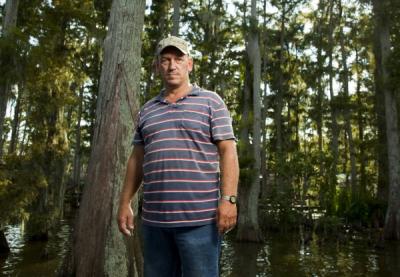
Troy Landry, one of the stars of History Channel's "Swamp People"

I was recently interviewed by Cara Bayles at the Houma Courier in Louisiana about the flood of reality television shows that are set in Louisiana.  We had a terrific talk that lasted a good half an hour, but all that ended up in the paper was a couple of sentences, which you can read here.  Just before we hung up the phone, I asked Cara “How did you find me?” to which she responded “I Googled ‘professor swamp people.'”

When I set out to write Dreaming of Dixie, I had no idea that it would lead to my becoming some “expert” on reality TV shows set in the South, although “Professor Swamp People” has a nice ring to it.  It began with the op-ed in the New York Times, which led to an interview about “hixploitation” for the Louisville Courier-Journal(KY) and similarly-related articles elsewhere.

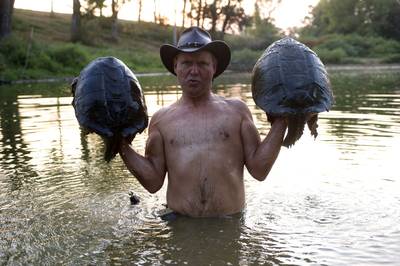
Ernie Brown, Jr. a.k.a. "Turtleman," from "Call of the Wild Man" on Animal Planet

It may seem a huge leap to go from an analysis on the impact of Gone With the Wind to that of Swamp People, but from where I sit the purveyors of popular culture have, since the early nineteenth century, simply decided to emphasize what it believes to be the South’s cultural distinctiveness–whether or not it applies to the broader region.

And yet, therein lies the problem. So often nonsoutherners (including seasoned journalists) who don’t know the region’s history and have not spent time in the South, will often buy into those differences they find in popular culture. And as long as they do, I will continue to answer to the name “Professor Swamp People” when called.  Choot’em!!

My former MA student, Nicole Moore, is becoming a leader in slave interpretations at historic sites. She is now a member of the Cooking Gene Project Team. Meet her here:

michaelwtwitty's avatarAfroculinaria

Nicole Moore is one of my team members for The Cooking Gene.  She is now a seasoned historic interpreter with degrees in public history and psychology.  She will be cooking with me en route and will advise on the tour, giving me an extra pair of eyes that sees the world similarly to how I see it, but just different enough to open me up to a new perspective.  Please learn more about Nicole at her blog:   www.interpretingslavelife.com.  You can find out more about The Cooking Gene at our campaign site:  http://www.indiegogo.com/The-Cooking-Gene-Project-The-Southern-Discomfort-Tour.  We strongly urge you to read our page, consider donating, and pass it on to others you know on social media such as Facebook, Twitter and LinkedIn as well as by email and text.  Enjoy this interview with Nicole 🙂

  1. What first got you interested in being a historic interpreter? What inspired you? Where…

View original post 5,046 more words