The Glory Foods Campaign Revisited: An issue of both race and gender

An image of “Shirley” is unavailable as are the television ads.

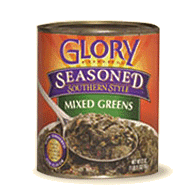
Recently, I wrote about the poorly-conceived marketing campaign for Glory Foods by The Brandon Agency (see: Black Domestic in a Can), a campaign that introduced a new generation to the stereotypical “black woman as mammy,” and reminds us of the Aunt Jemima of old.  If this weren’t bad enough, the campaign also works as a critique of white women’s abilities in the kitchen.  Miss White Lady, in one Glory Foods commercial, is a frustrated failure until a black woman (known as “Shirley” in radio ads and on the company’s website) shows up to save her in time to impress dinner guests.  In another commercial, Miss White Lady also fails to satisfy her bratty children.  And once again, she must be saved by the modern day mammy.

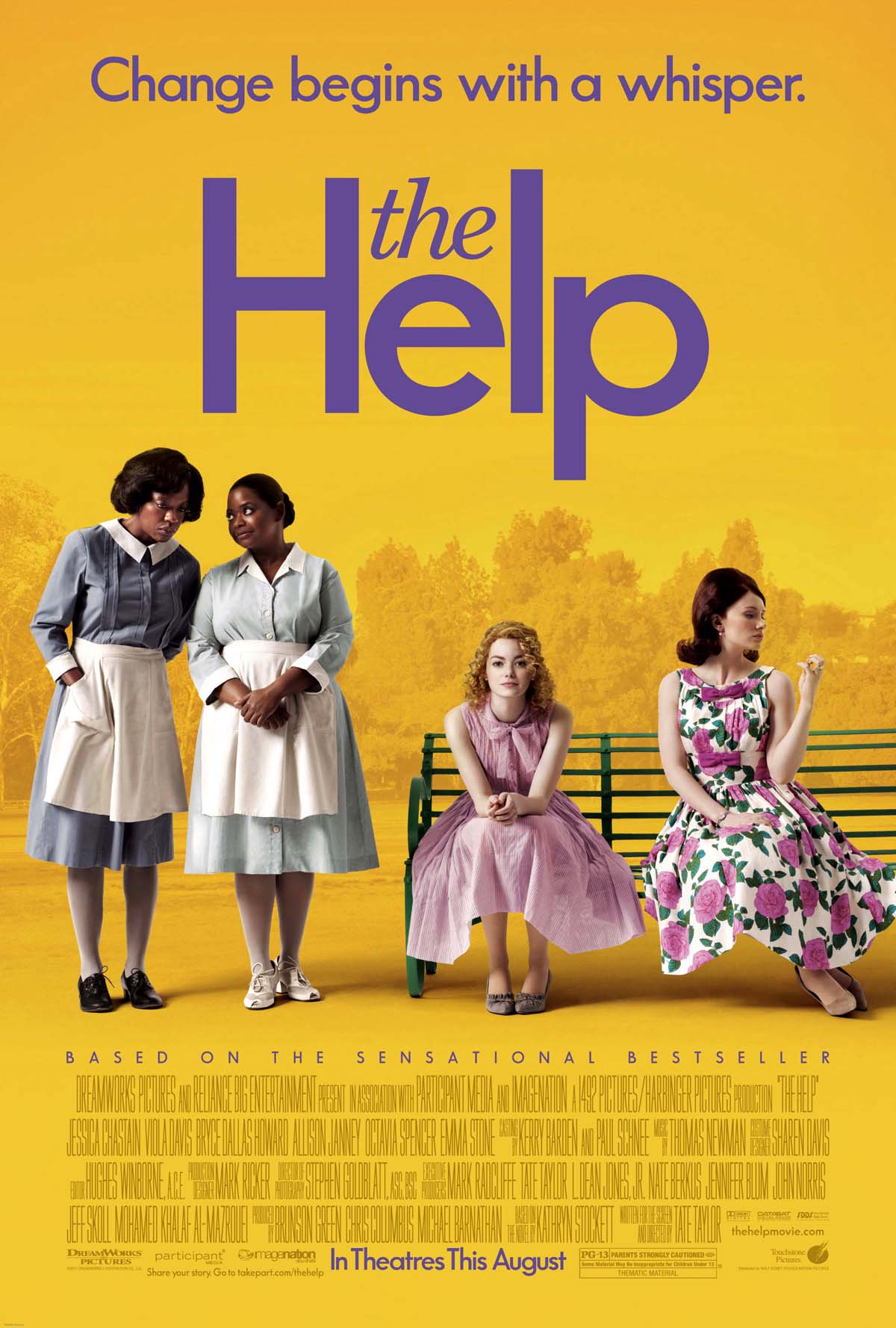
Does any of this sound familiar?  It should.  Fans of The Help will recognize in Shirley two different characters from the book.  In one commercial, Shirley is essentially Minnie who rescues the bumbling, naive, and helpless character Celia Foote who cannot cook to save her life.  In the second commercial, Shirley is something of a mix between Minnie and Abilene.  She’s sassy like Minnie, but like Abilene she also fills the role of surrogate parent–taking charge and getting the children to “eat their vegetables.”  Clearly excited about this campaign, Dan Charna, vice president of operations for Glory Foods is quoted as saying, “We hope everyone will invite Shirley into their kitchens via Glory Foods products.” (See, The Businesses Journal, April 11, 2012)

Thank goodness Dan Charna didn’t get his wish. The television campaign for Glory Foods, while it fails to understand the complex history of mammy in the kitchen, also insults white women by suggesting that they can’t cook and need help with their children.  As one woman of color suggested in a discussion of these ads on Facebook, “It serves nobody to depict a ‘hapless white woman in the kitchen’ nor a ‘buxom black cook in the kitchen.’ It’s demeaning not only to each race but to women in general.”  And from another woman of color, “There are [many] other ways you can sell Glory Foods without the maid/Jemima/mammy aspect. And I fail to believe that only white women are helpless when it comes to soul food.”

So, in sum, the campaign strikes a nerve on issues of both race and gender.  And that’s too bad, because if Glory Foods makes a good product–and I have no reason to believe it doesn’t–then why resort to southern stereotypes of both black and white women?

The Latest:  Since posting and tweeting about this ad campaign, the Brandon Agency has pulled the ads from television and YouTube, and “Shirley” no longer walks out onto the Glory Foods website to introduce herself. So, what does this mean?  Neither the agency nor the company were able to “see” what I and others saw before rolling out this new campaign, and seem caught off guard by the criticism.  To its credit, the agency is reassessing the campaign.  So, we shall see.
Black Domestic in a Can–A South Carolina Ad Agency “Helps” Glory Foods

IMPORTANT UPDATE:  After tweeting Scott Brandon of the Brandon Agency about these offensive commercials, they have been removed from YouTube.  Coincidence?  I think Pop South as well as viewer comments must have gotten their attention. (4/19/2012)

I wonder if you have seen these commercials by Glory Foods?  It’s a company out of Columbus, Ohio, that specializes in canned goods they call “Southern food with a soulful heritage.” In one, there’s a frustrated white housewife in the kitchen and she’s having trouble in preparing dinner for her guests.  What’s she going to do?  Not to worry, a black woman (known as “Shirley” on the company’s website) busts through the door to help!   As she prepares the food, a can of Glory collard greens, the white woman can relax.  Not only does she have a black woman working it out for her in her kitchen, she’s got food that already has its southern seasoning.   Even better, Shirley plans to stay hidden in the kitchen as she shouts to the white woman “Now get on out there, and take all the Glory!”

I thought this was an unfortunate commercial, until I saw a second and related commercial.  It’s the same white woman, although this time her two children are involved, shouting and banging their forks and knives on the table.  Who’s going to rescue Miss White Lady now?  You guessed it, the canned black domestic.*  She’s going to set those mouthy children straight, make sure they eat their vegetables, and guess who gets to take “all the glory?”  Miss White Lady.

I wonder what is going on here, because it looks like Glory Foods is taking its cues from The Help.  But this isn’t 1960s Jackson, Mississippi. I went to the website of the company and that’s where I discovered that this is a black-owned business with an African American CEO who has an MBA from Duke University.  So what gives?

Who is the company trying to reach with these commercials except, perhaps, all those white women who read The Help and are looking to recapture some of that for themselves? It’s certainly an interesting marketing ploy.  Perhaps that is the point. And guess what?

The Brandon Agency, a South Carolina-based advertising agency with offices in Myrtle Beach, Charleston, and even Charlotte, North Carolina are behind the TV commercials.  The agency was hired by Glory Foods back in February, which explains why these commercials have recently appeared in Charlotte.  Take a look at the agency’s website and you’ll find something very interesting–the entire leadership team is white.  That’s right.  White “originalists” (the term the agency uses to describe company leaders and probably found in the bottom of a cocktail glass) from South Carolina came up with the Glory Food campaign featuring a modern-day Aunt Jemima.

However, this shouldn’t let Glory Foods off the hook.  If this company were run by whites we’d be all over it with this analogy to The Help, which is why I don’t understand why Glory Foods and The Brandon Agency aren’t being called out for perpetuating this particular southern stereotype.

Maybe not enough people have seen these commercials or realize the underlying assumption (or history) of mammy in the kitchen.  If they had, they’d be as concerned about this image of black women as I am.


Republican Candidates in the South: A Confederacy of Dunces. So, too, MSNBC’s Martin Bashir & Co.

Oh, for goodness sake!  The Republican candidates for president went South and the next thing you know Mitt Romney touted “cheesy grits” and practiced saying “ya’ll,” and Rick Santorum adopted a hick accent and told people “I got kin here in Mississippi.  I’m not sure. . . (don’t say “what I think about it!”). . .I’m very proud of it.”  Shew!  That was a close one.

I think that Kathleen Parker hit the nail on the head in her opinion piece in the Washington Post that southerners deserve better from their candidates.  The one thing that she missed, however, is that Santorum, Romney, and even Newt Gingrich aren’t speaking to black southerners (or Latinos who represent the fasting growing population in the South) AT ALL.

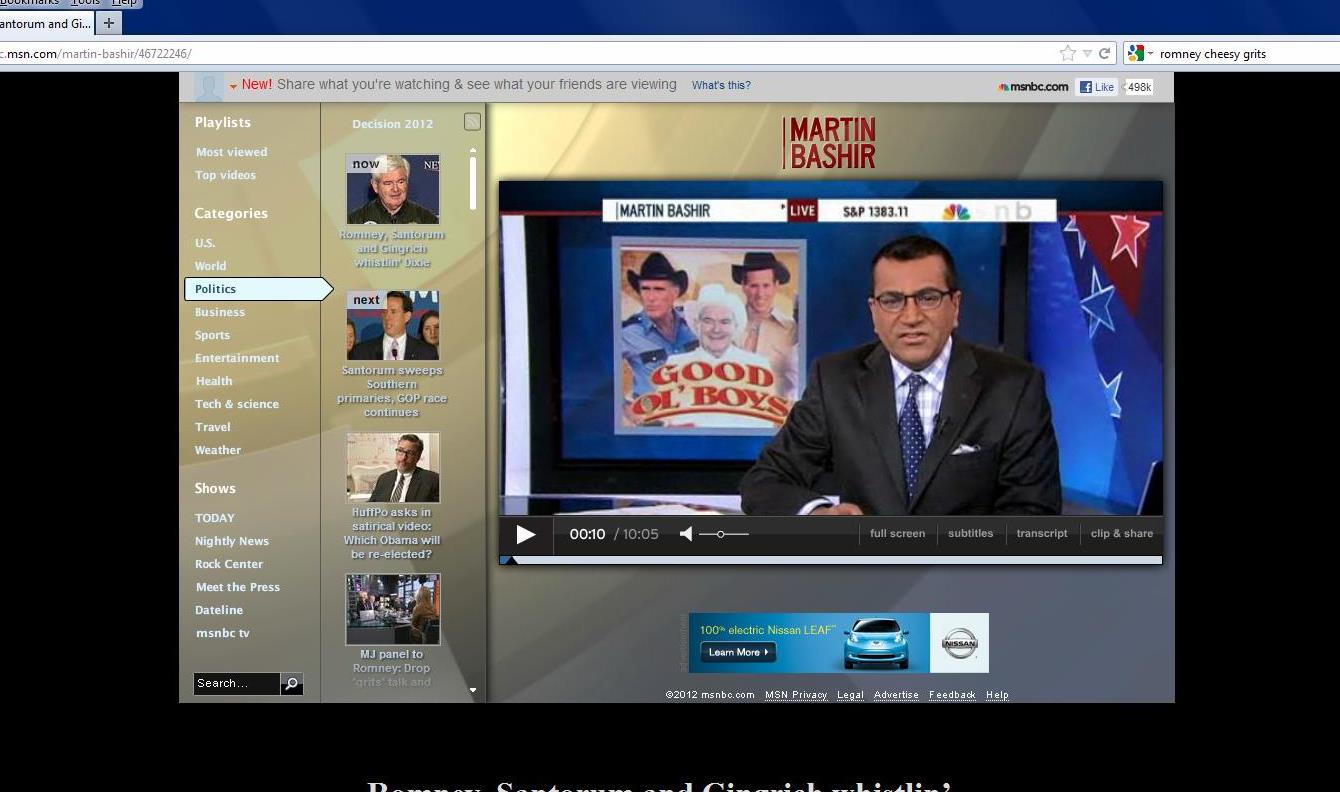
What made it worse, for me at least, was how MSNBC covered the Republican campaigns in Mississippi and Alabama–particularly Martin Bashir and company–as they chuckled their way through a discussion of the candidates.  Believe me, there is a lot to chuckle about when you hear the gems that fall from Romney’s mouth, but that shouldn’t let Bashir off the hook.  His show began with the banjo theme song from Deliverance followed by his opening statement “Oh, my goodness, it is a deep fried primary day down in Dixie.” Really? Hush yo’ mouth!  And then, between the graphic about Good Ol’ Boys (with the faces of Romney, Santorum, and Gingrich superimposed over a former Dukes of Hazzard logo), describing the Deep South as the “Cracker Barrel circuit” and then pondering what will happen “down in Faulkner country,”  Bashir did as much to perpetuate an image of the South as moonshine-swilling, varmint-eating, backward region as did the candidates themselves.   In sum, the national media is often no better than the candidates themselves in understanding the complexities of the South and the people who live here.

And this is what we are in for people, when the Democratic National Convention comes to Charlotte.  Because the media pundits, who are supposed to be “informed,”  will be looking for what makes this a southern city, and will likely miss what makes it as American as apple pie.

Yes, indeed, what DID happen to the Slavery Museum?

history4everyone's avatarHistory4everyone's Blog

Susan Svrlunga for The Washington Post, February 11, 2012:

Nearly 20 years ago, former Virginia governor L. Douglas Wilder announced that he wanted to create a museum that would tell the story of slavery in the United States. He had the vision, the clout, the charm to make it seem attainable, and he had already made history: the grandson of slaves, he was the nation’s first elected African American governor.

He assembled a high-profile board, hosted splashy galas with entertainer Bill Cosby promising at least $1 million in support, accepted a gift of some 38 acres of prime real estate smack along Interstate 95 in Fredericksburg and showed plans for a $100 million showstopper museum designed by an internationally renowned architect.

And then . . .

“Governor Wilder disappeared,” said Rev. Lawrence Davies, the former longtime mayor of Fredericksburg who was a member of the board. Davies stopped getting notices about board…

View original post 1,322 more words

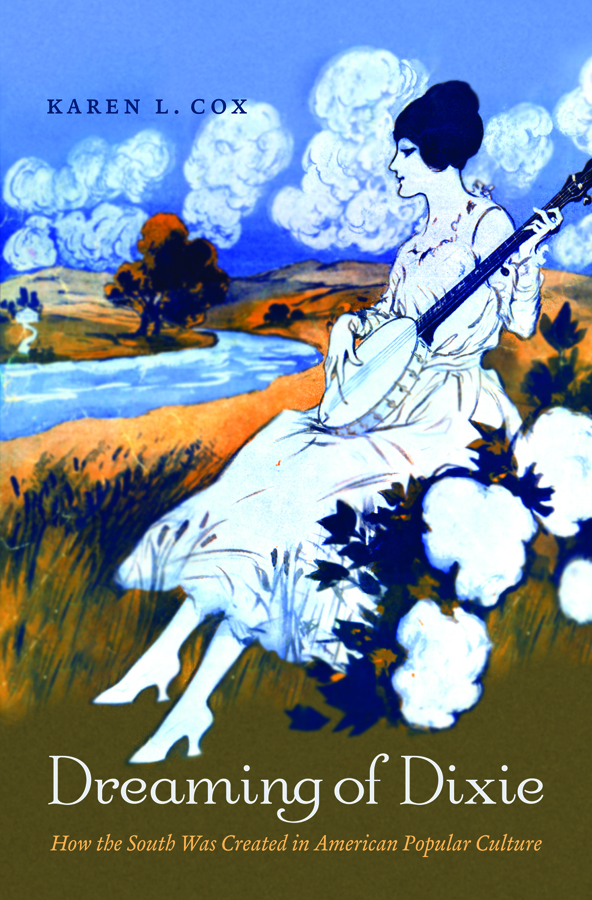
Panel Discussion of Dreaming of Dixie at UNC Charlotte, February 21st

The Center for The Study of the New South will convene a panel discussion of Dreaming of Dixie: How the South Was Created in American Popular Culture, by Dr. Karen Cox, on Tuesday, February 21, 2012 at 3:30 in the Halton Reading Room, in the J. Murrey Atkins Library.

Participants will include David Goldfield (history), Richard Leeman (communication studies), Debra Smith (Africana Studies), and Mary Newsom (Urban and Regional Affairs). Sonya Ramsey (History) will serve as moderator.

This campus event will be the precursor to the Center for the Study of the New South’s annual lecture, on Tuesday, March 13, at the Levine Museum of the New South. This year’s distinguished speaker will be Dr. Cox.

What the hey, NAACP?

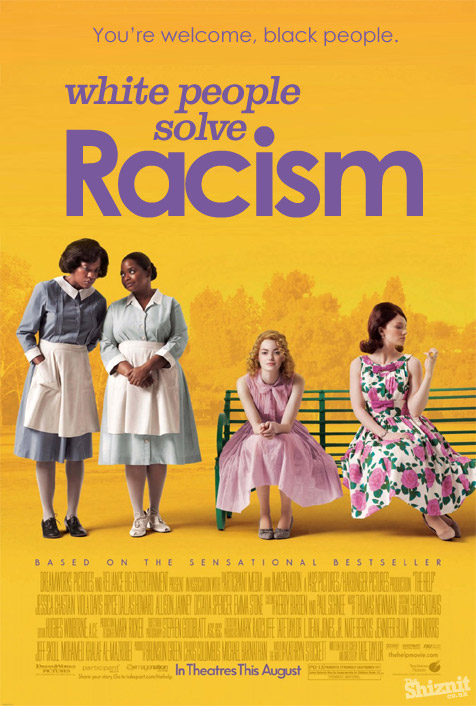
As I’ve written about before, I found the “history” reflected in the film “The Help” to be problematic on many levels.  I agreed with the Association of Black Women Historians in their criticism of the film’s message about black women in the era of Jim Crow. I also found Melissa Harris-Perry’s review of the film to be on point when she described it as “ahistorical and deeply troubling.” More recently, an alternate reading of “The Help” came in the form of this revised movie poster that bitingly states what many of us think about the film.

Then, what the hey is the NAACP thinking by nominating the film for Outstanding Motion Picture for one of its 2012 Image Awards? More importantly, why did they give Bryce Dallas Howard a nod for Outstanding Supporting Actress? Hilly? She’s not exactly a person of color (at least not in the tradition of these awards).  As the Washington Post stated, this is one of the most awkward nominations the organization made.  I can understand Viola Davis’ nomination for Outstanding Actress–even Melissa Harris-Perry recognized her talent.  Still, I agree with her that it’s a shame that Davis will probably win for playing a maid.  Hattie McDaniel, anyone?

As a historian, I often find myself combating popular media’s misrepresentations of the past in the classroom.  However, it is often an uphill battle and the success of films like “The Help,” make it even more difficult.  So, like my cohorts in the profession, I plod along and try to educate my students by having them read some honest-to-goodness history.  I only wish filmmakers would do the same.  It’s not as if the historical truth doesn’t make for good drama.

Call me “Professor Swamp People”

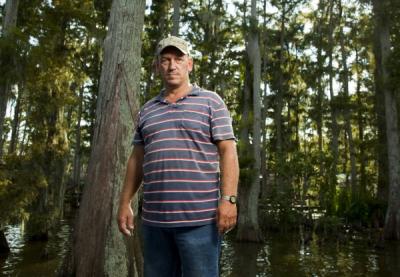
Troy Landry, one of the stars of History Channel's "Swamp People"

I was recently interviewed by Cara Bayles at the Houma Courier in Louisiana about the flood of reality television shows that are set in Louisiana.  We had a terrific talk that lasted a good half an hour, but all that ended up in the paper was a couple of sentences, which you can read here.  Just before we hung up the phone, I asked Cara “How did you find me?” to which she responded “I Googled ‘professor swamp people.'”

When I set out to write Dreaming of Dixie, I had no idea that it would lead to my becoming some “expert” on reality TV shows set in the South, although “Professor Swamp People” has a nice ring to it.  It began with the op-ed in the New York Times, which led to an interview about “hixploitation” for the Louisville Courier-Journal(KY) and similarly-related articles elsewhere.

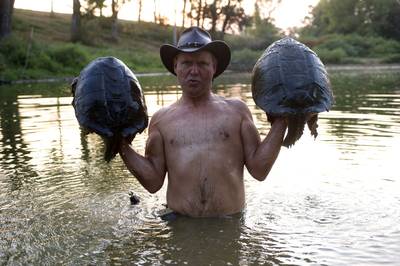
Ernie Brown, Jr. a.k.a. "Turtleman," from "Call of the Wild Man" on Animal Planet

It may seem a huge leap to go from an analysis on the impact of Gone With the Wind to that of Swamp People, but from where I sit the purveyors of popular culture have, since the early nineteenth century, simply decided to emphasize what it believes to be the South’s cultural distinctiveness–whether or not it applies to the broader region.

And yet, therein lies the problem. So often nonsoutherners (including seasoned journalists) who don’t know the region’s history and have not spent time in the South, will often buy into those differences they find in popular culture. And as long as they do, I will continue to answer to the name “Professor Swamp People” when called.  Choot’em!!

My former MA student, Nicole Moore, is becoming a leader in slave interpretations at historic sites. She is now a member of the Cooking Gene Project Team. Meet her here:

michaelwtwitty's avatarAfroculinaria

Nicole Moore is one of my team members for The Cooking Gene.  She is now a seasoned historic interpreter with degrees in public history and psychology.  She will be cooking with me en route and will advise on the tour, giving me an extra pair of eyes that sees the world similarly to how I see it, but just different enough to open me up to a new perspective.  Please learn more about Nicole at her blog:   www.interpretingslavelife.com.  You can find out more about The Cooking Gene at our campaign site:  http://www.indiegogo.com/The-Cooking-Gene-Project-The-Southern-Discomfort-Tour.  We strongly urge you to read our page, consider donating, and pass it on to others you know on social media such as Facebook, Twitter and LinkedIn as well as by email and text.  Enjoy this interview with Nicole 🙂

  1. What first got you interested in being a historic interpreter? What inspired you? Where…

View original post 5,046 more words

Occupy South Carolina? Yes. Republican debaters beware!

South Carolina is one of the most conservative states in the nation, a place where Republican presidential candidates are often assured of a supportive crowd.  So, when Michele Bachmann took to the stage to give a foreign policy speech aboard the WWII air craft carrier USS Yorktown, harbored near Charleston, South Carolina, she was taken by surprise when a group of around 30 protestors, affiliated with the Occupy Wall Street movement, shouted her down with chants of “you cater to the 1 percent!”  Instead of giving her policy speech, she was ushered off stage.  Score one for Occupy Charleston.

This was not a huge political story, but the fact that it took place in South Carolina drew significant media interest.  So often, it seems, the media delights in spreading the news of South Carolina’s political nuttiness.  To be fair, the state has often served as a wellspring of such stories in recent years.  Former governor Mark Sanford’s well-publicized affair with his Argentinian mistress, which included his weepy and weird press conference did nothing for the state’s political reputation.  Then, there was Alvin Greene, an unemployed Air Force veteran who was indicted for showing pornographic photos to a female student at the University of South Carolina, who still garnered enough votes to become the state’s Democratic nominee for the U.S. Senate.

Some in the media seem shocked that a pocket of populism (much less liberalism) exists in a state known for its conservative politics and its Tea Party governor, Nikki Haley.  The action taken by Occupy Charleston simply does not play into popular perceptions of the state; therefore, it was news that, even in South Carolina, people are taking a stand on behalf of the 99%.

This election, however, is ultimately about the economy and South Carolina is suffering.  The state’s unemployment rate is at 11% and in some areas that percentage is far higher. So, when the GOP’s presidential candidates gather tomorrow at Wofford College in Spartanburg for yet another debate, don’t be surprised if you hear from members of Occupy South Carolina and their friends in the pro-labor “Redneck Party” who are going after what they call “cheap labor” conservatives.  The Occupy Movement is alive and well in the Palmetto State. Don’t be so surprised.

“What about The Help?”

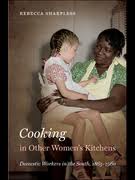
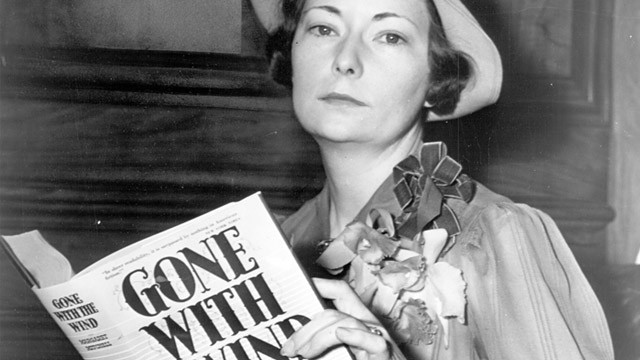
For the past several weeks, I have been traveling to promote the publication of my book Dreaming of Dixie—a study that explores representations of the South in popular culture up to World War II.  Still, even after explaining the book’s time frame, I am regularly asked “What about The Help?”  (One woman, more pointedly said “You didn’t even mention The Help!). In other words, what do I think of that book and its representations of the South?  The first time it happened, it took me off guard, because I had not read it (yes, it’s true). Instead, I was prepared to discuss the impact of Gone With the Wind.   So, I punted and happily recommended Rebecca Sharpless’s fine book Cooking in Other Women’s Kitchens and suggested they read it if they wanted a more historically accurate portrait. 

The thing about novels and movies that deal in history is that they so often get it wrong.  Gone With the Wind was a good story, and so is The Help, but let’s not kid ourselves that either makes the best history.  And yet, the success of a book like The Help means that historians will have to clear up the mistakes made in both the book and the film for a long time to come. (See, for example: An Open Statement to the fans of The Help from the Association of Black Women Historians.)

Still, I was curious as to what some readers of Stockett’s novel had to say.  As I write, there are more than 4,800 reviews of the book on Amazon.com, the majority of which are positive.  However, there are 261 readers (none who identify as historians) who gave the book less than stellar reviews.  It is clear that they, too, are concerned—not only by historical inaccuracies, but also the ways in which the book perpetuates stereotypes, specifically through the use of dialect.  As one reader put it (and very well, I might add):

“The way she presents it, the black vernacular becomes both abhorrent and belittling, particularly in that throughout most of the novel, Stockett avoided the use of the southern white vernacular when telling the story in the voice of the two main white characters, ‘Miss’ Skeeter, and ‘Miss’ Hilly.”

This particular remark seemed all too familiar to me, as I had read a similar criticism about Gone With the Wind when it was published.  In 1944, Earl Conrad, a vocal critic of Jim Crow, referred to writers who used dialect as “neo-Confederates,” because they used it to infer inferiority.  He considered Margaret Mitchell one of the worst offenders, because while she employed black dialect she never once used the nuances of language to illustrate a white southern drawl.  That book was published in 1936.  Stockett’s book—2009.

Seven decades after the publication of Gone With the Wind, it seems that a novel set in the Jim Crow South could and should move beyond the use of dialect.  As Conrad suggested, such writing “Jim Crows” African Americans by relegating them to the status of second-class citizens.

And that’s the “what” about The Help.