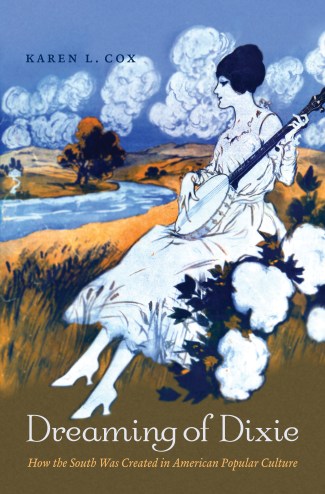
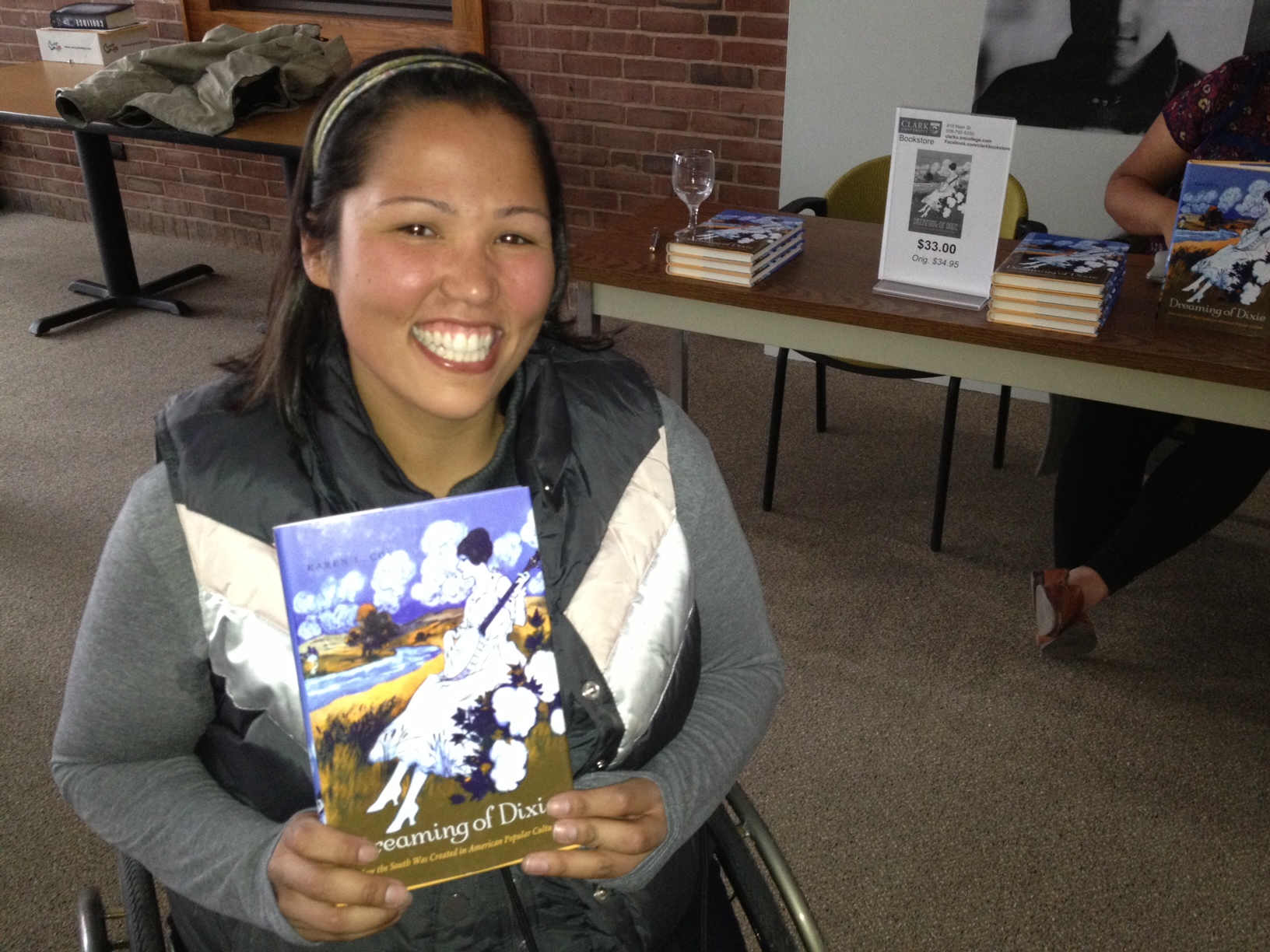
I’m pleased to announce that my book Dreaming of Dixie: How the South Was Created in American Popular Culture is coming out in paperback. You can pre-order now through UNC Press for the book’s release in August. Fun reading and great for classes!
I’m pleased to announce that my book Dreaming of Dixie: How the South Was Created in American Popular Culture is coming out in paperback. You can pre-order now through UNC Press for the book’s release in August. Fun reading and great for classes!
News recently broke that George Jones, whose distinctive voice and behavior made him a legend in country music, died today at the age of 81. I have fond memories of listening to his music with my Maw Maw Crum back in West Virginia. His nicknames “the possum” and “No Show Jones” hinted at his looks and the impact his alcoholism had on his performances. Yet no one can dismiss his unique voice or his impact on country music. Rest in Peace, George Jones.
Celebrity culture is an interesting phenomenon. We come to know a celebrity’s public persona and many people assume they “know” the person. And in some cases, the celebrity assumes that “the people” know him or her.

Enter Reese Witherspoon, or better yet a drunk Reese Witherspoon, whose celebrity persona is “America’s sweetheart.” Except that this past week the nation learned something about her true personality when, while driving in Atlanta, her husband James Toth was pulled over and arrested for drunk driving. She was in the passenger seat and instead of keeping calm and letting the officers do their job she got out of the car to announce to the officer “Do you know my name?” This was followed by “You’re about to find out. . .” Blah, blah, I’m an entitled Hollywood actress who should get special treatment and I have lawyers. Um, Reese, this is being videotaped.
Since this is a blog about the South, I wonder why it is that southern women often get the title of “America’s sweetheart?” We’ve had Mary Lou Retton (West Virginia), Julia Roberts (Georgia), Taylor Swift (from rural Pennsylvania–also known as North Alabama–and in country music she might as well be from the South), Britney Spears (Louisiana) and Reese Witherspoon (Tennessee). There have also been a number of beauty queens from the South who’ve won Miss America.
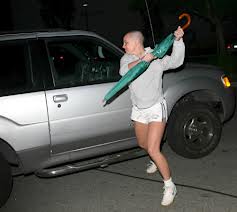
I have a theory that white southern women who supposedly exhibit a certain feminine innocence and charm, not unlike the southern belles of old, are still held up as models of femininity for the nation. Even if their private behavior isn’t innocent, very often their public personas suggest that they are well-behaved, models of traditional womanhood. So, when they show their human frailties (Britney Spears) or that they aren’t sweet at all (Reese Witherspoon) it seems like they’ve taken a big tumble from their pedestals. Except they shouldn’t have been placed there to begin with. It’s a precarious perch and they were bound to fall.
It is inherently problematic to assign southern women the title of “America’s sweetheart.” Southern women are not the mythic creatures of traditional femininity, nor do they embody the behavior that Americans and the media continue to portray them as having. They are, like other American women, fallible human beings who can sometimes behave poorly.

I’m pleased to be able to participate in the annual Historic Natchez Conference this week from Wednesday, April 17 through Saturday, April 20th. The focus of the meeting is “Civil War to Civil Rights.” I’ll be speaking about my new project about a murder case that made national headlines in 1932. It’s known locally in Natchez as the “Goat Castle Murder.”
William C. Davis, professor of history at Virginia Tech, is giving a keynote address. He is the author of Look Away! A History of the Confederate States of America (2003).
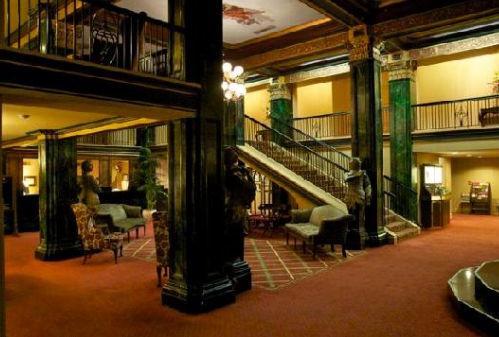
The conference will be headquartered at the historic Eola Hotel. As with many small towns with nary an airport in sight, folks there know how to show people a good time.
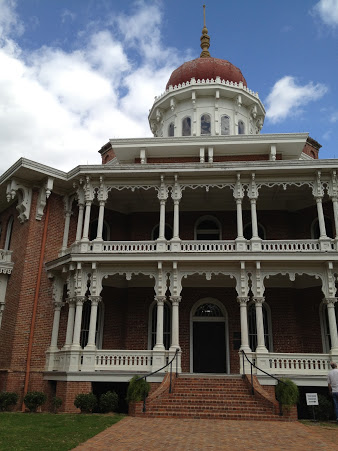
If you ever get to visit Natchez, you should. As they say there, “Natchez is in this world, but not of it.” Seeing is believing.
During the segment “Weekend Update,” Saturday Night Live’s Kenan Thompson and Jason Sudeikis satirized Brad Paisley and LL Cool J‘s new song “Accidental Racist.” Pop South examined this song earlier in the week, but admits that a brief satirical sketch can pack a big punch.
 On April 1st, Shain Gandee, one of the breakout stars of MTV’s “Buckwild” died along with his uncle and a friend. After going mudding, Shain’s truck became stuck in the mud so deep that the tailpipe on the muffler became clogged. Because it was cold that evening (and perhaps they had been drinking), the three men probably turned on the heat and fell asleep, and subsequently died of carbon monoxide poisoning.
The show was controversial for its negative representations of West Virginia, even drawing ire from Senator Joe Manchin. But during its first season “Buckwild” attracted an audience of 3 million viewers per episode. And what did the young folks who were being exploited by MTV earn? A measly $1,000 per episode. That’s right. All of you people out there who think reality television stars are making money hand over fist (because they know what they’ve gotten themselves into) need to read this again carefully: $1,000 an episode. Viacom-owned MTV on the other hand, reaped some handsome profits.
Now, in the wake of Shain’s death, MTV has canceled the show. Why? In a press release, the network reasoned that the show could not go on “given Shain’s tragic passing and essential presence on the show.” In effect, his “essential presence” meant that “Buckwild” without Shain Gandee affected Viacom’s profit margin, but nothing near what they made off of this young man’s life.
The kicker is that the producer is furious about the cancellation. According to an interview featured on HuffPost TV, J. P. Williams (who plays up West Virginia as his birthplace) is determined to save the show, going so far as to say that “My job is to protect these kids.” Say what? He exploited them to line his own pockets and not even the death of one of them is enough to keep him from being self-righteous (or being worried about his own bank account).
I was in West Virginia last week visiting with family and learned that MTV had NOT offered to assist Gandee’s parents with funeral expenses. Instead, fellow West Virginians stepped up to the plate and held a “Shain Gandee Memorial Mud Run” to help the family. Meanwhile, the network is going to have a memorial special to honor Shain, which will likely have a large audience and squeeze a few more dollars of profit from this poor soul.
All I have say about that is shame on you, MTV.
Correction: J. P. Williams’ company did pay funeral costs. However, this was after it was reported that the family didn’t have the money to pay for the funeral.
Brad Paisley‘s controversial new song “Accidental Racist” is causing a media stir and backlash creating what is euphemistically called a “shit storm.” Essentially, the song is that of a good ol’ boy who wants to show his southern pride and not have to apologize to the black guy who is waiting on him at Starbucks for doing so. He’s “just a white man, living in the Southland” who wants to wear his red shirt emblazoned with that innocuous symbol (not), the Confederate battle flag, because really, he’s just a fan of Lynyrd Skynyrd and his generation didn’t own slaves. Damn, Brad, even Lynyrd Skynyrd attempted to remove the flag from their concerts because of the flag’s ugly history–you know, the one associated not just with slavery, but with segregation and let’s not forget the Ku Klux Klan. Although in the end, Skynyrd’s legions of white fans shamed them into keeping it because it’s about “heritage, not hate.”
This is essentially Brad Paisley’s argument. Poor guy feels caught between “southern blame” and “southern pride.” Well, Brad, there’s a good reason for that and if you had done your homework, which you said you’re just doing now in order to defend yourself, you wouldn’t have written lyrics asking a black man to give you a pass for wearing that battle flag on your t-shirt with all of the political baggage that it carries. And why THAT symbol of southern pride above all others? Can’t you pick another one? Did you have to choose the one co-opted by hate groups? And why is a guy from the northern neck of West Virginia defending his southern pride?
And teaming up with LL Cool J did not help matters. He’s drifted a long way from “Mama Said Knock You Out,” which would have been a more appropriate response to Paisley’s lyrics. Instead, he joins in with ridiculous rhymes of his own like “The relationship between the Mason-Dixon needs some fixin'” and “If you don’t judge my do-rag, I won’t judge your red flag.” LL, don’t you think you’re making a sweeping generalization suggesting that all black men wear do-rags and gold chains? Then, incredulously, he gives a shout out to Robert E. Lee, offering a “RIP.”
Take a listen.
The one line LL has correct is “can’t re-write history, baby.” No, you can’t. And these two men should have familiarized themselves with the history of this country and of contentious symbols like that “red flag” before releasing this song.

What a thrill it was to be asked to come North to discuss my scholarship with the wonderful people at Clark University in Worcester, Massachusetts. I was invited several months ago by Dr. Janette Greenwood of the History Department to speak with students and to deliver the annual Bland-Lee Lecture, which is supported by a generous donation from the Chester Bland family in honor of former history professor Dr. Dwight Lee.
My first talk was with students from two different classes, one on public history and one on collective memory and mass violence. We met in the Goddard Rare Book Room of the library, a room filled with beautiful volumes of books, perfect for a salon-like discussion. While there I talked with students about the work of the United Daughters of the Confederacy in preserving Confederate Memory in the era of the New South. Students asked terrific questions, many of which were based on their reading of my book Dixie’s Daughters.
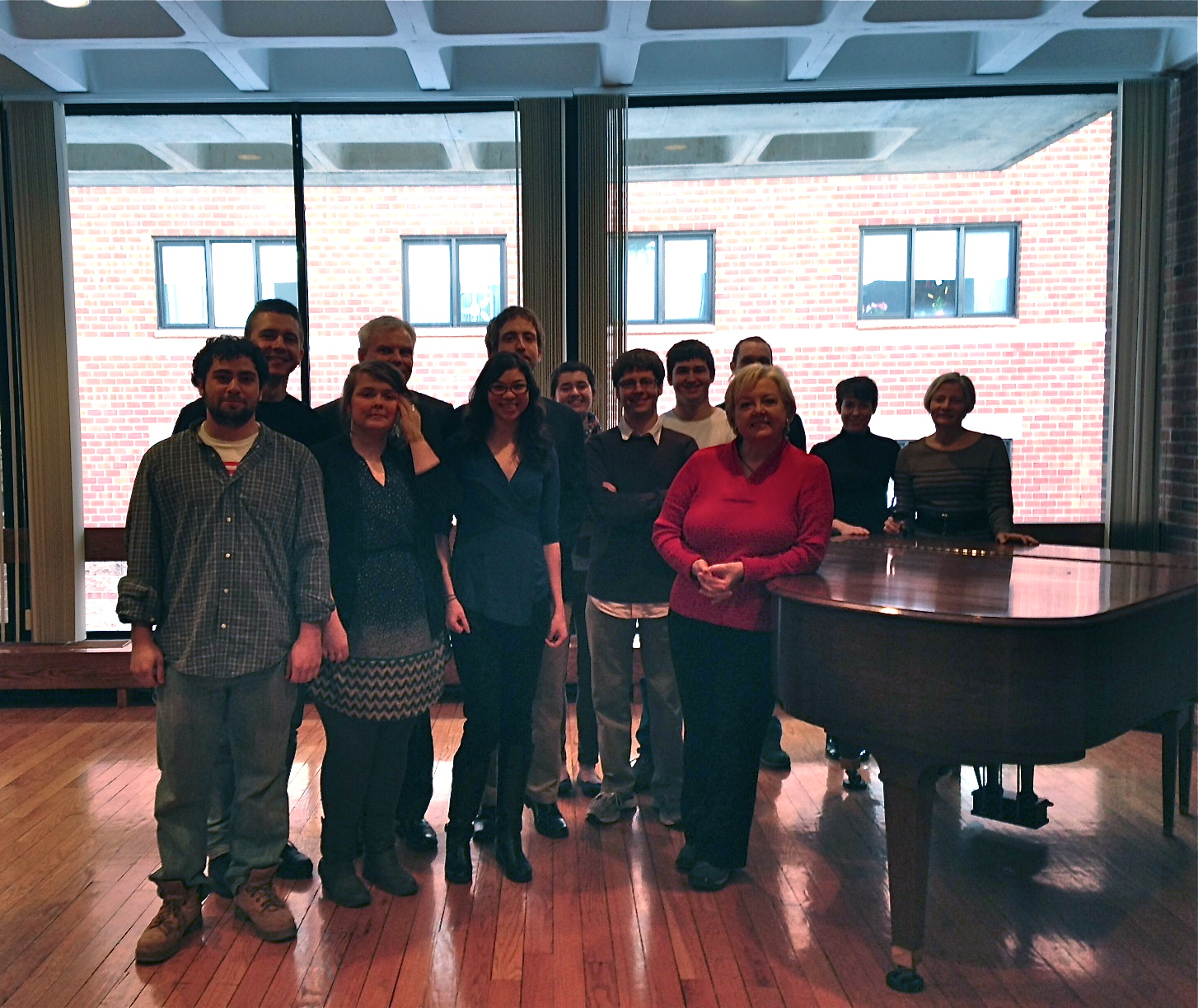
Later in the day, after a very welcome plug by golocalworcester, I had the privilege of speaking before a crowd of close to 75 people about the northern origins of the romanticized South. It was the first time I’ve had the opportunity to discuss my work with a northern audience, so I was pleased to hear their thoughts.
I began by asking those gathered (including Clark University President David Angel) if they had ever spent time in the South. Many raised their hands, although I’m not sure how much time they had actually spent here. Then I asked, “how many of you have preconceived notions about the South?” A majority of the hands in the audience went up. Then, I proceeded to illustrate the ways in which the North and northern purveyors of popular culture have been responsible for how we as a country perceive the South, including up to the present day. Afterward, I fielded questions for more than 30 minutes. To the point of exhaustion. I realized that, to this day, northerners still don’t quite understand the South. It is still regarded as a region of “others.” But to be fair, I imagine many southerners look askance at northerners as well. And so it has been since we’ve been a nation.
One of the pleasant parts of my visit was the opportunity I had to speak with Clark students. They were smart, engaged, community-minded, and all-around outstanding individuals. All of them serve as reminders that a strong liberal arts education is an outstanding foundation upon which to build our future.
I had the pleasure of joining numerous historians at Gettysburg College this past weekend for The Future of Civil War History: Looking Beyond the 150th conference–a meeting that considered how we can better interpret the American Civil War to gain a fuller, more complex, and multilayered understanding of its impact on the nation and its people. During this, the sesquicentennial of the war, the conference sought to set a far different tone than the celebratory centennial (1961-1965), which many scholars have noted was swathed in the rhetoric of the Lost Cause.
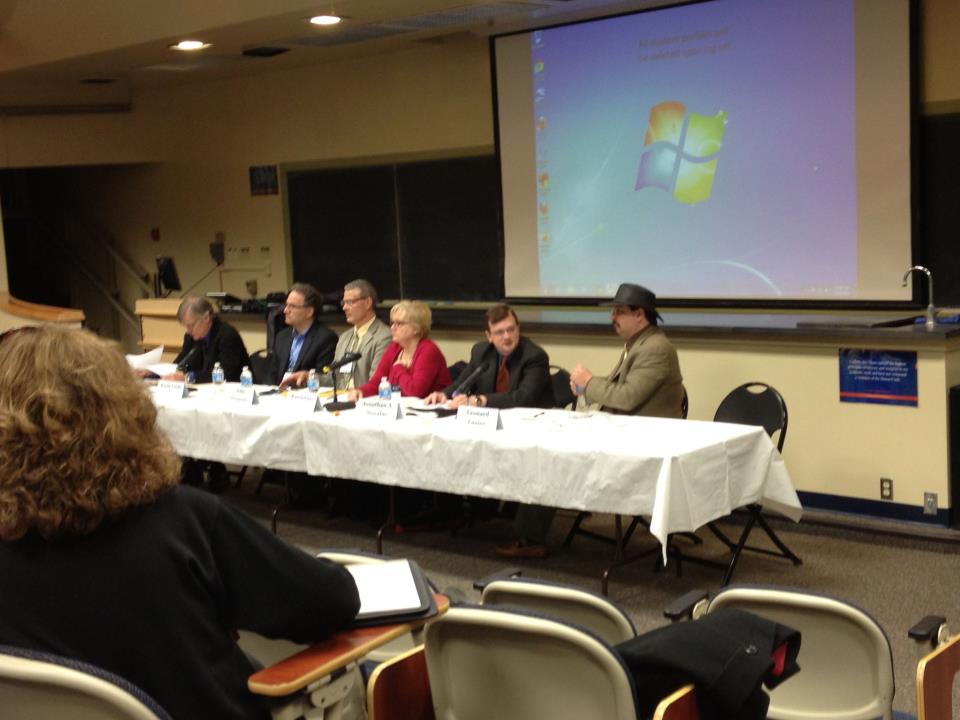
This gathering at Gettysburg certainly set a different tone as it brought together public historians and academic historians to tackle issues of memory and history, of slavery and gender, of trauma and even the smells and sounds of the battlefield. I participated in the session “Interpreting Issues of Civil War memory for the Classroom and Museum Audiences,” alongside Kevin Levin, who maintains the very successful blog Civil War Memory, Jonathan Noyalas, an instructor at Lord Fairfax Community College, John Hennessey of Fredericksburg & Spotsylvania National Military Park, and Leonard Lanier, assistant curator at the Museum of the Albemarle (NC). Our moderator was David Blight of Yale University and author of the very important and influential book Race and Reunion: The Civil War in American Memory.
One audience member asked us if we were doing a better job of interpreting the Civil War during the sesquicentennial. Time will tell, but I’d like to think that given the vast array of subjects covered at this conference that we’ve more than improved on the discussions held during the centennial.
As I’ve said many times, the explosion of southern-based reality television series make it difficult for me to keep up. One of the more recent is Lifetime‘s Double Divas, starring Molly Hopkins and Cynthia Richards, owners of LiviRae Lingerie in Kennesaw, Georgia. Lifetime may refer to it as a “docu-series,” but that’s just a highfalutin term for reality show.
The premise of Double Divas is that Molly and Cynthia are out to help women, one bra at a time, who’ve been frustrated in their effort to find one that fits. Their motto “no bust too big or too small” is the premise of their business, although there’s nothing particularly southern about that. Women from all over the country can appreciate a well-fitted bra.
While Lifetime describes the show as one that brings “southern charm and hospitality,” a claim made by many southern-based reality shows, what makes it “southern,” in my opinion, are Molly and Cynthia’s accents. Having grown up in the South, I truly appreciate a southern accent, of which there are several variations. Yet sometimes it seems that Cynthia lays it on a bit thick with hers, almost to the point where I have to hit the mute button. Still, I can’t help but wonder if the production company is behind the exaggeration.
NorthSouth productions, with offices in New York, Los Angeles, (and Knoxville?), produces this show and others in the greater Atlanta area, including Say Yes to the Dress, where a strong southern accent seems to be a requirement. The company also produced You Don’t Know Dixie, a show that promoted southern stereotypes, as I’ve written about previously.
Despite the exaggerated accents, there is something very likeable about Molly who seems genuinely interested in helping women find a bra that boosts their confidence as well as their breasts. And while Cynthia’s accent can get on my last nerve she, too, seems to really want to help women by creating the right bra for them.
I think women are watching this show (and heading to LiviRae Lingerie in droves) because so many of us are eager to get a bra that fits. That’s no joke. Even I might make the trip to LiviRae for that reason. Still, you don’t really need a southern accent or characters to sell you on that simple truth, but in the world of reality TV it’s a big part of what sells the show.
 Pop South