This is the South, NOT the Confederacy

As the government shutdown dragged on, journalists everywhere, on the left and the right, raised the level of their rhetoric in search of what they believed to be the appropriate scapegoat for their wrath. The American South, it turned out, was one of their favorites.
Enough of this.
Enough of this.

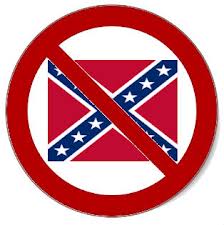
The Washington Post’s Colbert King offered a sardonic editorial in which he used the metaphor of the Confederacy to describe today’s Tea Party.  Over at Salon.com, Stephen Richter of The Globalist wrote that the shutdown was a reminder that the Civil War never ended.  Richter argued that “the South is once again rebelling against modernizing shifts in American society” and makes the analogy that “Southerners and white conservatives everywhere” fear that offering healthcare to Americans is akin to “freeing the slaves.” Of course, the article would not have been complete without illustrations of the Confederate battle flag.

Well, thanks for nothing.

The quagmire in Washington, DC, cannot be explained by simply tossing it into the lap of the South since just as many states outside of this region are being represented in Congress by members of the Tea Party caucus. When Ari Berman wrote in The Nation that the GOP has a “white southern Republican problem” by noting the high numbers of southerners in the Tea Party caucus, he failed to address the reality that the shutdown would have been impossible if only GOP conservatives from the South were involved.  The fact is that this southern faction has co-conspirators across the country. (See the list.)

Not only do these comparisons perpetuate the idea of a monolithic South, it keeps alive regional divisiveness (to say nothing of continued stereotyping) as the comments section of these articles attest. It also ignores the changing demographics of the region, which over the last few decades has included a considerable migration of people from North to South.

Moral Monday protest

More importantly, this Neo-Confederate rhetoric does nothing more than embolden Tea Party leaders and their acolytes, while at the same time it undermines the efforts of southern progressives. All the anti-South commentary illustrated with battle flags damages any inroads that are being made through grassroots efforts like those of the Moral Monday protesters here in North Carolina who are doing their damnedest to hold the GOP’s feet to the fire.

The real power struggle is not inside the Beltway, but in individual states. Conservative Republicans have gerrymandered districts to insure their power, but southern progressives in the state are not taking it lying down.

Wendy Davis, Democratic candidate for Texas Governor

Sen.Ted Cruz (R-TX) may still be a Tea Party darling (and a shoe-in for Joseph McCarthy), but State Senator Wendy Davis is offering a change to politics as usual with her candidacy for governor. And in Georgia, Democrat Michelle Nunn is off to a strong start to replace Republican Saxby Chambliss in the U.S. Senate.

The point here is that progressives nationally need to support southern progressives. (Apparently, Sen. Bernie Sanders (I-VT) agrees.)  It makes no good political sense to dismiss an entire region as a “lost cause” behind the drumbeat of Civil War rhetoric.

What’s happening in Washington is not a result of the return of the Confederacy. It might make good hay to allude to the South as the “Old South” or to suggest that it lacks the diversity (and by suggestion, education) to accept “modernizing shifts,” or insinuate that all southerners are conservative.  But this kind of commentary only serves to inspire southern conservatives, while placing yet another obstacle in the path of those seeking change.

Yes, conservatives appear to have a stranglehold on the region, but throughout the South there are strong progressive voices that need to be heard. So here’s a novel idea: rather than bolstering conservatism in the South by pointing fingers to its Confederate past and discouraging progressive voters, which is what the Tea Party wants, how about shining more light on candidates and grassroots efforts and give Progressivism a fighting chance?

And, by the way, I live in the South, NOT the Confederacy.
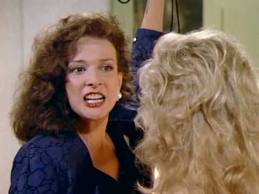
Southern progressives could learn a lesson from Julia Sugarbaker

sugarbaker
Designing Women’s Julia Sugarbaker, played by Dixie Carter.

Sometimes I feel like a lone voice in the wilderness when I write essays in an effort to counter some of negative images of the South that permeate popular culture or to contest the drivel that national journalists churn up in order to take swipes at a region they’ve never visited, much less know.

With the government shutdown, writers from The Nation to Salon to the Washington Post have all pointed their fingers at the South, especially conservative Republicans from the region, the most intransigent of which are members of the Tea Party caucus. Here, they say, the Civil War has not ended.  Here, they say, are nothing but a bunch of “Neo-Confederates.” I’m not suggesting that these journalists don’t have a point to make, but in making it, they are using a fairly broad brush that hits me and other southern progressives like a slap in the face.

This is when I wish I could muster up a rant that would make Julia Sugarbaker proud.  In the 1980s television series Designing Women, Julia Sugarbaker, played so well by the late actress Dixie Carter, knew how to rip someone a new one. In one particular episode, she lashed out at a writer from the New York Times for printing an article about dirt eating in the South.

Today, the articles about dirt eating may have subsided, but the stereotypes of the region remain.  The use of banjo music for television programs, illustrations of the Confederate battle flag for articles about the South, and so on. In one week John T. Edge might write a nice food article for the New York Times that gets all sorts of compliments (southerners do okay when it comes to food), but the next week a comedy-news show (The Daily Show or perhaps Real Time with Bill Maher) will interview a hillbilly type to make a point.

It’s tiresome and I wish Julia Sugarbaker were here to let them all know.

The Daily Show and Tired Southern Tropes

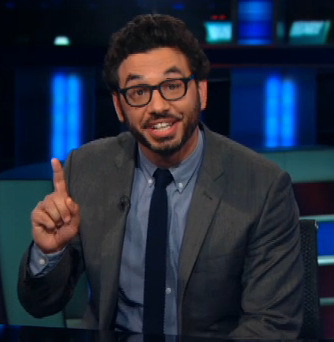
Al Madrigal
Al Madrigal

I love The Daily Show, I really do.  But when it comes to segments about the South, they often do a piss poor job of it. The latest example came from correspondent Al Madrigal who did a story on the dispute between Georgia and Tennessee regarding state borders and the water supply. (Watch the segment here.)

Georgia essentially wants and needs access to the water provided by the Tennessee River, and in typical Daily Show fashion, the actual story was less important than Madrigal’s effort to highlight the stupidity of local officials.  This is nothing new, because the show’s correspondents are often satirizing politicians.  Where it fails is in its pitiful attempt to poke fun at the South, which can be done, but with more intelligence.

Instead, it’s so lame, it’s as if the writers dialed this one in. Want to discuss the South? Incorporate banjo music and, these days, mention Honey Boo Boo.  Want to suggest that rural southerners are inbred? Incorporate a clip from Deliverance. Need to establish that people are ignorant? Mock their accents to their face or include “man on the street” interviews with people who fit the stereotype.  It was on this last point where The Daily Show showed its hand, because it was clear to anyone with a keen eye that a couple of those interviews were plants, what I’ll call “hicks for hire”.

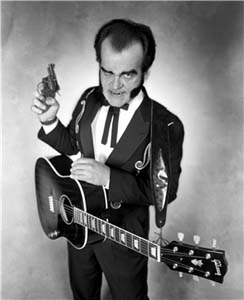
Unknown Hinson
Unknown Hinson

First, there were the two men in camouflage: one held a shotgun, while his friend offered a bug-eyed look. These two were obviously playing to the camera. Second, there was the guy who had mutton chop sideburns, slicked back hair, and sunglasses circa-1970s Elvis. The tip off that this guy was playing to the camera was his Unknown Hinson t-shirt.  While the studio audience in New York was laughing at this guy, I knew that he was saying things Al Madrigal needed to pull the piece off. And he was probably having his own laugh at Madrigal’s expense.  Like Unknown Hinson, he was portraying a character.  Everything he said played to stereotype on purpose.

So, suffice it to say, I’m disappointed with The Daily Show’s latest attempt at satirizing the South.  As usual, the writers relied on worn out tropes about the South and not only was it not amusing, it wasn’t even funny.

What it means to be a “soul sister” in a southern kitchen

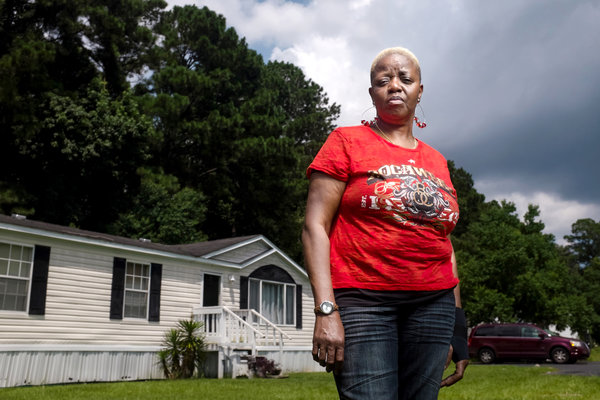
dora-charles-paula-deen
Dora Parker, the woman Paula Deen called her “soul sister.” Photo credit: New York Times.

I encourage readers of Pop South to read today’s New York Times op-ed by Rebecca Sharpless providing historical perspective on Dora Charles, the woman Paula Deen called her “soul sister.”

Ms. Charles, who helped open Deen’s restaurant Lady & Sons as well as train other cooks who worked there, was recently interviewed by the Times about her relationship with Deen.  That interview is, in many ways, even more revealing about who Paula Deen is than the deposition she gave in the lawsuit brought against her by a white woman, Lisa Jackson.

I also encourage you to read Rebecca Sharpless’s book, Cooking in Other Women’s Kitchens: Domestic Workers in the South, 1865-1960 (UNC Press, 2010). It’s a great read.

Paula Deen’s Recipe for Self-Destruction

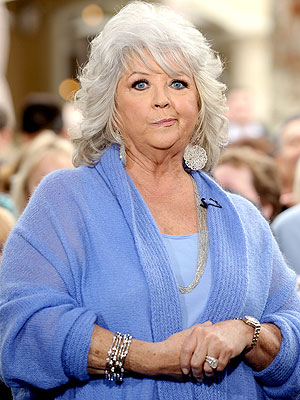
paula-deen-300
Paula Deen

There’s not enough butter to cover up or improve the bad taste that Paula Deen has left in people’s mouths since they learned that the South’s most famous cook admitted to using the “N-word” as well as making other racially insensitive remarks. Twitter lit up with fake recipe titles attached to the hashtag #paulasbestdishes, skewering Deen for her racial insensitivity.  “We Shall Over-Crumb Cake” and “Massa-roni and Cheese” are just two (and, frankly, kind) of hundreds of examples.

Her comments came under oath as she was being deposed by attorneys for Lisa Jackson, a former employee who is suing Deen and her brother Earl “Bubba” Hiers, along with Deen’s company, for alleged “violent, racist, and sexist behavior.” The full details of the complaint, in fact, are much more alarming and disturbing and go well beyond racial epithets.  Yet for now, the focus is on Paula Deen’s racist comments, and for good reason.

Deen has presented herself and has been marketed as the “face of southern cooking.”  Her shows on the Food Network, her cookbooks, magazines, and product endorsements have made her a household name and a multimillionaire. She is a very public figure and has to know that what she says and does will be publicly scrutinized.  And if she didn’t, she certainly knows it now.

So what did she say?  Under oath, she admitted to using the “N-word.”  She also said she wanted to plan a “really southern plantation wedding” for her brother Bubba Hiers.  Her inspiration came while visiting another southern restaurant where black men wore white jackets and black bow ties.  She was impressed, she said, because “that restaurant represented a certain era in America.” And when Jackson was brought in to assist the famed southern cook with preparation for Hiers wedding, she alleges that the following conversation with Deen occurred:

“Well what I would really like is a bunch of little niggers to wear long-sleeve white shirts, black shorts and black bow ties, you know in the Shirley Temple days, they used to tap dance around. . . Now that would be a true southern wedding, wouldn’t it? But we can’t do that because the media would be on me about that.” (courtesy of Talking Points Memo)

The media is on her, alright. And so are a lot of Americans who have taken to social media to let her know just what they think of her comments and her, personally.

Yet what I’m interested in here, as someone who blogs about the South in popular culture, is Deen’s supposed naiveté about the use of the N-word and her misinformed (to say nothing of outdated) view of what she believes represents a “really southern plantation wedding.”

First, there’s her use of the term “nigger.”  Deen, who is 66 years-old and grew up in southwest Georgia, knows exactly what the term means and knows full well that historically, it’s been used as a pejorative. In fact, she admits to as much under oath, saying “things have changed since the ’60s in the South. And my children and my brother object to that word being used in any cruel or mean behavior.”  Though, apparently, it’s okay to use in a joke. Well, now that she’s been caught using it, she’s being forced to consider that it’s not a laughing matter, y’all.

I have a sneaking suspicion that given the power she wields because of her wealth and celebrity, she didn’t think that using that term around one of her employees would matter, especially when that employee’s job depended on it.  Based on her responses to attorneys’ questions, it appears as though Deen felt she only used the n-word to describe, not hurt. She seems to believe that what she said was innocuous, and it didn’t even occur to her that a fellow white southerner might have a problem with it.  As it turns out, not only is Lisa Jackson white, she has biracial nieces.

Bill_Bojangles_Robinson-4
Deen’s idea of a southern plantation is straight out of a Hollywood movie from the 1930s. Pictured: Bill Robinson with Shirley Temple in The Little Colonel (1935)

Deen’s desire to give her brother a “really southern plantation wedding” is also problematic, because she’s out of touch with reality to say nothing of southern history. What she described, according to the complaint, was essentially Hollywood’s version of a southern plantation from movies of the 1930s.  Her reference to Shirley Temple films was a dead giveaway.  In 1935, Temple starred in two films set in the Old South, The Little Colonel and The Littlest Rebel.  In both, her co-star was Bill “BoJangles” Robinson who, like in Paula Deen’s image of the South “of a certain era,” is seen wearing jacket and bow tie.

The “certain era” she recalls, of course, isn’t the plantation South at all.  As one of my peers rightly noted: “As a southern historian I’ve seen a great many 19th century slave photos and none included tuxedo clad slave waiters.”  Indeed. What Deen described in her testimony is a 1930s pop culture version.  In essence, what she hoped to recreate for her brother Bubba was a wedding scene straight out of a Jim Crow era film.

According to her attorney, Paula Deen “does not condone or find the use of racial epithets acceptable.” Such a statement is to be expected now that her own use of racial epithets has been exposed, because her southern cooking empire is very likely in jeopardy as a result.

Deen’s experience is a lesson to us all that we do not live in a post-racial America. At the same time, we should not assume that racism is simply a “southern” problem. Unfortunately, given Deen’s association with the region, the popular perception of a monolithic, racist white South rears its ugly head. Yet, what I hope doesn’t get lost in all of this is that while Deen feigns to represent the South, she is not representative of the entire region. Another southern white woman, after all, is responsible for calling her out and holding her feet to the fire.

Reese Witherspoon and the Fallibility of the Southern Woman as “America’s Sweetheart”

Celebrity culture is an interesting phenomenon.  We come to know a celebrity’s public persona and many people assume they “know” the person.  And in some cases, the celebrity assumes that “the people” know him or her.

Reese Witherspoon's "sweet" mugshot.
Reese Witherspoon‘s “sweet” mugshot.

Enter Reese Witherspoon, or better yet a drunk Reese Witherspoon, whose celebrity persona is “America’s sweetheart.”  Except that this past week the nation learned something about her true personality when, while driving in Atlanta, her husband James Toth was pulled over and arrested for drunk driving.  She was in the passenger seat and instead of keeping calm and letting the officers do their job she got out of the car to announce to the officer “Do you know my name?” This was followed by “You’re about to find out. . .”  Blah, blah, I’m an entitled Hollywood actress who should get special treatment and I have lawyers.  Um, Reese, this is being videotaped.

Since this is a blog about the South, I wonder why it is that southern women often get the title of “America’s sweetheart?” We’ve had Mary Lou Retton (West Virginia), Julia Roberts (Georgia), Taylor Swift (from rural Pennsylvania–also known as North Alabama–and in country music she might as well be from the South), Britney Spears (Louisiana) and Reese Witherspoon (Tennessee). There have also been a number of beauty queens from the South who’ve won Miss America.

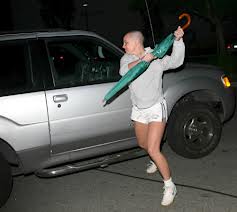
After shaving her head, Britney Spears had this "umbrella incident."
After shaving her head, Britney Spears had this “umbrella incident.”

I have a theory that white southern women who supposedly exhibit a certain feminine innocence and charm, not unlike the southern belles of old, are still held up as models of femininity for the nation.  Even if their private behavior isn’t innocent, very often their public personas suggest that they are well-behaved, models of traditional womanhood.  So, when they show their human frailties (Britney Spears) or that they aren’t sweet at all (Reese Witherspoon) it seems like they’ve taken a big tumble from their pedestals.  Except they shouldn’t have been placed there to begin with. It’s a precarious perch and they were bound to fall.

It is inherently problematic to assign southern women the title of “America’s sweetheart.” Southern women are not the mythic creatures of traditional femininity, nor do they embody the behavior that Americans and the media continue to portray them as having.  They are, like other American women, fallible human beings who can sometimes behave poorly.

Double Divas or Our Cups Runneth Over with Southern-based Reality TV

As I’ve said many times, the explosion of southern-based reality television series make it difficult for me to keep up.  One of the more recent is Lifetime‘s Double Divas, starring Molly Hopkins and Cynthia Richards, owners of LiviRae Lingerie in Kennesaw, Georgia. Lifetime may refer to it as a “docu-series,” but that’s just a highfalutin term for reality show.

The premise of Double Divas is that Molly and Cynthia are out to help women, one bra at a time, who’ve been frustrated in their effort to find one that fits.  Their motto “no bust too big or too small” is the premise of their business, although there’s nothing particularly southern about that. Women from all over the country can appreciate a well-fitted bra.

While Lifetime describes the show as one that brings “southern charm and hospitality,” a claim made by many southern-based reality shows, what makes it “southern,” in my opinion, are Molly and Cynthia’s accents.  Having grown up in the South, I truly appreciate a southern accent, of which there are several variations.  Yet sometimes it seems that Cynthia lays it on a bit thick with hers, almost to the point where I have to hit the mute button.  Still, I can’t help but wonder if the production company is behind the exaggeration.

NorthSouth productions, with offices in New York, Los Angeles, (and Knoxville?), produces this show and others in the greater Atlanta area, including Say Yes to the Dress, where a strong southern accent seems to be a requirement. The company also produced You Don’t Know Dixie, a show that promoted southern stereotypes, as I’ve written about previously.

Despite the exaggerated accents, there is something very likeable about Molly who seems genuinely interested in helping women find a bra that boosts their confidence as well as their breasts.  And while Cynthia’s accent can get on my last nerve she, too, seems to really want to help women by creating the right bra for them.

I think women are watching this show (and heading to LiviRae Lingerie in droves) because so many of us are eager to get a bra that fits. That’s no joke. Even I might make the trip to LiviRae for that reason.  Still, you don’t really need a southern accent or characters to sell you on that simple truth, but in the world of reality TV it’s a big part of what sells the show.

In Defense of Honey Boo Boo

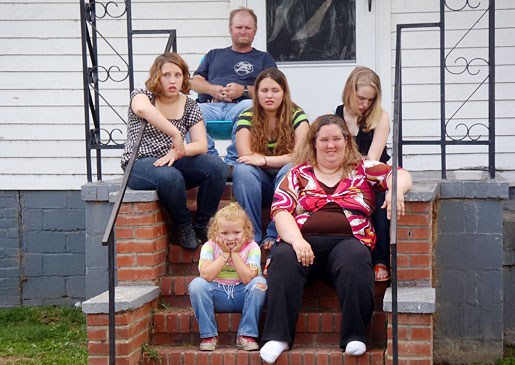
This is an excellent guest post by Abigail Gautreau for Katie Stringer’s blog entitled “Something Old, Something New.”  I suggest you read it and reconsider your views on Honey Boo Boo and the Thompson Family.  Thanks, Pop South

In Defense of Honey Boo Boo

Alana and her family