The Southern Foodways Vortex

This winter, weather watchers have been talking a lot about the “polar vortex,” which is a confluence of climatic events that essentially boil down to “Damn, it’s cold outside!”  The term “vortex,” however, offers a useful analogy for considering something quite different than the weather–the expanding interest in southern foodways.
SFAStay with me on this. Vortex, according to your basic dictionary, is a mass of spinning air, liquid, etc., that pulls things into its center. I’d argue that we’re currently experiencing a southern foodways vortex in which the food and culinary practices of the region are pulling at us from all directions thanks to the work of scholars, chefs, cooks, journalists, and documentary filmmakers. Leading this movement, of course, is the Southern Foodways Alliance (SFA), a non-profit organization based at the University of Mississippi that “documents, studies, and celebrates the diverse food cultures of the changing American South.”

Maybe I’m overstating the case about the growing interest in southern foodways because I’m familiar with the work of the SFA, know several scholars who have contributed to the literature on this topic, and have met some of the region’s chefs whose cookbooks sell a lot better than anything I’ve ever written. And if I don’t know them, I’m following them on Twitter. But I think the case is strong.

gandgSFA Director John T. Edge is a frequent contributor to the New York Times, and the paper’s Atlanta bureau chief, Kim Severson (also a cookbook author), has written several articles about southern foodways, which means the topic gets national exposure. Then there are the regional magazines (Southern Living, Garden and Gun, Our State) that practically beg to be bought, enticing us with mouthwatering photos of food and drink, spreading the love of southern foodways. The new online magazine called The Bitter Southerner, recently featured a two-part essay on the work of the SFA (which I highly recommend) that offers an in-depth look at the organization and the ways in which southern foodways can be used for good–to build bridges between people from all walks of life and to do so “in a spirit of reconciliation.”

willis_okraThe University of North Carolina Press, which has a reputation for publishing outstanding books on regional history and culture, is now publishing some of the best books on regional food to be found. Its Savor the South  cookbook series is unique in its exploration of regional food, as each book examines the history and cultural relevance of a single ingredient common in southern food, while also providing recipes that use those ingredients. Okra? Buttermilk? Pickles & Preserves? Yes, please!

While the photographs found in the pages of magazines and cookbooks are a feast for the eyes, there are also beautiful documentaries that invite you to savor the sights, sounds, and stories of regional foodways; there are none better than those produced by the SFA’s Joe York. York’s films, featured at food film festivals in New York and Chicago, are special because the focus is not so much the food as it is about people, and before you know it, you’ve learned something unique about southern history and culture. Watch York’s short film “Smokes and Ears” and you’ll see what I mean.

Why all this interest in southern foodways? Perhaps all that’s old is new again. During the Great Depression, Americans were very nostalgic about the South, as evidenced by the novels, plays, movies and advertising of the period. The nostalgia was based, in part, on an idea of the South as America’s last remaining pastoral region and that southerners embodied the American ideal of self-reliance because they lived off the bounty of the land they cultivated.

In our own time of economic uncertainty, I wonder if we aren’t experiencing a similar nostalgia for the pastoral and for the self-reliant southerner. Exploding interest in southern foodways goes a long way in feeding that craving, because it’s very much about valuing our history with the land, about the resourcefulness of people, and about traditions. Even if nostalgia draws people into the southern foodway vortex, any preconceived ideas about the region’s history and culture or what constitutes “southern” food are bound to be challenged by the work of historians, food writers, and the cooks themselves.

Cheers to that. With a glass of bourbon, of course.
Be a good neighbor–support your local animal shelter

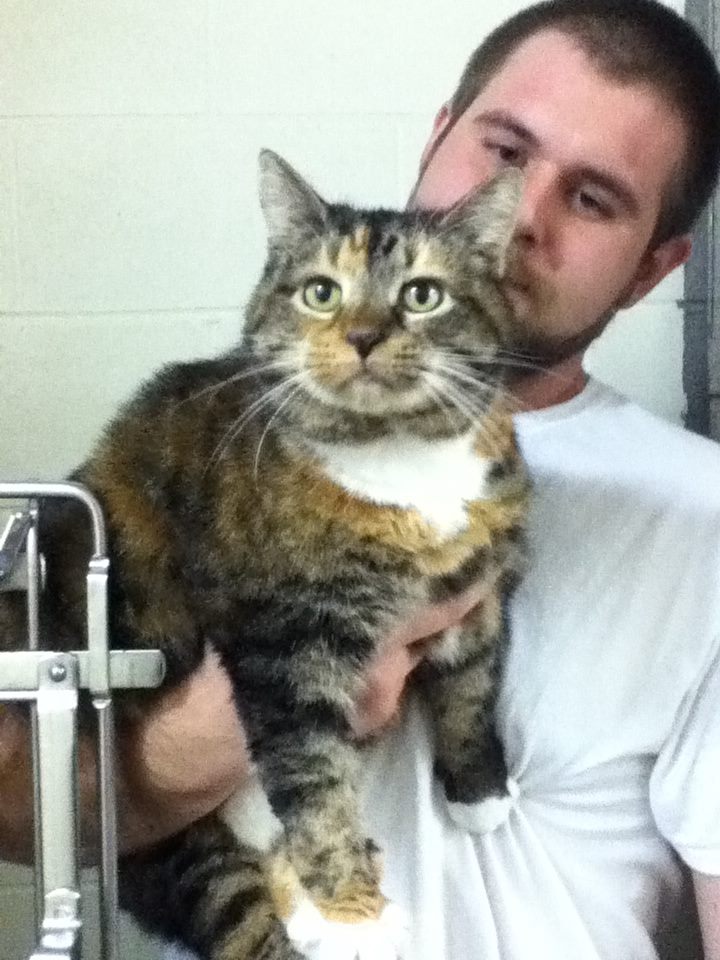
"Mama" was Hilda's cat who is now in a shelter. She's 8 years old, good with other animals, and an door cat. Call the APS in Yanceyville to adopt her!  (336) 694-4921
“Mama” was Hilda’s cat who is now in a shelter. She’s 8 years old, good with other animals, and an indoor cat. Call the APS in Yanceyville to adopt her! (336) 694-4921

This past week, a dear friend of mine named Hilda Brody, passed away.  She was a great animal lover and helped to found the Animal Protection Society of Caswell County, the county seat of which is Yanceyville, North Carolina. Throughout her life, she gave generously of herself–often taking in cats, dogs, and even horses–because she valued the lives of animals and knew the gift of love and loyalty that animals give us, as humans, in return.

The APS of Caswell County, like so many animal shelters across the South, struggles to stay afloat. In counties racked by rural poverty, local governments are less likely to support the efforts of organizations devoted to animals rather than human beings.That means that much of the work to maintain the shelter is left to volunteers or individuals who work for pennies on the dollar. Their budgets are often stretched thin and the need for both money and supplies is constant.

So many of us out there know the joy and love that our pets bring to us each and every day.  So, why not honor them by assisting another dog, cat, or the other animals that shelters care for?

What can you do to help?  Be a good neighbor and support your local animal shelter.

If you have some money to spare, consider making a donation to support the many things a shelter does (including spaying and neutering).

My cat, Halen, and my dog, Phoebe, were both adopted from an animal shelter.

And if you don’t have much, consider donating old blankets, towels, newspapers, old placemats, gently used toys, leashes, collars, litter, or grooming items.  Check here for Top Things to Donate to an animal shelter.

And when you are ready to offer an animal “forever home,” consider adopting from your local shelter.  You’ll be glad you did.

On behalf of my shelter-adopted pets, we thank you.

Kanye West, Neo-Confederate, and 12 Years a Slave

Since Pop South isn’t a paying gig, I don’t always post items as quickly as I’d like. I’ve got a real job that needs attending to, which means that I’m a little slow to blogging about those stories that are on my mind.  Like rapper Kanye West sporting a Confederate battle flag on his jacket.  And, 12 Years a Slave.

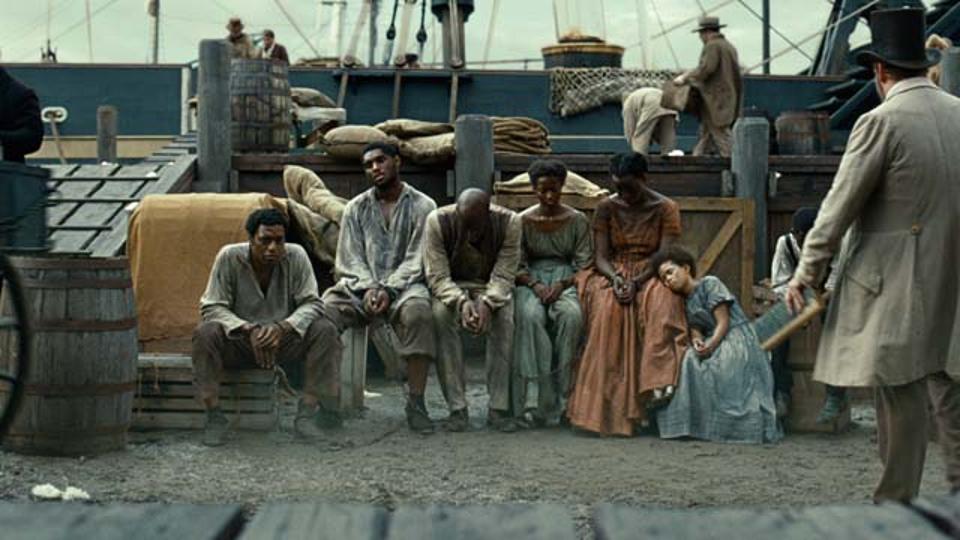
From the film, 12 Years a Slave

Speaking of which, what a powerful film.  The movie, directed by Steve McQueen, is based on true events in the life of Solomon Northrup, a free black man who was captured and sold into slavery.  But it is so much more.  Based on Northrup’s narrative, the story itself is an amazing tale of survival. Yet the greater story is how the brutality of slavery damages the humanity of everyone associated with the system–from the slave owners to the enslaved, the slave catchers and the slave buyers, men and women.  This is the institution that the Confederacy sought to preserve.

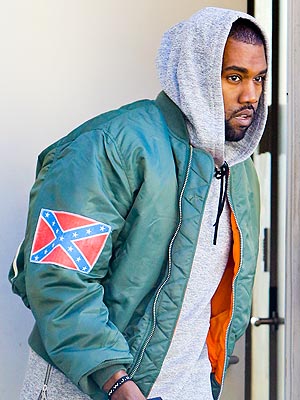
Which brings me back to Kanye and that flag.  Not just any ol’ Confederate flag, of which there are several, but the Confederate battle flag.  Because we know Kanye enjoys a battle, especially when his ego is involved or, more importantly, his wallet. Some have called this move “genius.”  He would agree. Controversy = publicity = $$$.

Kanye West, Neo-Confederate

What I find disconcerting is how willfully ignorant West is about the flag’s meaning. His public response to using it is to say: “You know, the Confederate flag represented slavery in a way—that’s my abstract take on what I know about it… So I took the Confederate flag and made it my flag! It’s my flag! Now what are you going to do?”  Yea, Kanye, it represented slavery “in a way,” and it’s also been co-opted by the Ku Klux Klan, segregationists, and Neo-Nazis. In essence, you’ve cast your lot with them, too.

But, wait. He doesn’t care about that. In a more recent interview he said as much. “You don’t ever know what I’m trying to do. Black people stopping other black people from getting checks. . .Don’t nobody care about the Confederate flag on that type of level.”  Perhaps, but I don’t think we’re out of the (pecker)woods yet.

This brings me back to 12 Years a Slave.  Kanye West needs to see this film. Over and over again. Perhaps then, he’ll get why he’s wrong about the meaning of the Confederate flag.  He may never admit to it publicly, but in his heart, he will know.

Paula Deen’s Recipe for Self-Destruction

paula-deen-300
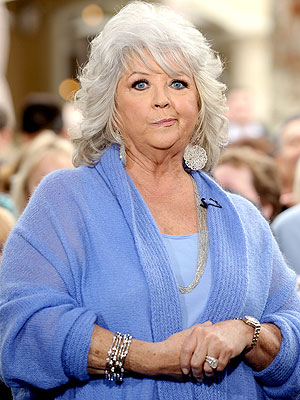
Paula Deen

There’s not enough butter to cover up or improve the bad taste that Paula Deen has left in people’s mouths since they learned that the South’s most famous cook admitted to using the “N-word” as well as making other racially insensitive remarks. Twitter lit up with fake recipe titles attached to the hashtag #paulasbestdishes, skewering Deen for her racial insensitivity.  “We Shall Over-Crumb Cake” and “Massa-roni and Cheese” are just two (and, frankly, kind) of hundreds of examples.

Her comments came under oath as she was being deposed by attorneys for Lisa Jackson, a former employee who is suing Deen and her brother Earl “Bubba” Hiers, along with Deen’s company, for alleged “violent, racist, and sexist behavior.” The full details of the complaint, in fact, are much more alarming and disturbing and go well beyond racial epithets.  Yet for now, the focus is on Paula Deen’s racist comments, and for good reason.

Deen has presented herself and has been marketed as the “face of southern cooking.”  Her shows on the Food Network, her cookbooks, magazines, and product endorsements have made her a household name and a multimillionaire. She is a very public figure and has to know that what she says and does will be publicly scrutinized.  And if she didn’t, she certainly knows it now.

So what did she say?  Under oath, she admitted to using the “N-word.”  She also said she wanted to plan a “really southern plantation wedding” for her brother Bubba Hiers.  Her inspiration came while visiting another southern restaurant where black men wore white jackets and black bow ties.  She was impressed, she said, because “that restaurant represented a certain era in America.” And when Jackson was brought in to assist the famed southern cook with preparation for Hiers wedding, she alleges that the following conversation with Deen occurred:

“Well what I would really like is a bunch of little niggers to wear long-sleeve white shirts, black shorts and black bow ties, you know in the Shirley Temple days, they used to tap dance around. . . Now that would be a true southern wedding, wouldn’t it? But we can’t do that because the media would be on me about that.” (courtesy of Talking Points Memo)

The media is on her, alright. And so are a lot of Americans who have taken to social media to let her know just what they think of her comments and her, personally.

Yet what I’m interested in here, as someone who blogs about the South in popular culture, is Deen’s supposed naiveté about the use of the N-word and her misinformed (to say nothing of outdated) view of what she believes represents a “really southern plantation wedding.”

First, there’s her use of the term “nigger.”  Deen, who is 66 years-old and grew up in southwest Georgia, knows exactly what the term means and knows full well that historically, it’s been used as a pejorative. In fact, she admits to as much under oath, saying “things have changed since the ’60s in the South. And my children and my brother object to that word being used in any cruel or mean behavior.”  Though, apparently, it’s okay to use in a joke. Well, now that she’s been caught using it, she’s being forced to consider that it’s not a laughing matter, y’all.

I have a sneaking suspicion that given the power she wields because of her wealth and celebrity, she didn’t think that using that term around one of her employees would matter, especially when that employee’s job depended on it.  Based on her responses to attorneys’ questions, it appears as though Deen felt she only used the n-word to describe, not hurt. She seems to believe that what she said was innocuous, and it didn’t even occur to her that a fellow white southerner might have a problem with it.  As it turns out, not only is Lisa Jackson white, she has biracial nieces.

Bill_Bojangles_Robinson-4
Deen’s idea of a southern plantation is straight out of a Hollywood movie from the 1930s. Pictured: Bill Robinson with Shirley Temple in The Little Colonel (1935)

Deen’s desire to give her brother a “really southern plantation wedding” is also problematic, because she’s out of touch with reality to say nothing of southern history. What she described, according to the complaint, was essentially Hollywood’s version of a southern plantation from movies of the 1930s.  Her reference to Shirley Temple films was a dead giveaway.  In 1935, Temple starred in two films set in the Old South, The Little Colonel and The Littlest Rebel.  In both, her co-star was Bill “BoJangles” Robinson who, like in Paula Deen’s image of the South “of a certain era,” is seen wearing jacket and bow tie.

The “certain era” she recalls, of course, isn’t the plantation South at all.  As one of my peers rightly noted: “As a southern historian I’ve seen a great many 19th century slave photos and none included tuxedo clad slave waiters.”  Indeed. What Deen described in her testimony is a 1930s pop culture version.  In essence, what she hoped to recreate for her brother Bubba was a wedding scene straight out of a Jim Crow era film.

According to her attorney, Paula Deen “does not condone or find the use of racial epithets acceptable.” Such a statement is to be expected now that her own use of racial epithets has been exposed, because her southern cooking empire is very likely in jeopardy as a result.

Deen’s experience is a lesson to us all that we do not live in a post-racial America. At the same time, we should not assume that racism is simply a “southern” problem. Unfortunately, given Deen’s association with the region, the popular perception of a monolithic, racist white South rears its ugly head. Yet, what I hope doesn’t get lost in all of this is that while Deen feigns to represent the South, she is not representative of the entire region. Another southern white woman, after all, is responsible for calling her out and holding her feet to the fire.

Historic Natchez Conference: Civil War to Civil Rights

Boxwood Garden, Natchez

I’m pleased to be able to participate in the annual Historic Natchez Conference this week from Wednesday, April 17 through Saturday, April 20th.  The focus of the meeting is “Civil War to Civil Rights.”  I’ll be speaking about my new project about a murder case that made national headlines in 1932. It’s known locally in Natchez as the “Goat Castle Murder.”

William C. Davis, professor of history at Virginia Tech, is giving a keynote address.  He is the author of Look Away! A History of the Confederate States of America (2003).

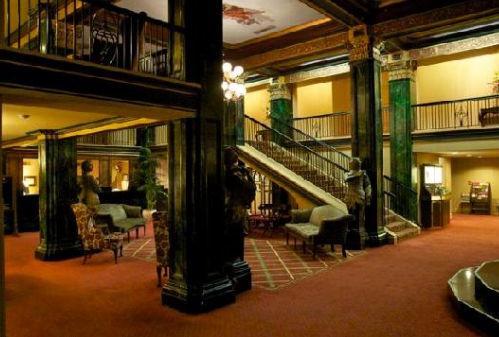
Inside the Eola Hotel

The conference will be headquartered at the historic Eola Hotel. As with many small towns with nary an airport in sight, folks there know how to show people a good time.

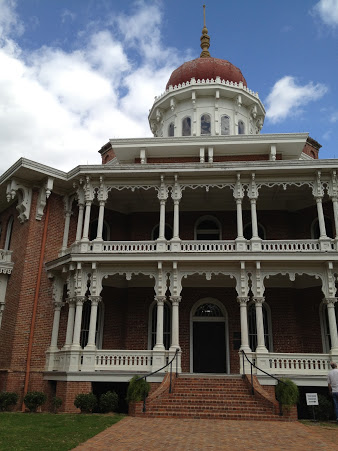
Longwood Plantation, Natchez

If you ever get to visit Natchez, you should.  As they say there, “Natchez is in this world, but not of it.”  Seeing is believing.

Pop South: 2012 in review

The WordPress.com stats helper monkeys prepared a 2012 annual report for this blog.

Here’s an excerpt:

4,329 films were submitted to the 2012 Cannes Film Festival. This blog had 26,000 views in 2012. If each view were a film, this blog would power 6 Film Festivals

Click here to see the complete report.

Looking Backward on the Dixie Highway

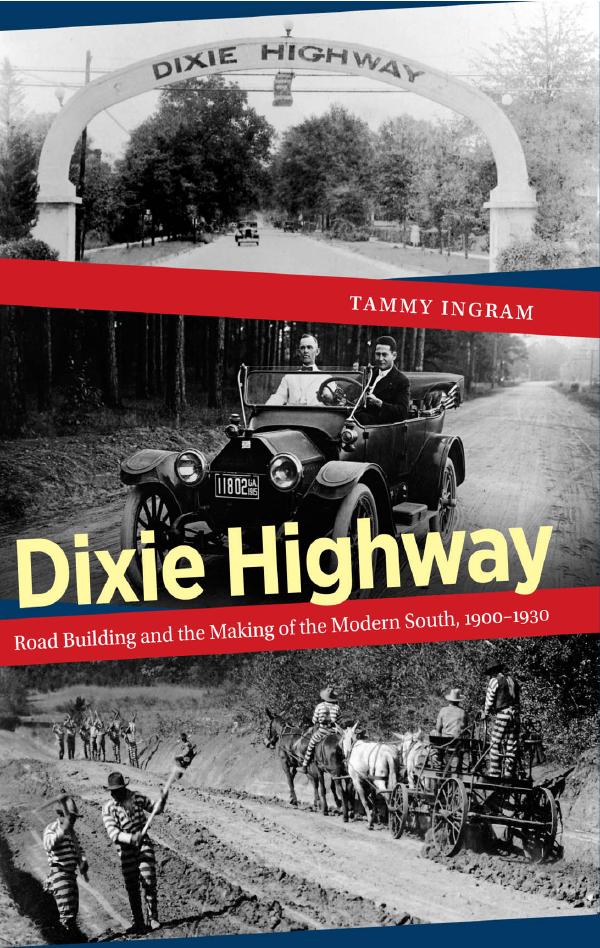
dixiehighwayPop South welcomes this post by Tammy Ingram, Assistant Professor of History at the College of Charleston. Her book Dixie Highway: Roads and Modernization in the South, 1900-1930 is forthcoming from the University of North Carolina Press.

I like to drive. My dad taught me how when I was seven or eight years old and turned me loose with his old one-ton flatbed truck. With the tattered bench seat pushed all the way forward, I toured the back roads around our South Georgia farm with my trusty co-pilot, a chihuahua named Scooter, perched on the seat next to me. When I was older (and legal), I ventured farther, this time with a stack of maps by my side. My best memories are from those road trips—my first solo long-distance drive to college; a cross-country journey with an old boyfriend; and speeding across the Tappan Zee Bridge at 4:00 AM on the 1000-mile trip home during grad school.

I got to know the South from behind the wheel of an automobile, just like the farmers and tourists I write about. But the South they encountered looked very different. At the turn of the twentieth century, a jumble of muddy roads covered the South like a bed of briars. Roads were not long-distance routes, but rather short paths that fed local traffic to the nearest railroad depot. Main roads branched outward from railroad towns, and thousands of miles of secondary roads linked them to farms. There were no road signs or mile markers to guide you. If you weren’t from around these parts, you’d have a hard time navigating the roads that linked isolated farms to nearby market towns but not much else.

These problems became the focus of a grassroots campaign called the Good Roads Movement. Though it began among urban bicyclists in the 1880s, by the 1910s the automobile craze had transformed it into a nationwide crusade to improve rural roads.

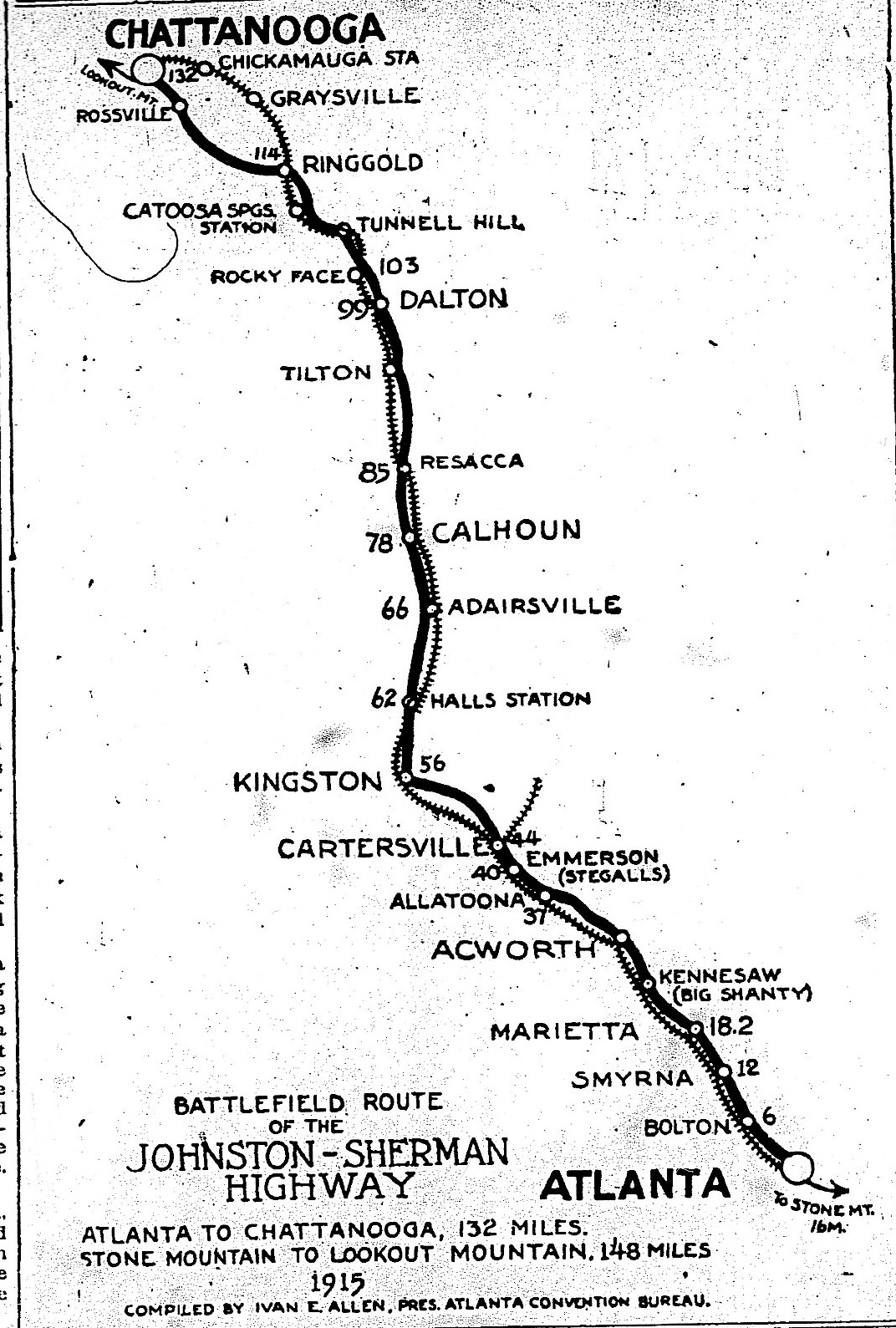
Section of the Dixie Highway from Chattanooga to Atlanta via Dalton (there was a rival routing option through Rome, as well) Atlanta Constitution, March 28, 1915

Between 1915 and 1927, the Dixie Highway served as the centerpiece the Good Roads Movement in the South. Made up of hundreds of local roads stitched together, the Dixie Highway looped 6000 miles from Lake Michigan to Miami Beach and back up again. It was originally planned as a tourist route to steer wealthy motorists from the Midwest to fancy vacation resorts in South Florida, but within a few years the Dixie Highway became a full-fledged interstate highway system—the first in the nation—and served tourists, businessmen, and farmers, alike.

The highway that helped to transform and modernize the South, however, reflected profoundly conservative ideas about the region’s place in the nation.

The Dixie Highway was the brainchild of Carl Fisher, an eccentric Indianapolis millionaire, and his wealthy friends in the auto industry. With the support of others in the Good Roads Movement, they used the highway to lobby for state and federal highway aid. Southern support was critical to this process. Yet in the Hoosiers’ imagining of the Dixie Highway route, the South was little more than an unavoidable place on the way to vacation paradise in South Florida.

In order to promote the highway to northern tourists, they had to market the South as a destination in and of itself, not just an obstacle separating Chicago snowbirds from the warm Florida sunshine. And in order to persuade southern voters and taxpayers to fund long-distance highways, which they derided as “peacock alleys” that served only wealthy motorists, they had to convince them that tourism in the South would pay.

They started with the name. Originally called the Cotton Belt Route, by early 1915 they had adopted a snappier sounding name that, as this blog’s author Karen L. Cox has argued, was not just a geographic reference but a brand that evoked popular nostalgia for the Old South. The Dixie Highway sounded like a road to the past as much as a road to a place. It presented the South as an exotic locale, and idea, to explore and exploit.

Although traffic would flow both ways along the Dixie Highway, its Hoosier boosters envisioned it as a path “leading down into the South,” where there existed “wonderful scenery that is most unusual and attractive” to Midwestern motorists. Some even believed the Dixie Highway could ease lingering sectional tensions. The New York Times dubbed it the “Dixie Peaceway” and mawkishly described it as “a memorial . . . symbolical of the accord between brethren which shall never again be broken.” In Illinois and Indiana, “Dixie” gas stations, restaurants, and hotels conjured up images of an unfamiliar but pleasant destination. Oil and gas companies capitalized on the interest in southern tourism, as well, by distributing road maps to guide tourists through the South.

But Yankee entrepreneurs were not the only ones who drew on stereotypes about the South. In Georgia, Dixie Highway boosters promoted Old South and Civil War tourism.

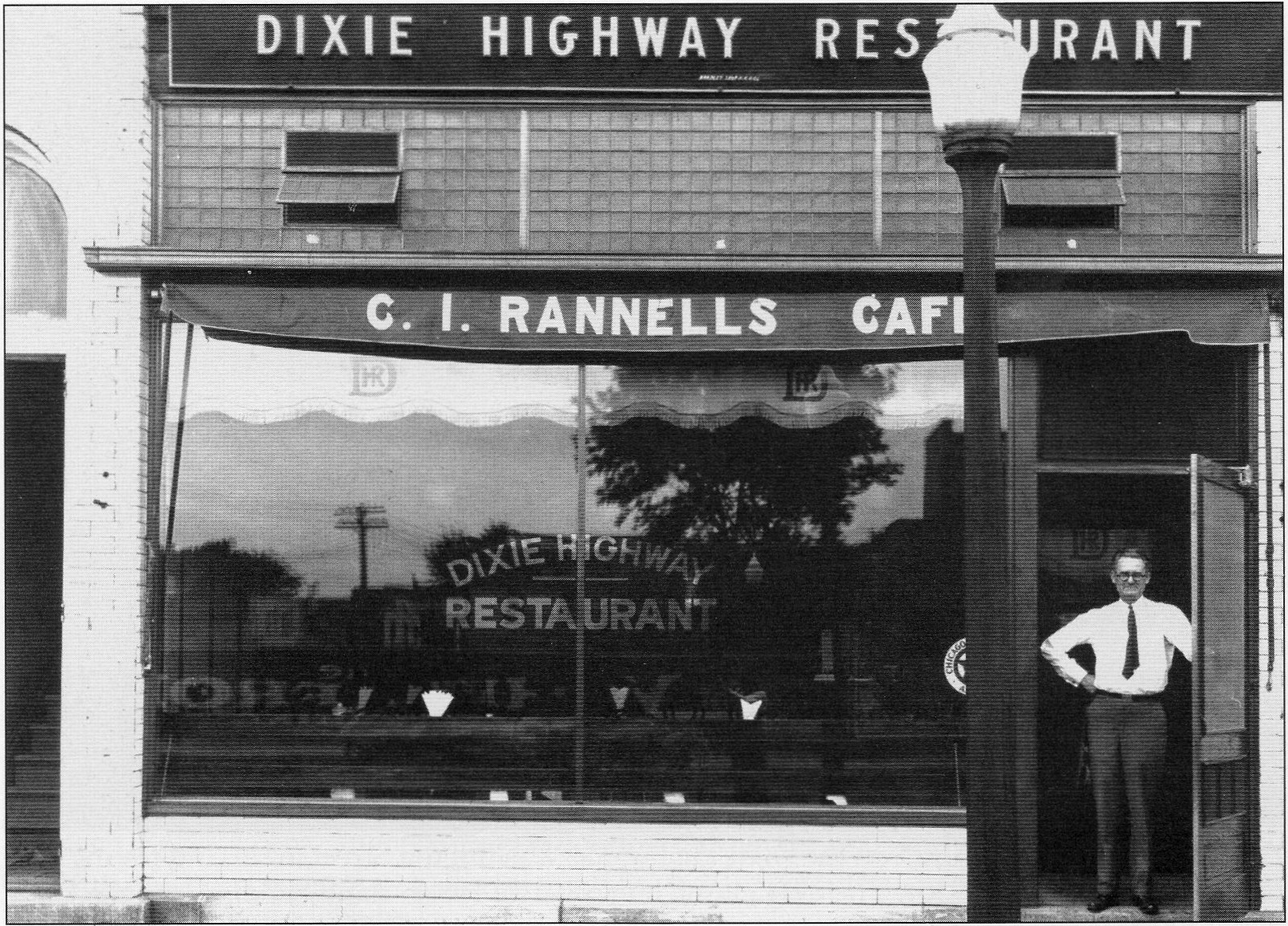
Dixie Highway restaurant in Illinois, courtesy Tammy Ingram.

Looking backward, however, proved incongruous with the challenges of building a modern highway system. Even while southern supporters of the Dixie Highway joined the campaign for state and federal aid, they clung to old social and political institutions that preserved local control.

The most ruinous was the county chain gang. Chain gangs were not unique to the South, but by the 1920s, when state- and federal-aid highways were beginning to take shape, most states outside the region had turned to contract labor. But not southerners. Chain gangs allowed local authorities to control black labor, so southerners preserved them long after other states had abandoned them.

As soon as modern highway building challenged their sacred institutions, southerners retreated. By the time state and federal highway markers began to replace Dixie Highway markers in the late 1920s, the Good Roads Movement was dead. The backlash against the emerging highway bureaucracy did not forestall road work altogether, but it delayed the development of a modern, integrated highway system in the South for decades. The construction of the Eisenhower system in the 1950s and 1960s transformed large parts of the South, but it had little impact on the quality of local roads and state highways miles away from the interstates. In the 1980s, when I was growing up in rural Georgia, a hard rain could wash out half of the county’s dirt roads.

A few years ago, I drove one of the few remaining sections of the original Dixie Highway, a narrow road that winds through peach country near Macon, Georgia. In some spots, you can see in your rearview mirror a stretch of Interstate 75, the modern, multi-lane, limited-access freeway that replaced the Dixie Highway. You won’t see much of the South driving eighty-five miles an hour along the latter route, but the former won’t take you where you need to go. If ever there was a fitting memorial to the Good Roads Movement, this might just be it.

Remembering Jesse Owens–An Olympian from the Deep South

In this guest post, Barclay Key, Assistant Professor of History at the University of Arkansas-Little Rock, reflects on the meaning of race and commemoration in the Deep South through his personal recollections of growing up in Lawrence County, Alabama, the same county where Olympic great Jesse Owens was born.  Key has a poignant essay about Owens in a forthcoming volume Destination Dixie: Tourism and Southern History.

While I have the vaguest memory, perhaps concocted later, of Al Michaels asking in 1980 if I believe in miracles, the 1984 Summer Olympics figured most prominently in my childhood.  As an eight-year-old in rural northwest Alabama, I had already developed a passion for some sports, particularly Dixie Youth baseball and Alabama football, but I had little knowledge of the varieties of athletic competition on display in Los Angeles.

Carl Lewis, Mary Lou Retton, and John Williams clearly inspired something in me because I soon developed my own Olympic events and invited friends to participate.  We had the traditional sprints that measured the length of our front yard, but other events required more imagination.  The shot put contest consisted of heaving a brick, and my gymnastics routine was limited to hanging from our rusty swing set, swaying a bit, and dismounting letting go.  I also managed to incorporate an obstacle course and an Atari game or two.  Motivated in part by Red Dawn, I went undefeated versus the Soviets as my games extended into the fall and winter.

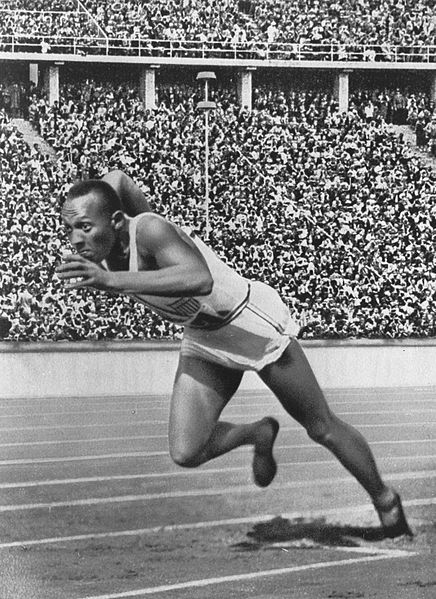
Jesse Owens, 4-time Gold Medalist at the 1936 Berlin Olympics

Imagine my delight the following summer when my mother offered to take me to the nearby Jesse Owens monument.  I had come to understand that Owens was an Olympic hero.  Lewis’s four gold medals in 1984 elicited comparisons to Owens, who had won four gold medals during the 1936 Olympics in Berlin, Germany.  And I had recently participated in the Jesse Owens Memorial Run, a new event in my hometown that acknowledged the track star’s local connection to Oakville, a community near our small town.

Even if he wasn’t technically from my town, I thought, he was from Lawrence County, just like me.  He became an Olympic hero; maybe I could, too.  Or at least I could start at wide receiver for the Univeristy of Alabama Crimson Tide.  In a place where one’s identity relates so closely to home and community, there is a sense in which Owens was becoming “one of us.”  Although I was naïve about this process and its abundant ironies, local people, particularly whites, were coming to embrace Owens as a hometown hero a few years after his death in 1980.

Owens had been a child—about nine years old, just like me—when he migrated with his family from Alabama to Ohio.  To the best of my knowledge, he never stepped foot in the county again.  In autobiographical accounts of his childhood, Owens wrote of the “terror of sharecropping in the South” and the “terror of Oakville,” a community he described as “more an invention of the white landowners than a geographical place.”  I don’t recall anyone explaining why the Owens family left “our home” or why Owens ran for Ohio State University instead of my beloved Crimson Tide.  I completely missed the significance of a black American from Alabama overcoming tremendous odds to represent his own country in an Olympiad often remembered for its Nazi hosts.

Mother’s offer was really more of a bribe.  She needed to run an errand near Owens’s birthplace, about ten miles away, and she did not want to leave me alone.  The promise of seeing the Owens monument convinced me to cooperate.  She provided no details, so my mind ran wild with possibilities.  At the very least, I imagined a large statue surrounded by beautiful flowers, or maybe even an elaborate fountain that would give me an opportunity to make a wish and toss a penny.

Twenty minutes into the drive, my mother exclaimed, “There it is!”

“Where?!” I shrieked, exasperated that I couldn’t immediately locate what must have been an amazing sight.

“Right there,” she replied.

I finally caught a fleeting glance of what looked like a tombstone.  “Is that all there is?” I asked.

A few years ago, I couldn’t resist an opportunity to write an essay about the commemoration of Owens in Lawrence County for Destination Dixie:  Tourism and Southern History.  Readers will learn how this modest monument provoked controversy that spilled into the state and national media and how the Jesse Owens Park and Museum later arose out of the same cotton fields that the Owens family picked before their migration.  This project was cathartic in several ways.  Having navigated the requirements of becoming a “professional historian,” I enjoyed sharing a local story that served as a microcosm of racial tensions and piecemeal efforts at reconciliation that have become more characteristic of the South in recent decades.

My recent interest in the commemoration of Owens illustrates how I too have embraced him as a Lawrence County native, not just an Olympic hero.  Although Owens’s experiences were in no way comparable to my own, I have come to appreciate that his story is indelibly tied to my own, to our own.  My grandfather was a sharecropper; my father started picking cotton at age five.  Their “whiteness” protected them from the racial discrimination that the Owens family faced, both in Alabama and beyond, but we share an ancestral relationship to the land, to work, to want.  We are from Alabama.  Jesse Owens is my people, just as notorious figures like George Wallace are.  Accepting both remains a work in progress for many.

The DNC and the National Media—Bringing Southern Stereotypes to a City Near You


As we get closer to the kickoff for the Democratic National Convention, I thought it would worthwhile to repost a blog I wrote in February 2011 when it was first announced that Charlotte, North Carolina, would host the convention.  Look for more DNC-related posts in the near future.  Here’s the link to that post:

The DNC and the National Media—Bringing Southern Stereotypes to a City Near You.


From the always amusing Southern Blogger.  KLC

thesouthwillblogagain's avatarThe South Will Blog Again!

Hey Y’all,

It’s been several months since my last post on The South Will Blog Again. You’ll have to forgive me for my absence. I went and found a full-time job. Funny thing about blogging…you have a whole lot more time to do it when you don’t have much else to do. So in any case, it’s been about ten weeks on the new job and I’m pretty settled in. I do have less time to draw cartoons so I’ll be posting most likely only once or twice a month instead of weekly.

Nevertheless, I have resolved that the South will indeed blog again. In any event with new co-workers, many of whom are “sectionally challenged” (from the North that is), I have had a new batch of people to tell my Mississippi stories to. And that reminded me of this blog and that I have a worldwide forum for…

View original post 2,116 more words