Andy Griffith and Me

Andy Griffith as Andy Taylor, Sheriff of Mayberry.

I’m just going to speak off the cuff here and not go into any analytical piece about The Andy Griffith Show (TAGS for those in the know) in popular culture.  You see, I love that show.  I mean LOVE that show.  My all-time favorite.

So, it is with some sadness that I write about the passing of Andy Griffith today.  As a fellow North Carolinian, I have an appreciation for his humor and of the South that he represented.  Yes, I know he had a much broader career than TAGS (starring in movies like Elia Kazan’s A Face in the Crowd, and having a second TV career with Matlock), but it’s my love of TAGS that I want to write about here.

I grew up in Greensboro, North Carolina, and it was my evening ritual to watch reruns of the show at 5pm and again at 5:30pm.  Later, when I got to college, I met other fans of the show, even attending an Andy Griffith party dressed as a waitress at the diner.  My date came as Malcolm Meriweather (Mayberry’s British visitor) and rode in on his bicycle.  My graduate school pal and lifelong friend Kelli Logan and I often traded lines back and forth from various episodes and when we see each other, we still do.  At some point, both of us even joined one of the first online discussion boards for TAGSRWC (The Andy Griffith Rerun Watchers Club), a place where we found others doing the same thing–trading lines.  It was a testament to the fine writing on the show, half of which was written by Griffith himself. It was also a testament to our insane love of all things Mayberry.

One Christmas I received The Andy Griffith Show puzzle, which I happily completed. (Ca. 1998)

I’ve watched marathons of TAGS on TV Land and videotaped them (when that technology was around) and later traded them in for a much nicer DVD set.  I purchased one of the earliest Andy Griffith trivia games, for which only my former neighbors–June Carraway and Gary Washburn–could ever really compete.  We all took a trip to Mt. Airy for Mayberry Days one year where we joined thousands of others who shared our passion for the show. There, I got to see the original doors to the courthouse, ate at the Bluebird Diner, and sat for a brief moment in one of the chairs at Floyd’s Barbershop.  The line to the Snappy Lunch for a pork chop sandwich was far too long. I also took a few photos with some of the folks who dress like characters from the show.
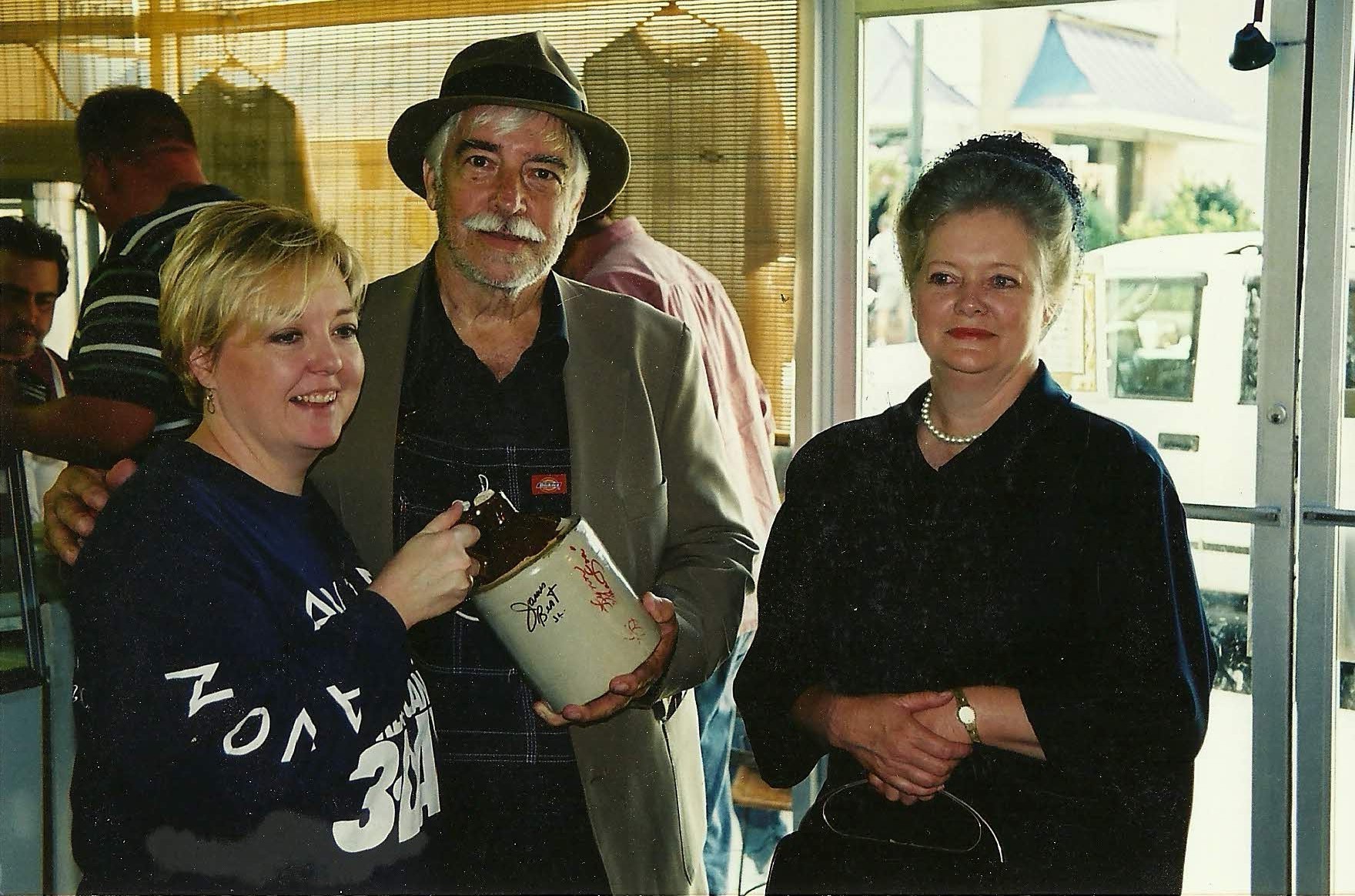
Me with Briscoe Darling and Aunt Bea look-alikes during Mayberry Days, ca. 2004.

A couple of years ago, I went to Mt. Airy for a doll exhibit (don’t ask) at the Gertrude Smith House in Mt. Airy.  I was there for about a half an hour when all of a sudden there was a commotion because Betty Lynn, who played Thelma Lou, had arrived.  You would have thought she was royalty, and in Mt. Airy, she is.  It was then that I learned that she had moved to the town and makes her home in an assisted living facility.  Even if Hollywood has long since forgotten her, the fans of The Andy Griffith Show still hold her in high esteem.  And I must admit, I was a little star struck.

Even more recently, I met a man who works in maintenance at UNC Charlotte who shares my passion for TAGS.  After completing some work in my office he noticed two books on my shelf were about the show.  He lit up when he found this out and to this day, he leaves TAGS trivia questions posted to my office door.  And when he passes me on campus in one of those tiny maintenance vehicles he gives me some sort of TAGS shout out.  He’s far better at the trivia than I am, but I appreciate that he keeps me on my toes.

[Above:  A clip from one of my favorite episodes “Arrest of the Fun Girls.”  That would be Daphne and Skippy for those who might not know their names]

So, Andy Griffith, and particularly TAGS, has been with me through most of my life and his passing feels a little like seeing my own life pass before me.  Thankfully, I can pull out those DVDs and watch the show again and again.  I never tire of it.  It makes me laugh no matter how many times I’ve seen any one episode.  I can also engage in banter with others who share my passion.  And that’s good for my southern soul.
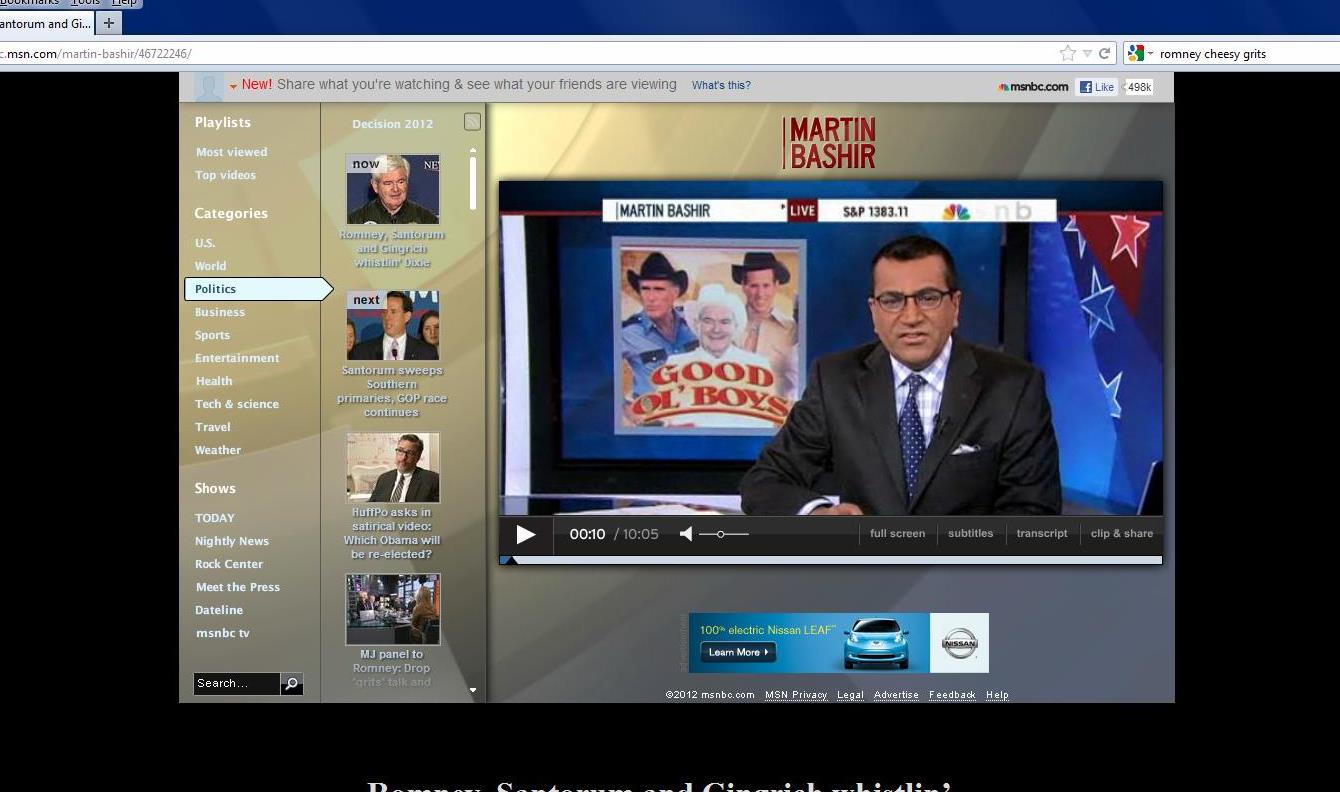
Republican Candidates in the South: A Confederacy of Dunces. So, too, MSNBC’s Martin Bashir & Co.

Oh, for goodness sake!  The Republican candidates for president went South and the next thing you know Mitt Romney touted “cheesy grits” and practiced saying “ya’ll,” and Rick Santorum adopted a hick accent and told people “I got kin here in Mississippi.  I’m not sure. . . (don’t say “what I think about it!”). . .I’m very proud of it.”  Shew!  That was a close one.

I think that Kathleen Parker hit the nail on the head in her opinion piece in the Washington Post that southerners deserve better from their candidates.  The one thing that she missed, however, is that Santorum, Romney, and even Newt Gingrich aren’t speaking to black southerners (or Latinos who represent the fasting growing population in the South) AT ALL.

What made it worse, for me at least, was how MSNBC covered the Republican campaigns in Mississippi and Alabama–particularly Martin Bashir and company–as they chuckled their way through a discussion of the candidates.  Believe me, there is a lot to chuckle about when you hear the gems that fall from Romney’s mouth, but that shouldn’t let Bashir off the hook.  His show began with the banjo theme song from Deliverance followed by his opening statement “Oh, my goodness, it is a deep fried primary day down in Dixie.” Really? Hush yo’ mouth!  And then, between the graphic about Good Ol’ Boys (with the faces of Romney, Santorum, and Gingrich superimposed over a former Dukes of Hazzard logo), describing the Deep South as the “Cracker Barrel circuit” and then pondering what will happen “down in Faulkner country,”  Bashir did as much to perpetuate an image of the South as moonshine-swilling, varmint-eating, backward region as did the candidates themselves.   In sum, the national media is often no better than the candidates themselves in understanding the complexities of the South and the people who live here.

And this is what we are in for people, when the Democratic National Convention comes to Charlotte.  Because the media pundits, who are supposed to be “informed,”  will be looking for what makes this a southern city, and will likely miss what makes it as American as apple pie.

Yes, indeed, what DID happen to the Slavery Museum?

history4everyone's avatarHistory4everyone's Blog

Susan Svrlunga for The Washington Post, February 11, 2012:

Nearly 20 years ago, former Virginia governor L. Douglas Wilder announced that he wanted to create a museum that would tell the story of slavery in the United States. He had the vision, the clout, the charm to make it seem attainable, and he had already made history: the grandson of slaves, he was the nation’s first elected African American governor.

He assembled a high-profile board, hosted splashy galas with entertainer Bill Cosby promising at least $1 million in support, accepted a gift of some 38 acres of prime real estate smack along Interstate 95 in Fredericksburg and showed plans for a $100 million showstopper museum designed by an internationally renowned architect.

And then . . .

“Governor Wilder disappeared,” said Rev. Lawrence Davies, the former longtime mayor of Fredericksburg who was a member of the board. Davies stopped getting notices about board…

View original post 1,322 more words

What the hey, NAACP?

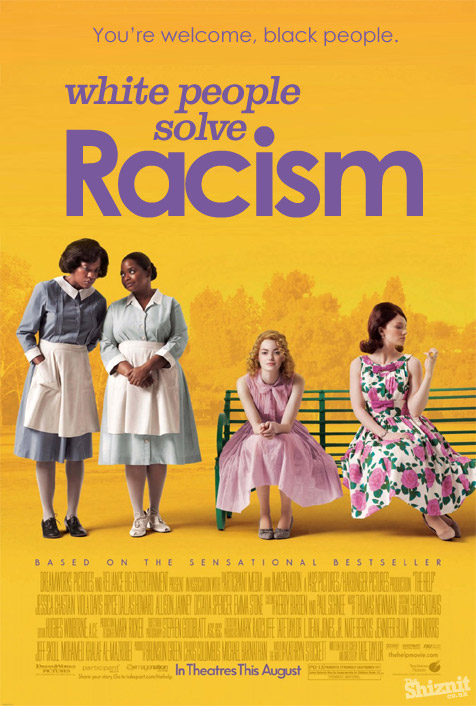
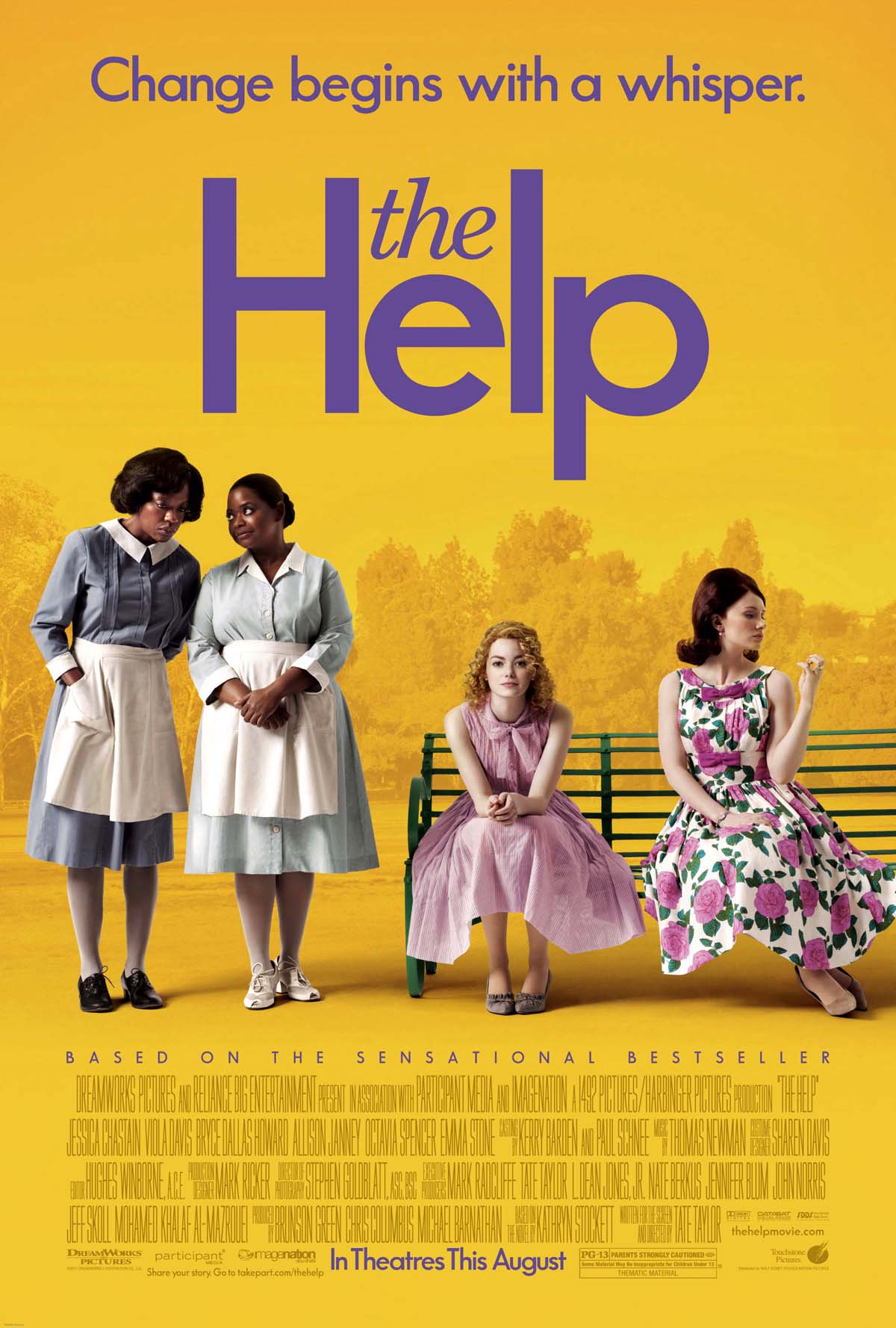
As I’ve written about before, I found the “history” reflected in the film “The Help” to be problematic on many levels.  I agreed with the Association of Black Women Historians in their criticism of the film’s message about black women in the era of Jim Crow. I also found Melissa Harris-Perry’s review of the film to be on point when she described it as “ahistorical and deeply troubling.” More recently, an alternate reading of “The Help” came in the form of this revised movie poster that bitingly states what many of us think about the film.

Then, what the hey is the NAACP thinking by nominating the film for Outstanding Motion Picture for one of its 2012 Image Awards? More importantly, why did they give Bryce Dallas Howard a nod for Outstanding Supporting Actress? Hilly? She’s not exactly a person of color (at least not in the tradition of these awards).  As the Washington Post stated, this is one of the most awkward nominations the organization made.  I can understand Viola Davis’ nomination for Outstanding Actress–even Melissa Harris-Perry recognized her talent.  Still, I agree with her that it’s a shame that Davis will probably win for playing a maid.  Hattie McDaniel, anyone?

As a historian, I often find myself combating popular media’s misrepresentations of the past in the classroom.  However, it is often an uphill battle and the success of films like “The Help,” make it even more difficult.  So, like my cohorts in the profession, I plod along and try to educate my students by having them read some honest-to-goodness history.  I only wish filmmakers would do the same.  It’s not as if the historical truth doesn’t make for good drama.

Call me “Professor Swamp People”

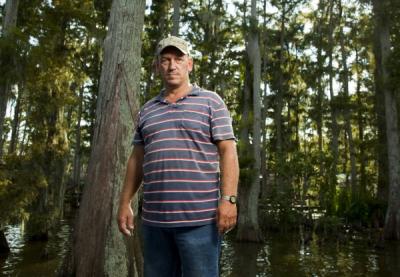
Troy Landry, one of the stars of History Channel's "Swamp People"

I was recently interviewed by Cara Bayles at the Houma Courier in Louisiana about the flood of reality television shows that are set in Louisiana.  We had a terrific talk that lasted a good half an hour, but all that ended up in the paper was a couple of sentences, which you can read here.  Just before we hung up the phone, I asked Cara “How did you find me?” to which she responded “I Googled ‘professor swamp people.'”

When I set out to write Dreaming of Dixie, I had no idea that it would lead to my becoming some “expert” on reality TV shows set in the South, although “Professor Swamp People” has a nice ring to it.  It began with the op-ed in the New York Times, which led to an interview about “hixploitation” for the Louisville Courier-Journal(KY) and similarly-related articles elsewhere.

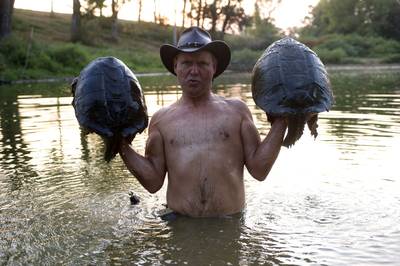
Ernie Brown, Jr. a.k.a. "Turtleman," from "Call of the Wild Man" on Animal Planet

It may seem a huge leap to go from an analysis on the impact of Gone With the Wind to that of Swamp People, but from where I sit the purveyors of popular culture have, since the early nineteenth century, simply decided to emphasize what it believes to be the South’s cultural distinctiveness–whether or not it applies to the broader region.

And yet, therein lies the problem. So often nonsoutherners (including seasoned journalists) who don’t know the region’s history and have not spent time in the South, will often buy into those differences they find in popular culture. And as long as they do, I will continue to answer to the name “Professor Swamp People” when called.  Choot’em!!

My former MA student, Nicole Moore, is becoming a leader in slave interpretations at historic sites. She is now a member of the Cooking Gene Project Team. Meet her here:

michaelwtwitty's avatarAfroculinaria

Nicole Moore is one of my team members for The Cooking Gene.  She is now a seasoned historic interpreter with degrees in public history and psychology.  She will be cooking with me en route and will advise on the tour, giving me an extra pair of eyes that sees the world similarly to how I see it, but just different enough to open me up to a new perspective.  Please learn more about Nicole at her blog:   www.interpretingslavelife.com.  You can find out more about The Cooking Gene at our campaign site:  http://www.indiegogo.com/The-Cooking-Gene-Project-The-Southern-Discomfort-Tour.  We strongly urge you to read our page, consider donating, and pass it on to others you know on social media such as Facebook, Twitter and LinkedIn as well as by email and text.  Enjoy this interview with Nicole 🙂

  1. What first got you interested in being a historic interpreter? What inspired you? Where…

View original post 5,046 more words

Historians on ‘The Help’: Vanessa May and Rebecca Sharpless Respond

Historians on ‘The Help’: Vanessa May and Rebecca Sharpless Respond.

So many people ask me questions about The Help (both the book and the film version), that I thought it would be better to let some historians, whose research can shed light on the subject, offer you a little context. Click on the link above.  Editor, Pop South

You Don’t Know Dixie—And If You Do, You Should Be Paying Attention to Pop Culture

Recently, The History Channel (THC) televised an hour-long special entitled You Don’t Know Dixie. Most historians haven’t come to expect much history from THC—a channel that is better known for airing shows like Ice Road Truckers and Swamp People.  Since I am interested in popular representations of the American South, I tuned in and what I observed didn’t change my mind about how the South and southerners continue to be represented as stereotypes.

On the one hand, message boards and even a Facebook page for the show suggest that it has a solid fan base—at least among southern whites.  For most of them, You Don’t Know Dixie doesn’t trade in negative stereotypes about the region and that’s reason enough to like the show.  This is understandable given how the popular media can often showcases the region as a backwater.

The late Barney Barnwell--fiddler, moonshiner, hillbilly

And yet, there were stereotypes and much that was problematic about the program.  You Don’t Know Dixie is heavy on trivia and relies on “well-known southerners” like Ty Pennington, Trace Adkins, and Jeff Foxworthy to tell us “hidden truths” about the region, with a couple of academics thrown in to make it legitimate.  Well, them and Barney Barnwell, a fiddler and hillbilly moonshiner whose speech required subtitles.

Employing the term “Dixie,” rather than “South,” and borrowing from the Confederate battle flag to illustrate the “X” in the show’s title is an indication of its focus.  The overarching message is that southerners (read: white) persevere in the face of outside challenges.  Southern women don’t make the cut, and African Americans cook well or sing the blues. While not a reality show per se, it has the same quality, and the message of the program is reduced to a Hank Williams, Jr. song—a country boy can survive.

It’s no surprise that historians hated it, which they made clear in a discussion on H-South.  And yet, the show will pass for “good” information about the region and THC may even purchase more episodes from North South Productions, the company that developed the program.  So what’s a southern historian to do except complain?  We could begin by doing a better job of engaging the general public with our scholarship.  And I would argue that we should engage in a serious discussion about popular culture rather than ignoring it as too low brow to warrant our attention.

Ben Bernanke–South of the Border

Pedro
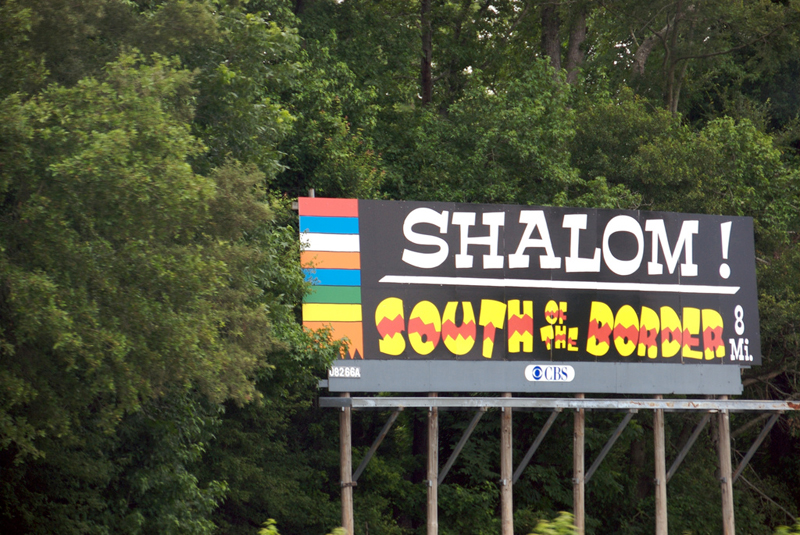
If you’ve ever traveled on I-95 and made it to Dillon, South Carolina, then you most certainly have noticed (and how could you not?) South of the Border and its steady stream of neon painted billboards with “Pedro,” the sombrero wearing icon, trying to draw you in to the roadside attraction to eat a hot tamale or take your kids to “Pedroland.”

South of the Border, owned and operated for years by Alan Schafer, began as the South of the Border Beer Depot.  According to Nicole King, a professor at the University of Maryland-Baltimore County who has written about the creation of what is known as “S.O.B.”, Alan and his father Samuel had a successful beer distribution company and because they were Jews, could avoid the cultural stigma associated with beer sales that Baptists and other religious conservatives could not. Over the years, especially after the passage of the Interstate Highway Act of 1956, South of the Border grew from beer depot into a souvenir shop to catch the traffic now going up and down I-95.(See King’s article “Behind the Sombrero: Identity and Power at South of the Border, 1949-2001,” in Dixie Emporium: Tourism, Foodways, and Consumerism in the American South, edited by Anthony Stanonis).

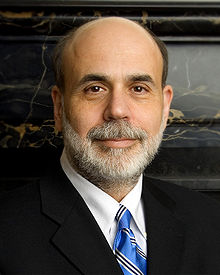
Chairman Ben Bernanke

What you might not know and what I learned recently through a fellow historian and Facebook friend is that our current Federal Reserve chairman, Ben Bernanke, worked as a waiter one summer at South of the Border.  This must certainly be a feather in his sombrero and should have brought him more respect from Republican presidential candidate Rick Perry, who accused his fellow southerner of “treason.”  That’s right.  Fellow southerner.  Bernanke didn’t just work at S.O.B., he is originally from Dillon, South Carolina.  Take that, Senor Perry.

Alan Schafer

South of the Border is complex, just as complex as Alan Schafer, who died in 2001.  As King explains, the roadside attraction “memorializes the African American experience by selling ‘authentic souvenirs’ from Africa in a Mexican-themed tourist spot created by a progressive Jewish man in the predominantly Anglo, conservative, and Protestant American South.”  And that’s just for starters.

All this is to say S.O.B. is a fascinating place.  And it just became more fascinating to me, now that I know that Ben Bernanke, the man who can make economic markets go up or down whenever he speaks, once worked under the big sombrero.

Southern Festival of Books 2011

I am pleased to say that I will be one of the authors represented at the Southern Festival of Books in Nashville, Tennessee, this coming October.  I’ll be sure to post the details as soon as I can. I’ll be talking about and signing copies of my new book from UNC Press, Dreaming of Dixie: How the South Was Created in American Popular Culture.
The Southern Festival of Books